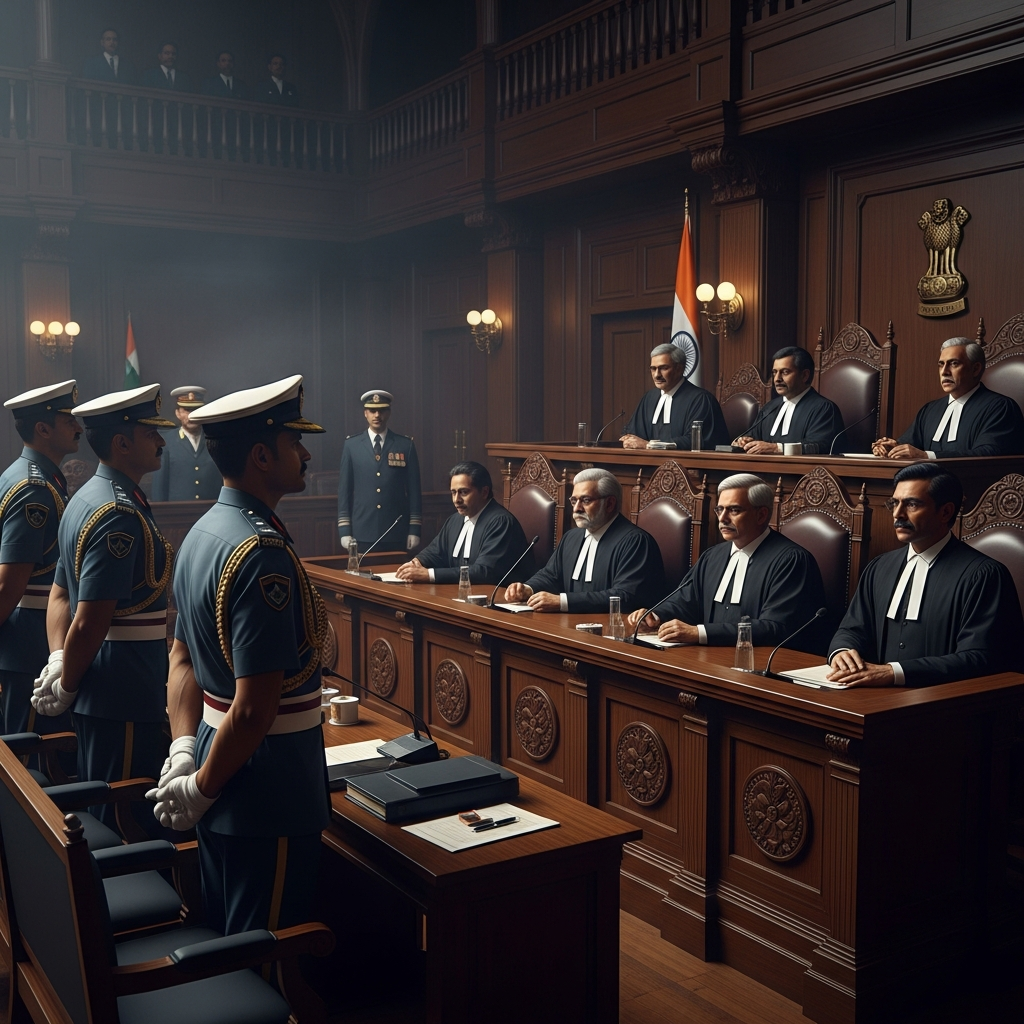
The Supreme Court is hearing petitions against the deployment of central forces in West Bengal. This case is quietly becoming one of the most important legal discussions about India’s federal balance in years.
On the surface, the case in front of the Supreme Court of India looks like a simple administrative dispute: who decides how many armed people stay in a certain state and for how long? But anyone who has followed the long, complicated relationship between New Delhi and West Bengal knows that this case is not very clear-cut. The Supreme Court’s decision to look at petitions that question the continued presence of central forces in the state has opened a legal door that, once walked through, could change how India thinks about federal intervention, election law, and the limits of national oversight for years to come.
The petitions being looked at question whether it is constitutional for central paramilitary forces to stay in West Bengal for a long time, especially when it comes to keeping the peace and getting ready for elections. The court has asked the central government and other interested parties to formally respond. This shows that the court is not just interested in the procedure, but also in the constitutional question at hand. Legal experts following the case say that the framing is very important: at its core, this is a debate about where state power ends and national oversight legitimately begins. “The tension between a state’s right to govern its own territory and the center’s duty to uphold constitutional order is one of the oldest fault lines in Indian federalism.”
That stress isn’t new. There has always been some friction in India’s federal government. The Constitution carefully divides powers, but it also gives the central government the power to step in when it thinks law and order has broken down or when elections are in danger of being compromised. The use of central forces fits perfectly into this disputed area. West Bengal has long been a place where this tension is most visible. It has seen a lot of political competition and occasional violence during elections.
The state government has always said that the presence of central forces is an overreach and an infringement on its authority to manage its own police and security. On the other hand, the central government has said that the deployment is necessary because of the situation on the ground, especially before elections. Both sides have valid constitutional arguments, which is why the case has ended up where it is: in front of the highest court in the land.
Why this case is important
The Supreme Court’s decision could set a standard for how and when central forces can be sent to any state during elections. This would change not only West Bengal, but also the whole system of election law that India uses in future elections.
From a legal news point of view, the Supreme Court’s review is especially important because it could set a broader precedent. The Election Commission of India wields considerable authority when it comes to requesting central forces for election duties, a power rooted in the framework of election law.
There is another reason why legal scholars are interested in this case. The petitions talk about the constitutional principle of cooperative federalism, which says that the relationship between the center and the states should be one of working together instead of one of dominance. When central forces are sent to a state against the wishes of its elected government, it’s not just a security decision. The pronouncement regarding the ultimate arbiter of peace extends its implications well beyond the confines of West Bengal.
However, it would be wrong to see this as just a political fight dressed up in legal language. It is a real and serious concern for the safety of voters during elections. In many cases, central forces have played an important role in making sure that polling happens without violence or intimidation. Saying that their deployment is only a political tool does not do justice to the real security problems that managing elections in some parts of India still poses. The court seems to be able to see both sides of the issue at the same time: the legitimate security argument and the legitimate constitutional objection.
No matter what the outcome, the fact that the Supreme Court of India is involved in this case is important. This serves as a reminder that the courts are still active and willing to help define the rules of federal government, and they don’t want to leave these questions up to the political branches alone. In a democracy where the relationship between the states and the center is often put to the test, that willingness to get involved is a big deal.
The hearings will go on, both sides will file responses, and both sides will make strong and convincing arguments. But the real audience for this case isn’t just the judge. Every voter, every state government, and every election official needs to know what the rules are in a clear and unambiguous way. This case gives the Supreme Court a chance to do just that. This could become a landmark in Indian constitutional history or just another chapter in an ongoing disagreement that never really gets settled, depending on whether it takes advantage of the chance.