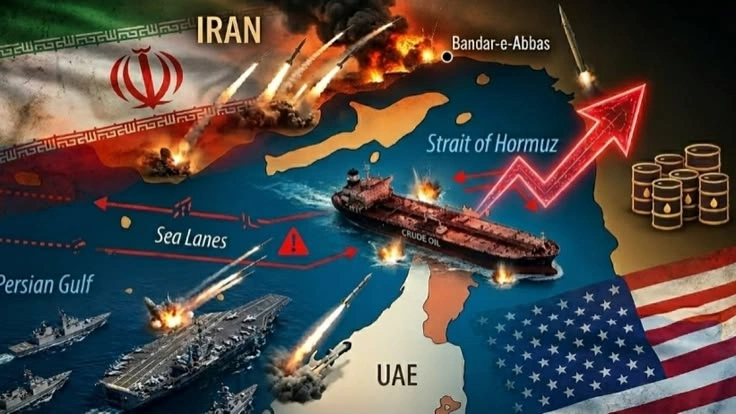
The Middle East has long been a crucible of conflict, yet the past few months have witnessed a surge in unrest, a particularly intense period of turmoil.
Things seem more unstable now than they have in a while. Oil prices are climbing, and ceasefires aren’t lasting. This has consequences that reach far and wide, affecting both the big players on the world stage and the day-to-day workings of companies closer to home.
How It All Began
The initial spark occurred on February 28, 2026. That day, Israel launched airstrikes, targeting cities, nuclear facilities, and missile sites situated well within Iran’s borders.
The U.S. got involved right away, and the operation murdered important people, including Iran’s Supreme Leader Ali Khamenei. Iran struck back hard by shooting missiles at Israel, U.S. sites in Qatar and Saudi Arabia, and closing the Strait of Hormuz, a tiny waterway that supplies about 20% of the world’s oil.
By the beginning of March, things had gotten worse. Hezbollah in Lebanon increased their rocket strikes on Israel. At the same time, Houthis in Yemen began launching missiles, which put the Red Sea route at risk as a backup for ships. Gulf countries including the UAE, Kuwait, and Saudi Arabia got involved and saw drone and missile attacks on their own land. Airports were closed for a short time, refineries caught fire, and civilians died on all sides.
Pakistan stepped in as a mediator to assist set up negotiations, but there wasn’t a lot of confidence. President Trump imposed deadlines, first for April 6 and then for later, saying he would destroy Iranian power plants if the strait didn’t open. A two-week ceasefire for U.S.-Iran attacks was proclaimed just a few days ago, on April 7. However, Israel is still battling in Lebanon.
Strategic alliances are changing quickly.
No one is sitting this one out alone. To fight Iran, Israel has been establishing what Prime Minister Netanyahu calls a “hexagon” of partners. These partners include India, Greece, Cyprus, and certain Arab governments. It was helpful to have normalization treaties from years before, but now it’s all about sharing information, technology, and defense against Iranian missiles.
Their U.S. bases are equipped with missile defenses, yet Iran’s attacks on their refineries and tankers prompted them to publicly criticize Tehran and pursue stronger ties with Washington.
But they’re still hedging. There isn’t a full jump into Israel’s side since people are angry about Palestinian issues.
China and Russia? They’re keeping calm and letting the U.S. and Israel waste resources as oil money flows into Moscow—up to $97 billion more by the end of the year, according to estimates. China is happy with any distraction from the Pacific. It wants ceasefires but blocks UN resolutions that directly accuse Iran. Pakistan’s role is important because it hosts talks and lets certain ships travel through Hormuz.
What does this signify for the future of the Gulf? Do they have to choose sides in someone else’s game?
Energy Nightmare Comes Home
Oil is the big unknown here. The blockade of Hormuz cut off supply, which caused Brent crude prices to rise to above $140 a barrel at their highest point before falling to $95 when the truce news broke. Fitch raised its 2026 projections to $70 and Goldman’s to $71, but that’s too high if problems keep happening. Iraq and Kuwait cut back on production. If mines or strikes hit, Saudi Arabia and the UAE might do the same.
Ripple around the world? Gas prices in the U.S. reached $4 a gallon, the highest level since 2022. The IEA said it was the biggest supply shock ever and let reserves go, but warned that they would run out. Prices of food could also go up because fertilizer from the area gets more expensive, which hurts harvests around the world.
Brent crude rose by 63% in March, the highest monthly rise since 1988.
Daily loss of oil: up to 10 million barrels if it lasts a long time.
If it shuts for one quarter, GDP growth would plummet by 2.9% in Q2 2026.
It’s personal for India. Crude oil shipments fell sharply, from 3.5 million barrels a week to 1.9 million barrels a week in early March. The trade gap grew by $4 billion per month, which made prices go up and made energy security weaker. New Delhi has been getting close to the UAE and Canada for other options, but connections with the Middle East, which are important for cheap hydrocarbons, suddenly seem dangerous.
Ripples around the world and India’s stake
This isn’t just a fight in one area; it’s shaking everything. Shipping is a mess: 2,000 ships are stuck, war insurance is gone, and rerouting across Africa is making things more expensive. Air travel? Flights are down 59%, Emirates is only half full, and Europeans are canceling their trips until May.
U.S. recommendations tell people in most countries there to “leave now.” Embassies are closing, and families are leaving. There are a lot of arguments in the UN, but vetoes stop activity.
India feels it very strongly. If the economies of the Gulf countries go bad, remittances from workers there could go down. Families in Nashik with relatives in Dubai or Riyadh are worried about losing jobs at home as gas costs rise. And what about strategy? Concerns about escalation now mingle with ties to the UAE for renewable energy and ports. Could this make Delhi plunge even deeper into that “hexagon” in Israel?
Stop the fighting or blow up?
That break on April 7 feels more like a breath than a remedy. Iran’s IRGC talks about a “new Gulf order” and wants tolls on Hormuz forever. Israel won’t stop in Lebanon, and the Houthis want to close Bab al-Mandeb. Trump has run out of patience, yet backing down may make him look weak.
The Gulf states seek to stop wars without starting new ones. They are working with Turkey, Pakistan, and even NATO to build missile defenses. The China-Russia partnership makes money quietly, but what about a bigger war? No, thank you.
Looking Forward
People all across the world are watching because electricity runs through here, alliances change power, and one drone may make your groceries bill go up. That shaky ceasefire gives diplomats more time. Will they be able to reach a true agreement, or will Hormuz be constricted till summer? For now, the markets are on edge, governments are being careful, and people from Mumbai to Manhattan are getting ready for the next turn. Stability is weak; one wrong move might make 2026 much crazier.
What the Middle East Crisis Is All About and Why the World Is Watching