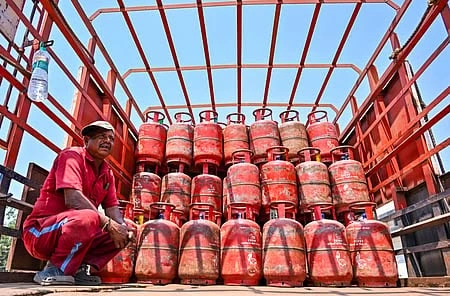
Hardeep Singh Puri, India’s oil minister, got to Qatar on Thursday. His path was set in motion by a deepening LPG supply crisis. The effects are rippling across the country, evidenced by the increasing number of empty cylinders and the rising concerns about running out.
This goes beyond mere diplomacy; it’s a crucial move to ensure a dependable energy source.
The situation in West Asia, with its potential to upset critical energy imports, makes this especially important.
Puri’s trip underscores India’s urgent need to bolster its energy security in a world of fluctuating oil prices and rising import costs.
The time is perfect. State-run oil companies like Indian Oil Corporation (IOC) and Hindustan Petroleum (HPCL) say that LPG deliveries are spotty in places like Uttar Pradesh and Bihar. This is partially because of shipping problems caused by disturbances in the Red Sea. India is the world’s biggest importer of LPG, and it uses more than 28 million tons a year to power around 340 million homes.
Shipping costs have skyrocketed, jumping by 30% to 40%, and deliveries are now lagging by several weeks. Qatar, which supplies India with approximately 4–5 million tonnes of LPG each year, is feeling the pinch firsthand.
New Delhi wants to rely less on shipping lanes that aren’t as safe, so Puri’s visit is probably meant to get more constant volumes, maybe even long-term agreements.
But it’s not all about geopolitics. There were also problems with domestic refining. Last month, the BPCL Kochi facility, which is a key LPG hub, had to shut down for a short time for maintenance. At the same time, worldwide propane prices went up 15% because the U.S. shale formations cut back on supplies. Add in delays caused by the monsoon for inland travel, and you have a perfect storm. The Petroleum Planning & Analysis Cell (PPAC) says that LPG imports fell by 5% in the first quarter of 2026 compared to the same time last year. Stocks are currently at 2.8 million tonnes, which is ample for now but quite thin.
Significant factors contributing to the current financial strain:
Altering the Red Sea route incurs an additional $1 to $2 per cylinder in concealed costs.
The North Field expansion in Qatar will bring in additional gas, but pipelines and tankers are behind.
India’s subsidy bill for 27 kilogram commercial cylinders went up 12% to ₹25,000 crore.
Puri, who is used to these kinds of talks, has a lot of work to do. Past visits brought in spot cargoes, but this one might ask for equity participation or exchange deals. Picture this: India selling finished goods for Qatar’s LNG, which would make it easier to bring in goods.
Qatar’s Important Role in India’s Energy Supply
Qatar isn’t just any supplier; it’s India’s third-largest source of crude oil and a top LPG partner, sending 12% of the country’s needs. Indian companies like ONGC Videsh own parts of Qatar’s North Dome gas field, which is the biggest in the world. But things didn’t go smoothly. Last year’s price fight led Qatar to raise spot rates by 10%, which made India look for Algeria and the U.S. Now that there are problems in West Asia, including the Iran-Israel shadowboxing and threats to Gulf tankers, stability is more important than haggling.
Puri’s schedule, which is based on official briefings, includes meetings with Qatar’s Energy Minister Saad bin Sherida al-Kaabi. Expect talk about expanding the LNG deal from 2023, which is worth 7.5 million tons per year, and about joint ventures in green hydrogen. Qatar is looking to India as a way to protect itself from Europe’s gas hunt after the war in Ukraine. For Indians, it’s practical: 70% of LPG originates from other countries, and Qatar is a reliable source in the middle of instability.
But there are problems ahead. If tensions between the U.S. and Iran rise, sanctions might affect shipping in the Gulf. What about promises to help the environment? At COP29, both countries agreed to decrease methane leaks, yet they still rely on fossil fuels. What if tensions get so bad that they lead to blockades? Could you not use your UPA connection card for weeks?
Broader Strokes: Tensions in West Asia Are Changing the Flow of Oil Around the World
If you look at the big picture, India’s push for Qatar is like a race around the world. Saudi Arabia and Iraq are the two biggest sources of oil for India, which gets 40% of its oil from West Asia. But last month, Houthi drone attacks sank two tankers, which caused insurance rates to go up by 20%. If the Strait of Hormuz was blocked, Brent crude, which is currently at $82 per barrel, may go up to $90. That’s an extra ₹20,000 crore a year for India on the forex budget.
The government isn’t lazy. The ₹10 lakh crore energy security plan raises strategic reserves from 5 days’ worth to 12 days’ worth. At the same time, PLI initiatives bring in $5 billion for refinery renovations. Last quarter, the amount of ethanol blended into gasoline reached 15%, which cut oil demand by 2 million tonnes. Experts like former PPAC chairman Chetan Maini nonetheless warn, “Diversification is important, but Qatar is still the steady hand.”
India is also courting other countries. U.S. cargoes are up 25%, while Russia’s Urals are still at a low price despite pressure from the West. But the amount is important. Qatar’s 1.8 million barrels per day of crude oil exports to India are far more than those of new countries.
Domestic Fallout: Homes, Hotels, and Other Hidden Costs
The LPG price surge is hitting people where they live. In Nashik, Maharashtra, depots are reporting a 10% decrease in available stock, and rural agents are restricting the number of refills. Commercial users, including dhabas and manufacturers, are facing an additional ₹1,500 charge per cylinder, which is eating into their bottom line. And then there’s inflation to consider.
If it goes on for a long time, food costs could go up by 0.5%.
As usual, women are the ones who suffer the most. Ujjwala 2.0 gave away 100 million free connections, but refills are slow in areas where people want them. A woman from Delhi told the local news, “We’ve shifted to electric burners, but not everyone can.” Puri’s team guarantees that there won’t be any shortages, but optics are important, especially with elections coming up.
India’s Oil Minister Lands in Qatar as LPG Crunch Bites Harder Amid West Asia Storm