Introduction:
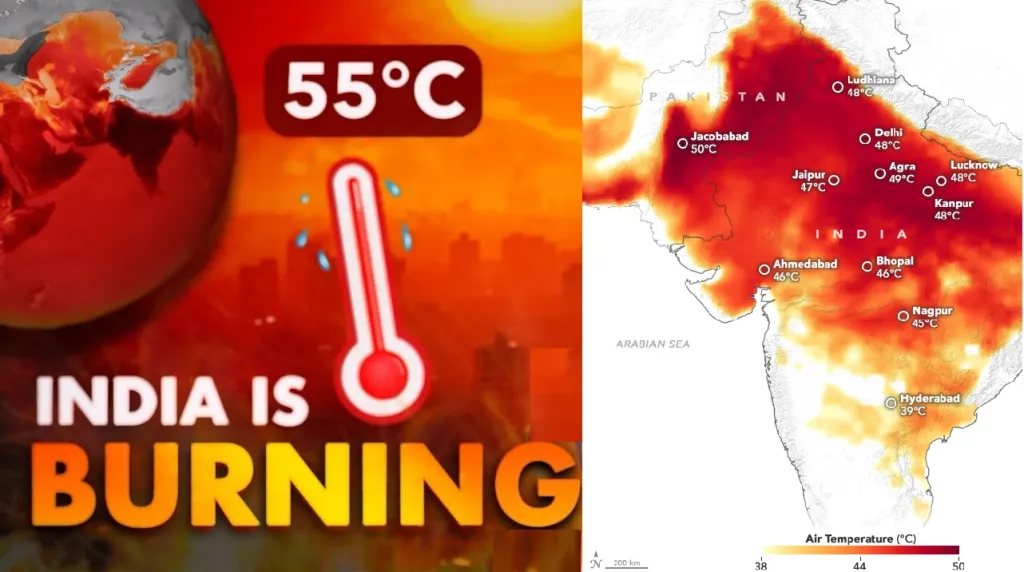
India is currently experiencing one of its most intense heatwaves in recorded history, with temperatures in several northern and central regions surpassing 48°C (118.4°F). The extreme weather conditions, attributed to climate change and delayed monsoon patterns, have triggered health emergencies, disrupted daily life, and raised concerns over water scarcity and power outages across the nation.
Body:
The India Meteorological Department (IMD) has issued red alerts in multiple states, including Rajasthan, Uttar Pradesh, Madhya Pradesh, and parts of Delhi, as mercury levels hit unprecedented highs. Phalodi in Rajasthan reported a staggering 49.2°C, making it one of the hottest locations in the country this year.
Public health officials have warned of a sharp rise in heatstroke cases, especially among vulnerable groups such as the elderly, outdoor laborers, and children. Hospitals in affected regions are witnessing increased admissions for heat-related illnesses, prompting authorities to deploy additional medical staff and stock up on essential supplies like oral rehydration salts and IV fluids.
Experts link the current heatwave to a combination of climate change-induced warming, persistent high-pressure systems, and reduced pre-monsoon rainfall. Dr. M. Rajeevan, former Secretary of the Ministry of Earth Sciences, emphasized, “We are witnessing a clear trend of intensifying heatwaves in India. The frequency, duration, and severity of such events are increasing due to global warming.”
In urban centers like Delhi and Nagpur, the urban heat island effect has exacerbated the problem, with concrete structures and limited green cover trapping heat and offering little nighttime relief. The situation has compelled many state governments to implement heat action plans, including restrictions on outdoor work during peak hours, closure of schools, and advisories for staying hydrated.
The agricultural sector has also taken a hit, with early signs of crop stress emerging in heat-sensitive crops such as wheat, maize, and pulses. Farmers in Madhya Pradesh and Haryana have reported wilting plants and lower soil moisture, raising alarms about potential yield losses if the heatwave continues unabated.
Meanwhile, power grids in several cities are under strain as the demand for electricity surges due to widespread use of air conditioning and cooling appliances. Some regions have reported power outages and water shortages, adding to public distress. The Ministry of Power has assured citizens that emergency measures are being taken to stabilize energy supply and prevent blackouts.
Conclusion:
As India battles this record-breaking heatwave, the crisis underscores the urgent need for long-term climate resilience strategies, sustainable urban planning, and robust public health infrastructure. With summer far from over and the monsoon still weeks away, authorities and citizens alike must brace for more extreme temperatures and take proactive measures to mitigate the impact of this escalating climate threat.