
Introduction:
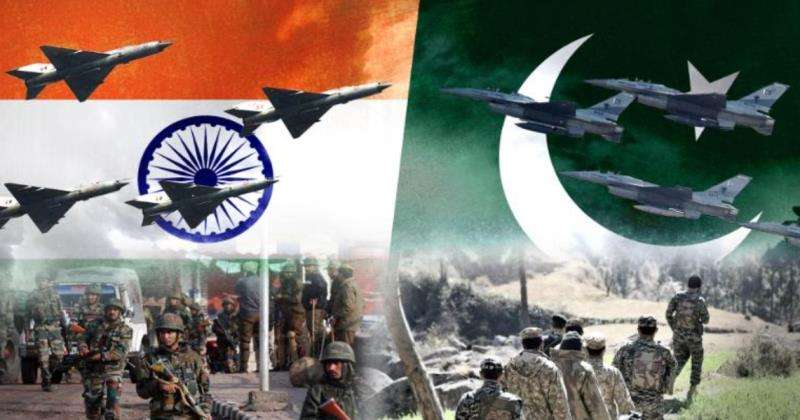
In a concerning escalation of border tensions, India and Pakistan are witnessing a new frontier in conflict: drone warfare. The increasing use of unmanned aerial vehicles (UAVs) along the Line of Control (LoC) and International Border (IB) has raised serious security, military, and diplomatic alarms in both countries, signaling a shift in modern cross-border hostilities.
Body:
Over the past several months, Indian security forces have intercepted and neutralized a record number of Pakistani drones attempting to infiltrate Indian territory. According to officials from the Border Security Force (BSF) and Punjab Police, over 100 drone incursions have been reported in 2025 alone—many of them allegedly used to smuggle arms, ammunition, explosives, and narcotics.
In early May, the Indian Army shot down a high-tech Pakistani drone carrying AK-47 rifles and grenade launchers in the Samba sector of Jammu and Kashmir. “These drone intrusions are not random acts; they are part of a systematic attempt to destabilize internal security and supply resources to terror operatives,” said a senior intelligence official.
Pakistan, on the other hand, has denied direct involvement, claiming that non-state actors may be responsible for such activities. However, analysts point to the increasing sophistication and frequency of drone deployments as evidence of state-sponsored support. The Indian Ministry of Defence has emphasized the need to strengthen counter-drone technology and surveillance infrastructure across the border regions.
Drone warfare marks a significant evolution in the traditional military engagement between India and Pakistan, allowing hostile elements to bypass physical barriers without immediate risk to personnel. The low cost, high mobility, and remote operation of drones make them a preferred tool for espionage and asymmetric warfare. As a result, keywords like “India Pakistan drone conflict”, “cross-border UAV intrusions”, and “counter-drone systems India” have gained substantial traction online.
In response, India has accelerated deployment of anti-drone technologies, including radar-guided jammers, AI-powered surveillance drones, and thermal imaging devices. The Defence Research and Development Organisation (DRDO) is also working on indigenous drone-neutralizing systems, while private Indian tech firms are contributing to AI-based solutions for threat detection.
Meanwhile, the diplomatic fallout continues to build. The Ministry of External Affairs has lodged formal protests with Islamabad, while international observers have urged both nuclear-armed nations to exercise restraint and engage in dialogue. Strategic experts warn that continued escalation could destabilize South Asian regional security, particularly with ongoing geopolitical tensions involving China and Afghanistan.
Conclusion:
As drone warfare redefines the nature of the India-Pakistan conflict, the stakes are higher than ever. With both nations investing heavily in drone and anti-drone capabilities, the need for effective policy frameworks, international mediation, and confidence-building measures is more critical than ever to prevent a high-tech cold war from turning into a hot conflict.

