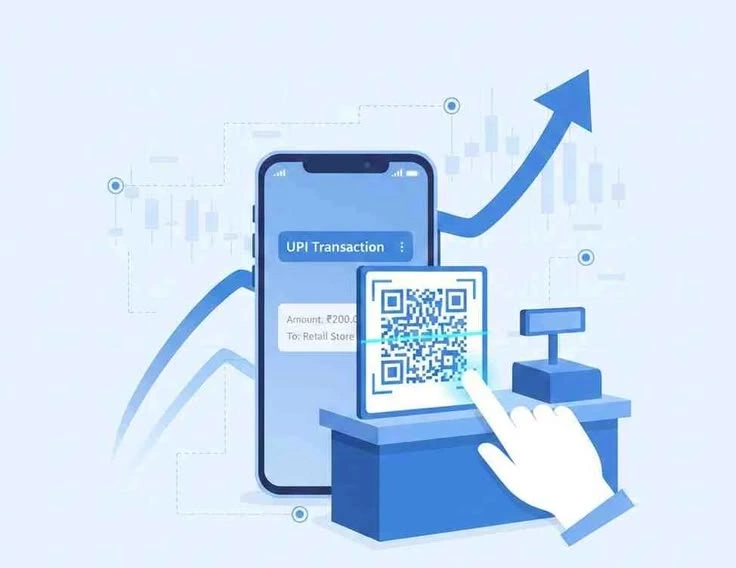
Unlike many parts of the world, where economic uncertainty is the norm—marked by rising inflation in the US and sluggish growth in Europe—India’s digital payment landscape is thriving. December 2025 saw a staggering 16.8 billion transactions, a 22% jump compared to the previous year. This surge occurs even as global consumer spending shows signs of a slowdown.
That’s not just numbers on a screen; it’s people in India using their phones to swipe, tap, and scan their way through markets, metros, and malls. What is going on now? And what does it mean for a country that is already at the forefront of fintech innovation?
This strength isn’t a fluke. Demonetization in 2016 started the fire, then UPI (Unified Payments Interface) spread it. Now, even though the world is uncertain, digital payments in India are going up. There are more than 1.4 billion mobile subscribers, and the infrastructure is quite strong because data plans are cheap. But let’s take a closer look at how this growth is happening, what is causing it, and where it is going next.
The Numbers Tell a Strong Story
Don’t pay attention to the bad news in the news. The most recent NPCI statistics shows that India’s digital payments system has processed a huge ₹247 lakh crore in transactions so far in FY 2025-26. UPI, the clear winner, handled 150 billion transactions last year, which is more than the total volume of the US, UK, and Brazil. That’s a 45% increase per year, even while the amount of digital payments around the world stayed the same in many markets, at 5–7%.
UPI makes up 85% of all digital transactions in stores.
Prepaid Payment Instruments (PPIs), such as wallets, are up 30% and already number 2.5 billion a month.
Cards and online banking: steady at 10–15%, but losing ground to real-time choices.
These numbers look even better when you look at the world as a whole. The World Bank says that cross-border payments have gone down because of trade problems and higher interest rates. But in India? Keeping things going with an emphasis on home. Think about it: a street vendor in Mumbai who takes a QR code scan for chai, or a farmer in Punjab who gets paid for his crops right away. This routine use is protecting India from the slowdown.
UPI: The Homegrown Hero Behind the Boom
When people talk about digital payments in India, they always include UPI. NPCI started it in 2016, and now it’s the envy of the world. Singapore and France are testing comparable systems based on it. By early 2026, the platform boasted over 450 million monthly active users, with the average transaction exceeding ₹650. Peer-to-peer transactions were free, payouts were swift, and it worked with over 400 banks.
Consider PhonePe and Google Pay, two of the industry’s giants. PhonePe currently holds the largest market share, at 48%, and is projected to process over 80 billion transactions in 2025.
GPay is close behind at 36%. New players like Paytm are bouncing back after regulatory problems and are focusing on merchant loans based on payment data. And don’t forget about ONDC. It’s combining payments with e-commerce, which helps small businesses.
Uncertainty around the world? It hardly registers here. RBI’s drive for RuPay credit cards on UPI, which currently has 50 million issuances, has led to more people who don’t have bank accounts getting credit. On Diwali 2025, UPI transactions reached 600 million in one day. That’s a mix of holiday craziness and financial magic.
But is UPI unbeatable? Last year, there were 25% more attempts at fraud, but RBI’s AI-driven surveillance captured 98% of them in real time. Still, people don’t know enough—have you checked that QR code again lately?
Wallets, cards, and the EMI wave are more than UPI.
UPI is the most popular, but the ecosystem is changing. Digital wallets like Amazon Pay and Mobikwik grew by 28% because to cashback offers and bill payments. Postpaid wallets, which let you buy now and pay later, grew by 60%. This is great for buying things on impulse during times of inflation.
Do you have credit cards? Issuances rose to 120 million, while spending on digital-first items rose by 40%. This is happening because millennials and Gen Z are using co-branded cards from banks like HDFC and Axis. Debit cards are still popular, but contactless taps using NFC are the way of the future. They now make almost 30% of all POS transactions in urban India.
The EMI revolution is next. No-cost EMIs on sites like Flipkart and Amazon spread payments out over several months, making price increases less painful. Digital transactions linked to EMI reached ₹50 lakh crore in 2025. Buy-now-pay-later companies like Affirm have trouble with defaults around the world, but in India, low default rates (under 2%) thanks to strong KYC and data analytics keep it going.
India’s rural areas aren’t left out. Last year, Bharat BillPay (BBPS) digitized 1.2 billion utility bills, bringing villages into the cashless network. Integrating Jio and Airtel’s wallets makes it easy to recharge.
Government Push: Policies that Make Things Worse
Delhi isn’t just sitting back and watching. The Reserve Bank of India’s digital rupee pilot, which is already in 20 banks and has 10 million users, is testing the waters for CBDC. Offline transactions, which are very important in areas with poor internet access, went live in stages and could handle up to 1,000 taps without an internet connection.
The Union Budget for 2025 set aside ₹5,000 crore for fintech infrastructure, like as 5G-enabled point-of-sale equipment in tier-2 cities. The Account Aggregator architecture allows you share financial data between apps, which makes lending much easier. There are already more than 550 million PMJDY accounts, and 40% of them are linked to digital payments.
In the rest of the world, this is like the PSD3 delays in Europe or the US antitrust investigations into Big Tech payments. India’s flexible rules—like sandbox testing for neobanks—encourage new ideas. NPCI International is sending UPI to the UAE and Malaysia, where it hopes to make $1 billion in remittances each year.
But there are still problems. Cybersecurity concerns are very real; phishing schemes cost ₹1,500 crore in 2025. The RBI’s fraud reporting tool dealt with 2 million incidents, but raising awareness is important.
From Kirana to Corporate: How Merchants Are Adopting
The unsung heroes are the little businesses. By the end of 2025, more than 60 million people will have accepted digital payments, up from 40 million before the pandemic. QR codes are all over the place, from tea sellers in Kerala to Chandni Chowk in Delhi. Soundbox devices that say “payment received” cut down on theft and speed up service.
Big retail? Reliance Retail and Future Group added UPI to 15,000 outlets. Meesho and other big e-commerce sites do well when people switch from cash on delivery to digital payments. Now, 70% of items are paid for in advance.
When looking at the whole world, India’s 65% digital payment penetration is much higher than China’s 50% urban rate. But tier-3 towns are only 40% full, and McKinsey says closing that gap could add ₹10 lakh crore to GDP.
Navigating Challenges in Uncertain Times
Growth presents its own set of difficulties. Network failures, like the October 2025 UPI outage that affected ten million people, expose the system’s weaknesses. The Reserve Bank of India requires 99.99% uptime, but monsoon-related power outages in Bihar challenge that standard.
NSSO surveys indicate that a substantial number of adults in rural areas, approximately one in five, continue to use cash for their day-to-day financial dealings.
Moreover, women are 15% less likely than men to use digital technology. This difference is due to cultural factors and varying levels of literacy.
Fraud is the real menace.
Scams that use deepfakes to look like bank calls went up by 40%. RBI’s requirement for biometric authentication for high-value transactions is helpful, but users need to be careful.
Inflation at 5.2% hurts wallets, but digital advantages like rewards help. Global recessions may cut remittances by 8% to $110 billion, but domestic spending, which makes up 80% of payments, stays strong.
Stories from the Ground: How It Affects Us Every Day
Meet Raju, an auto driver in Bengaluru.
Before UPI, not having enough cash meant losing fares. Now, 90% of rides end in scans, and earnings are up 15%. Or Priya in Pune, using an app to pay her EMIs—one tap pays for rent, food, and that online saree.
These aren’t outliers. According to the Reserve Bank of India (RBI), digital payments saved ₹20,000 crore in printing costs last decade. Hygiene after COVID cemented the deal—no more fumbling with dirty notes.
India’s digital payment systems are experiencing rapid growth, a bright spot amidst global economic headwinds.