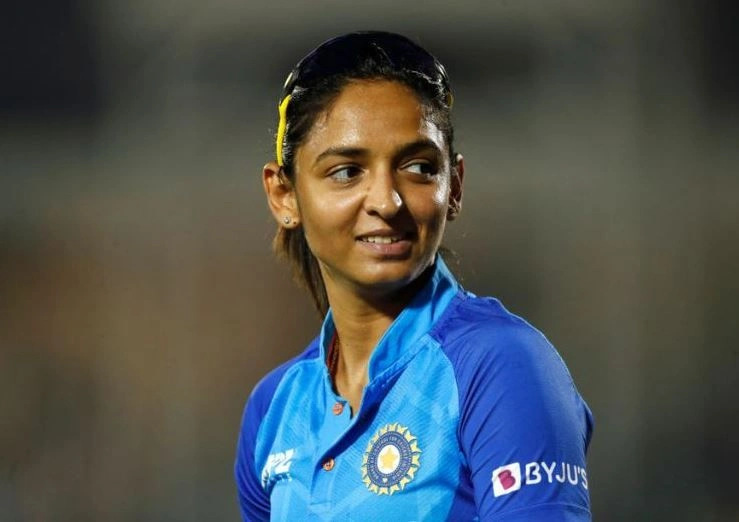
Harmanpreet Kaur is doing a great job of getting the Indian women’s cricket team to play well right now. With the T20 World Cup fast approaching in England, her leadership is under the microscope. A combination of determination, strategic thinking, and a busy schedule is driving the team forward.
The Steadfast Resolve of a Captain
Harmanpreet Kaur knows a thing or two about hard work.
At a recent fitness event in Bengaluru put on by PUMA and HYROX, she made it clear that the team’s busy schedule is a great opportunity for growth. “We simply want to keep playing all the time,” she remarked, underlining how playing games back-to-back helps you get better and gives you an edge against tough opponents.
This comes right after India’s amazing 50-over World Cup win last year, which was their first in that format. Kaur considers it “the biggest thing in our lives.” That win has sparked interest in women’s cricket in India, making it more visible. The BCCI and ICC’s efforts are clearly paying off, as more fans are tuning in. The WPL’s viewership, in particular, is experiencing a remarkable surge.
But Kaur realizes that the team has to keep working hard.
Her own form supports this. Even though she had a persistent strain in her left knee during an ODI against Australia in February (where she still scored a half-century before sitting out the fielding), she’s back, fitter, and motivated. There haven’t been any huge problems lately, and her captaincy records speak for themselves: India has won 80 of the 135 T20Is she’s led, which is a strong 62% clip.
The Road to Birmingham: A Full Schedule of Preparation
India is working hard to be ready for the T20 World Cup, which starts on June 12 in England and Wales. They just finished a tour of Australia in February and March, and now they’re going to South Africa for five T20Is starting on April 17. The first game is in Johannesburg, then Durban on April 19, and there are further games through the end of April.
The Proteas series won’t be easy; South Africa is in India’s Group 1 and has strong players like Laura Wolvaardt and Nonkululeko Mlaba. If you win there, you’ll have a lot of momentum going into a three-match T20 trip to England on May 28. The matches will be at Chelmsford, Bristol, and another place that is still humming in cricket circles.
Why is this so strong? Kaur thinks it’s the best moment to tune. Playing cricket all the time sharpens reflexes, repairs deficiencies, and simulates the strain of the World Cup. It’s excellent for a country that loves the sport, like when stadiums are full in Mumbai or Delhi streets are full with cheers. Can this schedule turn almost misses into the trophy India wants?
T20Is in South Africa: April 17–? (5 games, testing seam and bounce)
England T20Is: May 28, 30, and June 1 (a warm-up for the World Cup on home soil for the hosts)
The first game of the World Cup is on June 14 against Pakistan at Edgbaston in Birmingham.
Group of Giants: India’s Road to the World Cup
The ICC announced the schedule for the 2026 Women’s T20 World Cup back in February, and India’s draw looks tough. In Group 1, they will face Australia (the defending champions and always tough), South Africa, Pakistan (that opening rivalry!), Bangladesh, and teams that made it through the qualifying, such the Netherlands.
The top two teams from each group move on to the semifinals. The final will be at Lord’s on July 5. Group 2 has England, New Zealand, the West Indies, Sri Lanka, Ireland, and Scotland. India’s campaign opens on June 14 with a match against Pakistan, which is always full with subcontinental fire.
Harmanpreet will rely on a core that has changed. As vice-captain, Smriti Mandhana opens the batting with style. Shafali Verma hits the ball hard, Deepti Sharma spins webs, and Richa Ghosh keeps the ball with power-hitting flair. Recent teams suggest that players like Shreyanka Patil and Bharati Fulmali will be included in the series against Australia, which shows that the team is deep.
What is Kaur’s style? Smart but aggressive. She’s pushed for daring cricket, which is shown from her T20I record, where India routinely hit knockouts, like the final run in 2020. But the heartbreaks from the past semifinals still hurt; this team wants to break them.
Key Players Keeping the Momentum Going
No one team can win by itself, and India has a lot of firepower. Mandhana’s smooth drives set up plays; that’s why she’s vice-captain. Verma is brave at the top, Pooja Vastrakar swings the new ball, and Deepti and Radha Yadav choke the middle overs.
Harmanpreet herself is the middle anchor—think of her tremendous knocks that change games. After her injury, she has focused on fitness and joined competitions like HYROX to stay sharp. Younger players like Jemimah Rodrigues bring style, and Ghosh’s finishing is similar to MS Dhoni’s.
In India, where cricket is like a religion, this women’s team is getting closer to the men’s team. Scouts are thrilled about WPL success, and academies are pumping out talent from Pune to Patiala. The world is watching, too. England’s wickets are good for fast bowlers, but India might take advantage of them and win.
What if this combination works out perfectly? A World Cup run may make women’s cricket huge here and bring even more girls to dusty maidans.
Building a legacy by getting over obstacles. Lots of problems? Fans were worried about Kaur’s knee pain, but updates indicate that she is handling it and putting recovery first even if she is busy. Australia’s bowling that makes teams fall apart, South Africa’s home field advantage, and Pakistan’s spin all test determination.
But there is such a thing as momentum. It wasn’t luck that they won the 50-over World Cup; it was teamwork under pressure. Kaur gives the BCCI credit for pushing for equal pay, improved facilities, and making players become stars. ICC’s support implies that the World Cup is likely to be sold out.
In India, relevancy is real. The squad is making a change, from schoolgirls in Haryana looking up to Shafali to urban parents applauding in cafes. Cricket is good for the economy since it brings in tourists and creates jobs. For example, think of how World Cup fever spread across host cities like Birmingham.
People have looked closely at Kaur before. She has shown her mettle as a T20I captain, winning 80 out of 135 games, but she still hasn’t won the big prize. Total: 113 wins out of 190, or 62% of the time. Strong, but glory calls.
Harmanpreet Kaur Leads India’s Women’s Team to the T20 World Cup