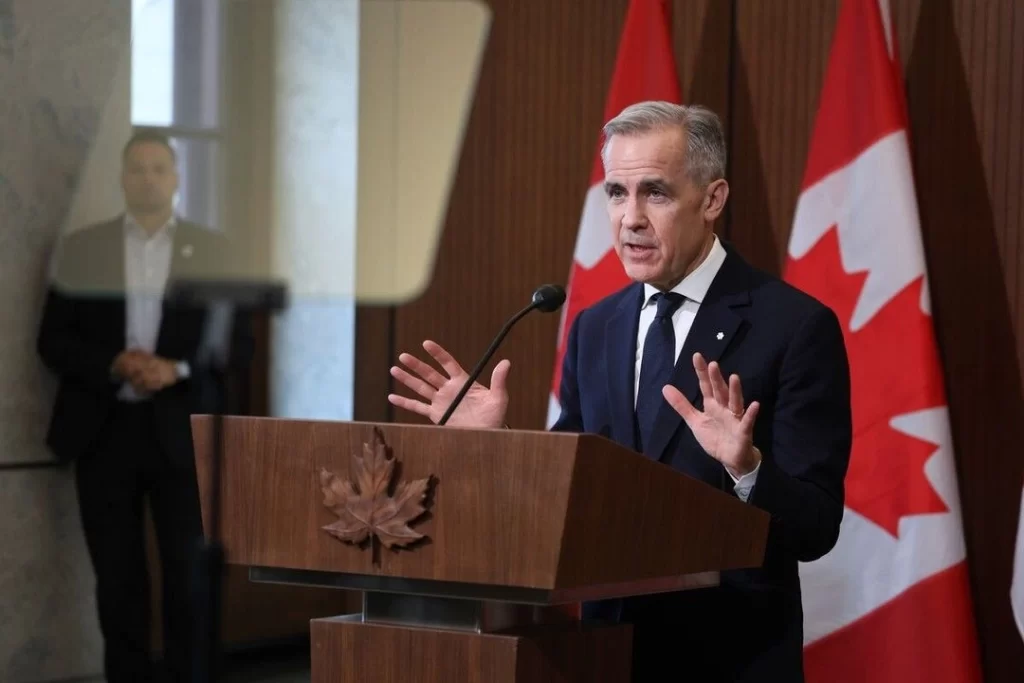
This victory, following the April 2026 elections in key ridings such as Toronto-St. Paul’s and Vancouver Granville, arrives amid a backdrop of surging housing prices, trade tensions with the United States, and murmurs of an economic downturn. Carney, the economist who succeeded Justin Trudeau as leader last year, described it as “a mandate for steady hands.” So, what does this mean for Canadians in their everyday lives? And what about the international scene, especially for India, which has its own economic ties with Canada?
Carney’s journey to this point hasn’t been a simple one. A major figure in global finance, he guided central banks through the 2008 financial crisis and the tumult of Brexit before entering Canadian politics.
Now, with these by-election results—Liberals snagging all three contested seats by margins of 8-15%—his minority government from the 2025 snap election flips to a working majority. It’s a game-changer in a Parliament that’s been a tug-of-war between Liberals, Conservatives under Pierre Poilievre, and the surging NDP. Voters turned out in droves, with turnout hitting 68% in urban ridings, signaling people want decisiveness amid inflation hovering at 4.2% and unemployment ticking up to 6.8%.
The By-Election Battlegrounds: Where Votes Told the Real Story
Let’s break down the ridings. Toronto-St. Paul’s, once held by Carney’s mentor Trudeau, was a nail-biter until the end. Liberal candidate Lena Metlege Diab crushed Conservative challenger Sarah Fischer by 12 points, thanks to a late surge on affordability promises. Over in Vancouver Granville—Jody Wilson’s old turf—the Liberals reclaimed it from an independent with a 15% blowout, fueled by Carney’s green energy pitch resonating with B.C.’s eco-conscious crowd.
Then there’s the prairie wildcard, Winnipeg Centre. NDP incumbent Niki Ashton held on narrowly, but Liberal gains elsewhere siphoned enough support to tip the overall balance. Poilievre’s Conservatives, riding high on anti-tax rhetoric, gained ground in Alberta-adjacent polls but fizzled in Ontario metros. Quick snapshot of the swings:
Liberals: +10% average vote share
Conservatives: +3%, mostly rural
NDP: -5%, squeezed in cities
Greens: Flat at 4%
These aren’t just numbers—they’re lifelines. Carney’s team ran on “pragmatic progress,” hammering home plans for 500,000 new homes by 2030 and a carbon tax rebate tweak to ease winter bills. Polls from Nanos and Angus Reid pre-vote showed Carney’s approval at 52%, up from 44% in January, largely because he’s no-nonsense on the economy.
Why Carney’s Win Matters Now More Than Ever
Canada’s politics have felt like a house of cards since the 2025 election left no clear winner. Constant confidence votes, stalled bills, supply-and-confidence deals with the NDP—they’ve gummed up everything from pharmacare rollout to Indigenous reconciliation. Carney’s majority—now holding 170 of 338 seats—cuts through that. Expect faster action on his flagship bills: the Housing Accelerator Act, aiming to slash red tape for 100,000 units yearly, and the Clean Economy Roadmap, pledging $50 billion in green tech by 2035.
But it’s the economy, stupid—or so the old U.S. saying goes, and it rings true here. With U.S. President-elect J.D. Vance threatening 25% tariffs on Canadian autos and lumber, Carney’s banking cred shines. He’s already jawboning with Trump allies, floating a “North American resilience pact” to shield supply chains. Domestically, inflation’s biting: grocery baskets up 22% since 2021, rents in Toronto averaging $2,800 monthly. Carney’s pledging interest rate relief talks with the Bank of Canada (which he once chaired) and targeted GST cuts on essentials.
Globally, this stability ripples out. India, Canada’s third-largest trading partner with $10 billion in bilateral trade last year, stands to gain. Carney’s pro-immigration stance—targeting 500,000 newcomers annually, many skilled Indians—bolsters tech corridors in Toronto and Vancouver. Think IT services from Bengaluru firms like Infosys, now expanding H-1B style visas north. And on climate, his Paris Accord zeal aligns with Modi’s green push, potentially unlocking joint hydrogen projects. Have you wondered how one country’s election could tweak your next overseas job hunt or energy bill?
Carney’s Playbook: From Banker to Ballot-Box Boss
What sets Carney apart? He’s not your typical pol. At 61, with a Oxford pedigree and stints at Goldman Sachs, he talks trade balances like bar talk. Critics call him elitist—Poilievre dubs him “Globalist Mark”—but voters seem to buy the competence. His by-election campaign was street-smart: town halls in strip malls, TikTok lives debunking “tax-and-spend” myths, even hockey rink stops in Winnipeg.
Take his economic agenda. It’s laser-focused:
Housing fix: Zoning reforms to build 3.9 million homes by 2031, partnering with provinces.
Energy transition: A gradual reduction of oil sands production, coupled with an increase in nuclear and hydroelectric power, while simultaneously preparing for LNG exports to Europe.
Fiscal guardrails: Debt-to-GDP cap at 42%, no deficits post-2028.
Opposition’s fuming. Poilievre vows a no-confidence push come fall, railing against “Carney’s carbon colonialism.” NDP’s Jagmeet Singh warns of corporate coziness, pointing to Carney’s Brookfield ties. Yet, with majority muscle, Liberals can sideline them—for now.
Challenges Ahead: Not All Smooth Sailing
Don’t pop the champagne yet. Cracks show. Quebec’s Bloc Québécois grumbled about federal overreach, threatening sovereignty talks if language laws tighten. Western alienation is a real thing, and it’s bubbling up. Alberta Premier Danielle Smith is pushing for increased oil royalties, which puts her at odds with Carney’s net-zero goals.
And internationally? Trump’s tariff shadow looms large—Canada exports 75% south, so retaliation could spike unemployment to 8%.
Immigration’s another hotspot. Carney’s targets drew 200,000-person protests in Calgary last month, with claims they’re inflating rents. He’s responding with caps on temporary workers, but numbers dipped just 2% in Q1 2026. Then there’s the ethics file: Old allegations of Brookfield favoritism during his tenure dog him, though cleared by the ethics commissioner.
For Indian diaspora—over 1.8 million strong in Canada—this win’s a mixed bag. Easier pathways for students and workers, yes, but housing squeezes hit Punjabi and Tamil communities hard in Brampton and Surrey. One Vancouver realtor told me, “Carney’s plans sound good, but my Indo-Canadian clients are priced out—will the builds keep up?”
Looking to the Horizon: Stability as Canada’s Superpower?
Mark Carney’s by-election majority isn’t just a scorecard win; it’s a pivot point for a nation at crossroads. Political stability lets him tackle the big fights—affordable living, climate action, U.S. brinkmanship—without constant horse-trading. Early signs are promising: TSX futures jumped 2% post-results, loonie strengthened 1.2% against the dollar.
Yet politics is fickle. Will Carney deliver on housing before rents hit $3,500? Can he charm Trump into ditching tariffs? And with midterms looming in 2027, how long does this majority last? Canadians, ever polite but pragmatic, gave him the keys—now he’s got to drive.
For now, though, breathe easier. In a world of populist tempests, Carney’s steadying the ship. And as India eyes deeper ties—from tech talent swaps to Arctic trade routes—this could herald calmer waters for bilateral bonds too. Stability, it turns out, is the quiet superpower Canada needs.
Mark Carney Secures Majority in 2026 By-Elections—What It Means for Canada