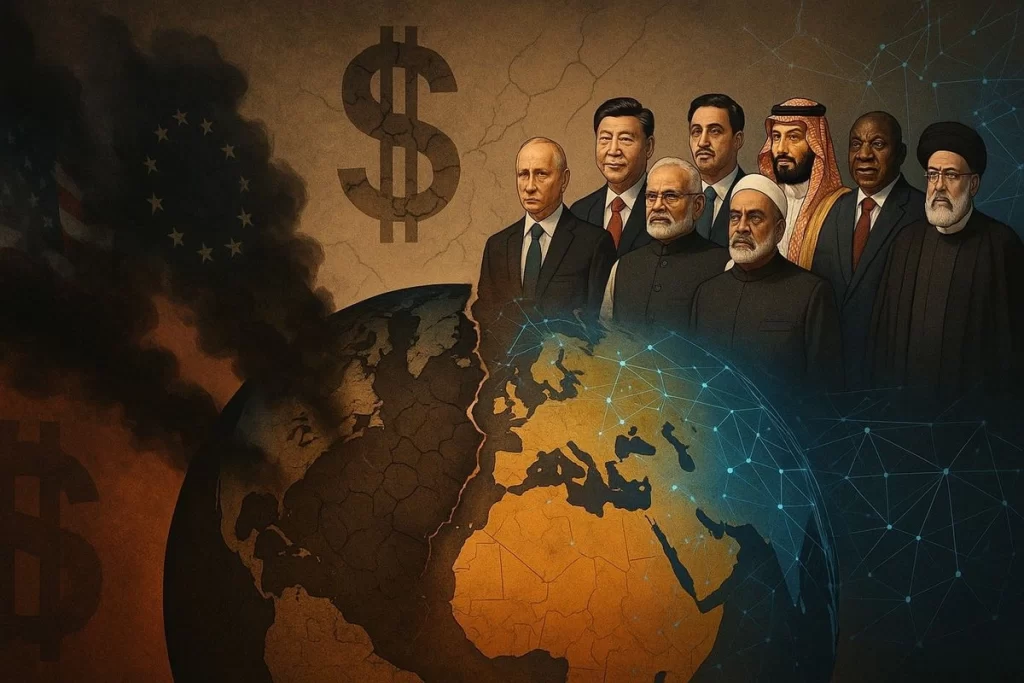
The World Economic Forum (WEF) has canceled its high-profile special conference in Saudi Arabia. This news is making waves in boardrooms from Riyadh to Davos. The event, which was planned for later this year, was expected to bring together world leaders, CEOs, and policymakers to talk about everything from AI ethics to commerce that lasts. The WEF said “geopolitical instability” was the main reason for the delay, but tensions were high in the Middle East. It’s a stark illustration that even the most exclusive gatherings are vulnerable to outside disruption.
This isn’t just a scheduling adjustment. The move underscores the fragility of international diplomacy, particularly in a region where old grudges and emerging conflicts are a daily reality. For India, this alteration raises complex issues. How will it impact our pursuits of energy security and technological partnerships in the Gulf? And what does it mean for the global economy when even ostensibly neutral entities like the WEF are sidelined?
The Announcement and What Happened Right After
Last week, word of the delay slowly spread through official WEF channels, but it immediately made headlines throughout the world. The forum’s statement was clear: “We have decided to put off the Special Meeting in Saudi Arabia because of the changing political circumstances in the Middle East.” There was no new date announced, so everyone who was there, from Fortune 500 executives to heads of state, was left in the dark.
Saudi Arabia was getting ready for a great event. Riyadh spent a lot of money on what was called a “Davos in the Desert,” which included side events on green hydrogen and digital economy. The kingdom’s Vision 2030 plan made this a key part of its efforts to improve its reputation as a global player in more than just oil. That’s on hold now, and the damage to the economy might be in the millions. Hotels, event planners, and businesses in the area were already counting on the surge.
The markets didn’t like it either. Shares in Saudi Aramco fell a little, and regional indexes felt the pain as oil prices fell. People are talking about a “WEF Saudi Arabia meeting delay” domino effect around the world. Could this mean that additional summits will be held online or in safer places like Singapore or the UAE?
The Geopolitical Storm’s Roots
Let’s get to the point: the Middle East is a very dangerous place right now. The WEF’s demand comes at a time when tensions are getting worse, making it dangerous for huge groups to meet.
The Israel-Hamas war is at the center of it all, and it has been going on for almost three years with no end in sight. Recent fighting between Hezbollah and Israel near the Lebanon border has raised worries of a larger confrontation. When you add Iran’s secret proxy network, which includes the Houthis in Yemen blocking shipping in the Red Sea and militia strikes in Iraq, you get a prescription for catastrophe. A drone attack on a Saudi oil plant last month, which was claimed by unknown groups, brought back memories of the Abqaiq attack in 2019.
The civil war in Yemen isn’t helping. Since late 2023, the Houthi rebels, who are supported by Tehran, have attacked more than 100 ships, forcing them to change course and raising shipping costs throughout the world by 30%. For Saudi Arabia, holding a WEF event means spreading out the red carpet while there is a chance of rocket fire. Intelligence assessments going around in diplomatic circles say that non-state actors are more likely to take advantage of the fog of war.
And it’s not just fighting. Saudi Arabia and Iran are fighting proxy wars, with both sides trying to gain power in Syria and other places. The Abraham Accords, which the U.S. helped to make happen, now seem precarious as discussions to normalize relations with Saudi Arabia stall over Gaza.
Key reasons for the WEF delay:
Attacks in the Red Sea: More than 50 in 2025 alone, which cost $1 trillion in trade delays.
Cyberattacks and assassinations are climbing 40% year over year in the Iran-Israel shadow war.
The failure of the Yemen truce makes the humanitarian crisis worse, with 18 million people facing hunger.
These threats are not just ideas. They’re the reason why private jets won’t be able to land in Riyadh for a while.
Saudi Arabia’s Plans to Host Have Been Stopped
The WEF summit was a coup for Saudi Crown Prince Mohammed bin Salman (MBS). It fit perfectly with Vision 2030, the kingdom’s trillion-dollar bet on tourism, technology, and other areas. Even if there were problems with human rights, major names showed up at events like the 2023 Future Investment Initiative.
But geopolitics keeps getting worse. Do you remember the LIV Golf outrage in 2022? Or the impact from Khashoggi? This delay is another blow to public relations. Riyadh had speakers ready to talk about “resilient supply chains” and “AI for the Global South,” which are both perfect for Saudi Arabia’s plans for the NEOM megacity. Now, those pitches are on hold.
It’s bad for the kingdom’s economy. Last year, the non-oil sectors increased by 4.3%, but things like these bring in money and power. Analysts think that direct spending will lose $200 million. MBS might move to lesser sites, but the loss of prestige is still there. What do you do when someone says they can’t come to your major event?
Global Leaders in a Rush: The Davos Agenda Will Be Affected
The WEF isn’t just any club; it’s where the “Davos Man” people make decisions. The 2026 calendar is already busy with a smaller Davos in January, which will be hard to do with Swiss snow and protesters.
Expect things to change. Big IT companies like Google and Microsoft, who are interested in Gulf AI hubs, are now rethinking their plans. Talks about the climate? Saudi’s position in COP pushes is less important. And what about trade? As U.S. elections get closer and EU protectionism grows, conferences like this are very important for negotiating deals.
India is very aware of this. New Delhi has strengthened its connections with Riyadh, with $50 billion in commerce between the two cities last year, mostly from oil and rupee agreements. PM Modi’s recent trip to the Gulf drew attention to partnerships in renewable energy. A postponed WEF Saudi Arabia meeting could slow down progress on those. Companies in India, like Reliance and Tata, were interested in taking part in green tech pitches. What now? They are unsure if the forum will go to Mumbai or Dubai.
It’s a wake-up call for the whole world. EU and ASEAN leaders are pushing for virtual alternatives, but nothing matches talking to people in person. Will this speed up the rise of a multipolar summit scene, with China’s Boao Forum gaining ground?
Voices from the Frontlines: Reactions are Coming In
Diplomats don’t say much, but leaks convey the story. A European envoy termed it “wise but disappointing,” while a Gulf analyst joked, “Security beats schmoozing every time.”
Business executives are practical. The CEO of BlackRock intimated that they would be flexible and praised the WEF for being careful. On the other hand, campaigners are happy—groups like Amnesty argue it brings attention to Saudi Arabia’s treatment of dissidents.
People in India are worried and see opportunities at the same time. Piyush Goyal, the Minister of Commerce, tweeted that Delhi is ready for other places. He remarked, “Geopolitical volatility tests resilience, but India’s forums are still open.” People in tech areas like Bengaluru are buzzing about organizing a mini-Davos.
One has to wonder: do these high-level meetings still matter in a world that is so unstable, or are they just vestiges of a time before chaos?
Wider Effects on Global Cooperation
When you look at the WEF delay from a distance, it shows deeper problems. The recovery after COVID was already hard enough. Now, problems in the Middle East are threatening energy costs. Brent crude is currently $85 a barrel, but it might go up if tensions rise. Central banks who are tired of inflation are watching closely.
Another victim is the supply chain. The India-Middle East-Europe Corridor (IMEC), which Modi came up with, is meant to get around problems like the Suez. But Houthi problems make it less likely. It’s a pain for Indian exporters of textiles, pharmaceuticals, and IT.
On the bright side, disasters lead to new ideas. Saudi Arabia is pushing for more drone defenses at home, while India is working to make more electronics in India. The main ideas of the WEF—trust and resilience—seem more important now. Klaus Schwab’s team said they will come up with a “reimagined” agenda, which may include both virtual and hybrid formats.
But balance is very important. The forum needs to talk on the criticism of elitism. With youth unemployment soaring in the Arab world (over 25% in Saudi Arabia), summits cannot overlook the challenges faced by ordinary people.
The World Economic Forum has put off its summit in Saudi Arabia because of rising instability in the Middle East.