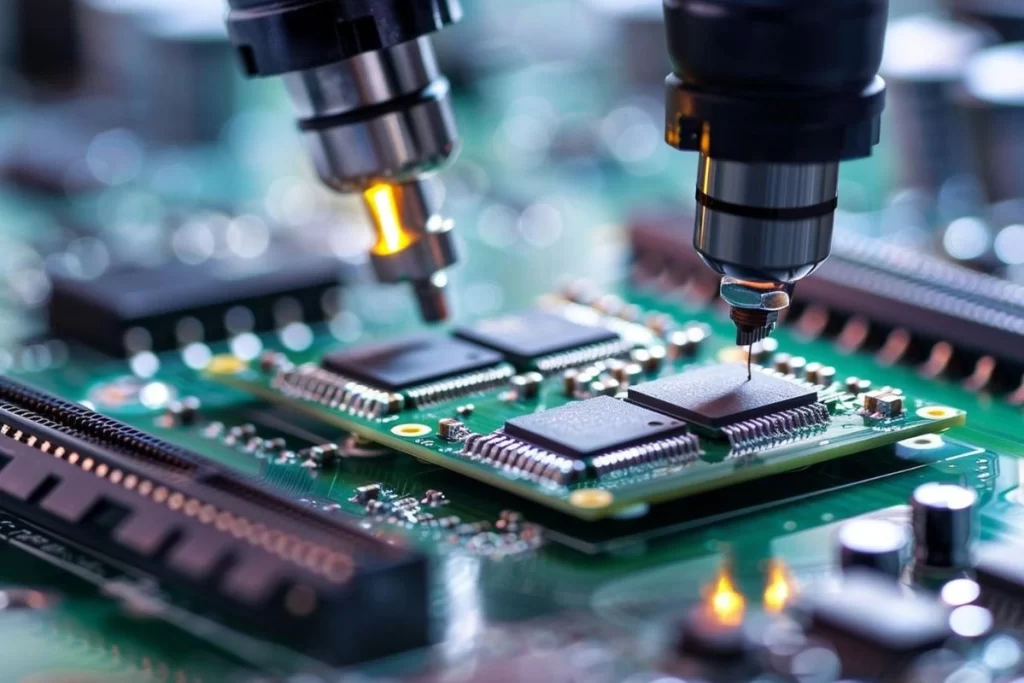
On the production floors, India’s long-awaited semiconductor dream is starting to come true. With new plants starting trial production, the country is slowly reducing its need on imports. This might change the tech landscape as global supply chains become less stable.
The Import Trap That Is Stopping India
Think about all the things that use technology: every smartphone in your pocket, every electric vehicle speeding through Mumbai, and even the servers that make UPI payments possible. A lot of them depend on chips that come from far away. India spends billions of dollars on semiconductors every year. In 2025 alone, it will spend about $17.78 billion on integrated circuits. That’s a huge amount, with 95% of needs coming from China, Taiwan, South Korea, and other places.
This dependency isn’t just about the numbers. It makes India weak to problems that happen around the world, such trade disputes or COVID shortages. China and Hong Kong sent over half of those imports in 2025. It’s no surprise that the government is fully behind the India Semiconductor Mission (ISM). It started in 2021 with ₹76,000 crore in incentives and has since grown into ISM 2.0, which was announced in the 2026-27 budget with another ₹1,000 crore boost. What is the goal? By 2029, you should only need to import 25% to 30% of what you need, and for domestic needs, you should be 70% to 75% self-sufficient.
From Policy Papers to Machines That Spin
This is different because it involves action, not simply words. By the beginning of 2026, ten projects costing ₹1.6 lakh crore were approved in six states: Gujarat, Assam, Uttar Pradesh, Odisha, Punjab, and Andhra Pradesh. These include everything from entire fabs to OSAT (Outsourced Semiconductor Assembly and Test) units and specialist companies.
The Sanand hub in Gujarat is very busy. In February 2026, Prime Minister Narendra Modi opened Micron Technology’s ATMP (Assembly, Testing, Marking, and Packaging) plant. This $2.75 billion factory makes memory chips for AI, data centers, and mobile devices, and it is already in full production. Days later, on March 31, Kaynes Semicon’s OSAT unit started up, making Intelligent Power Modules for cars and businesses with a goal of 6 million units a day.
This year, four more companies—Tata Electronics, CG Power, Kaynes, and Micron—are going to start commercial runs. Tata’s partnership with Taiwan’s PSMC in Dholera, Gujarat, would produce 50,000 wafers a month for electric vehicles and telecommunications. Tata’s Morigaon ATMP in Assam could make 48 million chips every day. Odisha has a Silicon Carbide facility for electric vehicles and defense, Punjab has a MOSFET for power tech, and Andhra has 3D Glass Packaging for AI radars.
In certain places, pilot lines are buzzing, which is a strong sign that India is moving from plans to production.
Big Bets on India by Key Players
A Quick Look at Major Projects
Micron Sanand (Gujarat): ATMP for memory; $2.75 billion investment; open since February 2026.
Kaynes Sanand (Gujarat): OSAT for power modules; ₹3,300 Cr; business starts in March 2026.
Tata-PSMC Dholera (Gujarat): A fab for 28nm chips that costs ₹91,000 Cr.
Tata Assam: ATMP; ₹27,000 Cr; pilot by the middle of 2026.
SiC in Odisha, MOSFET in Punjab, and SiP in Andhra have all been approved. The total is ₹4,594 Cr.
Big companies throughout the world see promise here. Micron’s facilities in the U.S. shows that supply networks are reliable. Tata and CG Power-Renesas contribute local strength, while Taiwan, Japan, and Korea look for allies. Why India? There is cheap talent available, PLI programs that cover up to 50% of capital expenditures, and the market is expected to grow from $38 billion in 2023 to $100–110 billion by 2030.
Why Chips Are Important for India’s Future
Semiconductors are not only devices; they are the brains of modern existence. They’re giving money to electric vehicles, 5G deployment, defense drones, and AI firms in India. Make in India stops without them. Electronics exports are on the rise, but chips constitute the most important part.
There are a lot of professions available in the area, and most of them require a lot of talent. These factories need chemists, engineers, and cleanrooms. ISM is also related to design. For example, Chips to Startup supplied tools to 67,000 students, 122 academic tape-outs, and 56 chips were made in Mohali. What about the DHRUV64 processor? That’s homegrown IP that cuts import strings.
It’s a good time for everyone. “Friendshoring” is popular because of tensions between the U.S. and China. India’s Pax Silica membership in February 2026 puts it in a good place for safe silicon flows. But can India grow as fast as Taiwan? That’s what people are talking about in boardrooms.
Obstacles on the Fab Floor
No one is drinking champagne yet. Building fabs is hard work. They need ultra-pure water (a fab uses 10 million liters a day), consistent power, and no dust. If yields don’t reach 90% or higher, losses will grow. India doesn’t have enough hardware, chemicals, or gases of its own—ISM 2.0 aims to fix that.
Big talent gap? Need thousands of people who know how to etch and lithograph. Geopolitics makes things riskier, and projects are often delayed because of land issues or permissions. Investments are quite expensive. Can they make money without getting a lot of government help?
Still, early triumphs like Micron and Kaynes show that execution is feasible. Four plants getting bigger in 2026? That’s what gives you momentum.
A Design Edge Becomes Real
India’s secret weapon is its design skills. There are already 20,000 engineers working on it, and startups have 16 tape-outs on 12nm nodes. Design Linked Incentives pays for IP, while the RISC-V push lowers license prices. ISM 2.0 adds to this with full-stack IP and research hubs.
Imagine native chips in missiles from DRDO or rockets from ISRO. Or Tata electric cars with power modules that you may pack at home. It’s not science fiction; tests are showing that it is.
Connections around the world, benefits at home
India is not going it alone. Working with PSMC and Renesas fills in gaps in knowledge. Joining groups like Pax Silica makes sure you get what you need. For techies in Pune or developers in Bengaluru, this means work closer to home and less brain drain.
In terms of the economy, a $100 billion market by 2030 would entail a boost to GDP and exports that are as big as Vietnam’s. SiC chips from Odisha’s factory could be needed just for EVs.
But what if a worldwide recession hurts demand? Or do Gujarat fabs shut down because of a lack of water? These risks are real, but the trial productions show that people are getting stronger.
Looking ahead to 2030 and beyond
The end of trial production is not the end; it’s the beginning. India’s semiconductor mission feels serious now that 10 projects have been approved and pilots are up and running. As local production increases, imports will go down and self-reliance will go up.
What about 3nm/2nm ambitions by 2035? It’s a big goal, but the 2026 ramps set the basis. This drive goes along with Digital India, which includes safe 5G, AI sovereignty, and green tech. There are still problems, from ecology to implementation. But as Sanand’s lines hum, it’s evident that India isn’t just buying chips anymore. It’s creating them. And that makes a big difference for a country that is getting stronger.
India’s semiconductor push is picking up speed: trial production marks the start of a new era of self-reliance.