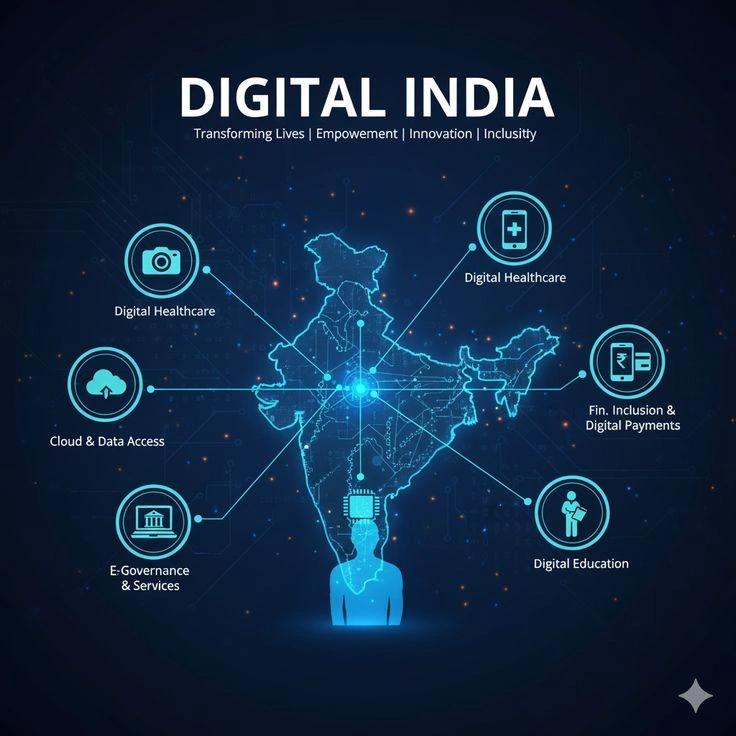
A lot of individuals in our country, where more than 65% of people still reside in rural areas, have always wanted to be able to utilize a bank. But things are changing fast. The Indian government is putting more money into its digital public infrastructure (DPI), which includes UPI, Aadhaar, and the India Stack. This will make it a great tool for coming up with new ideas in fintech and for offering financial services to people who live in remote areas. It’s not just talk about technology; farmers in Maharashtra’s sugarcane fields and weavers in Tamil Nadu’s villages may now acquire fast loans on their cell phones. These programs promise to bring cities and rural areas closer together, which will help the economy in ways that are both significant and life-changing. The number of persons using rural fintech has surged by 40% in only the last year.
The push comes at a very vital time. India’s DPI ecosystem is evolving, and it now has additional links for agriculture, micro-insurance, and credit scoring. It already conducts more than 15 billion UPI transactions every month, which makes it the best in the world. Officials said they want sending money to be as easy as sending a WhatsApp message. But how far will this go in countries where people don’t trust banks and the internet isn’t constantly available?
The Backbone: How DPI is Getting Used to Life in the Country
Digital public infrastructure isn’t just a concept in India; it’s the hidden pathways that keep business going every day. The India Stack is made up of layers of open technologies that are designed on Aadhaar’s biometric ID, e-KYC for quick checks, and UPI for simple payments. The Union Budget for 2026 talks about a number of recent developments, like bringing Account Aggregator frameworks and the Open Network for Digital Commerce (ONDC) to rural cooperatives.
One example is UPI. What started as a tool for city dwellers has quickly extended to rural areas. NPCI data shows that the number of UPI transactions in rural areas rose by 55% in 2025. This was made possible by affordable feature phones and soundbox technology. The government wants banks to build up 50,000 new micro-ATMs in panchayats by the middle of 2026. These ATMs would be able to accept UPI payments. This is due of PMJDY, or Pradhan Mantri Jan Dhan Yojana, which has opened more than 530 million accounts with no money in them since 2014. There are accounts in rural areas for 65% of them.
These improvements are making it easier for fintech to do well in rural India. DPI is teaming up with companies like Khatabook and OkCredit to help small businesses keep track of their loans online. A farmer in Bihar may now check on a crop loan in less than two minutes using Aadhaar-enabled payments. They don’t have to fill out any documents. It helps. Imagine how pleasant it would be to not have to walk 20 kilometers on bad roads to get to the nearest bank branch.
But there are still problems. Trai says that 45% of individuals in rural regions have internet connection, but not many of them know how to use it. What did the government do? By 2027, the Common Service Centers (CSCs) would get ₹10,000 crore to train 20 million individuals how to utilize fundamental fintech. There are currently 5.5 lakh of these facilities, where you may also pay your bills and file complaints.
From digital hubs to villages without banks, the goal is to include everyone in the economy.
The story of rural India is changing because of UPI-style financial inclusion. The PMJDY extension lets account holders who are directly linked to Aadhaar use RuPay cards with overdraft limits of up to ₹10,000. More over 300 million women have these accounts, and most of them live in rural areas. This is a peaceful movement for men’s and women’s rights.
Issues: 30% of adults in rural regions still don’t have a bank account, and 20% more people are getting scammed because they use shared gadgets.
These numbers show that things are getting better, but what will happen if there is a drought and the quick loan app stops working? To solve this, regulators are introducing AI-based fraud detection to UPI 2.0.
The Fintech Rural Renaissance: New Businesses and Success Stories
People in rural India are really happy about new ideas in fintech. For instance, Navi uses India Stack to provide out loans for tractors over UPI. The business was started by Sachin Bansal. The government gave out ₹5,000 crore in 2025 alone. Or Kaleera, which pays farmers every day with digital wallets and cuts out the middlemen in Punjab’s orchards.
The government needs to get involved. Last month, the Fintech Fund rose to ₹20,000 crore. It distributes money to 500 businesses that serve people in rural areas. This is in accordance with Startup India 2.0, which puts DPI-native startups first. Like the ones in Solapur, cooperatives in Maharashtra, which is near Pune, are trying out blockchain-based supply chain finance. This shows them how cotton goes from the field to the mill.
This is also happening to people all across the world. The World Bank argues that India’s DPI is an excellent example for the Global South. Kenya and Brazil are also working on building UPI clones. It’s creating jobs in the area: there are 1.5 million rural business correspondents (Bank Sakhis), and most of them are women who make ₹8,000 a month in commissions.
Lakshmi Sahoo, who is 42 years old, started a digital kirana business in Odisha using a JioPhone and PMJDY. “Money used to be king.” “I now pay my merchants overnight,” she claimed in a recent RBI article. You might imagine that every gaon could become a fintech hotspot after reading her story.
Policy Power Plays: What’s Next and More Money for the Budget
The 2026 Budget was quite helpful because it granted rural fintechs tax breaks and a ₹5 lakh crore fund through DPI to help important industries. The RBI’s sandbox extensions have made it possible for businesses to send money over the Aadhaar Payment Bridge. This is highly essential for the 10 million migrant workers who send money back home.
India Stack is letting a number of systems work together. ONDC now lets farmers in rural areas sell their goods to people in cities, and payments are made through UPI. You can feel comfortable with facial recognition testing in 10 states, just like you can with city applications.
Some people claim that data protection is dangerous (Aadhaar breaches made news last year) and that the way it was put in place in the Northeast highlands wasn’t fair. The DPDP Act specifies that users have to agree to let their data be used, and regulators utilize this to fight back. It’s still hard to establish a good mix between safety and fresh ideas, though.
India’s Digital Leap: The government is improving public infrastructure to kickstart a fintech boom in the rural heartlands.