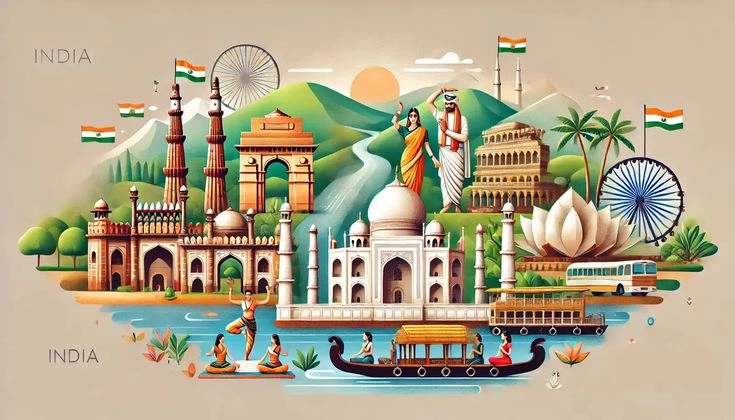
India’s tourism industry is approaching one of its best times in years, with a lot of people wanting to travel to both local and international places this summer. After years of fits and starts in the economy, the most recent data on air travel, hotel bookings, and vacations abroad show that Indians are traveling more, spending more, and making plans earlier than they used to. This is changing not only travel plans, but also the way airlines do business, how hotels invest, and the economies of places like Goa and Bali.
Why summer 2026 seems different
Summer has always been a popular time for travel in India, but the recent rise is substantiated by both facts and stories. In 2024, the number of people flying within India climbed by 6.12%, reaching 161.3 million. This was on top of an even bigger resurgence in 2023. Early signs for 2025 and FY2026 reveal that demand has remained strong, even though there are geopolitical concerns and economic problems. Domestic traffic is still rising, and the number of international passengers on Indian airlines is also slowly rising.
The same thing is happening with global indicators. According to the International Air Transport Association (IATA), the peak travel season for the northern summer of 2025 set a new record. Global demand was up 4.6% from the previous year, and planes were flying with a record load factor of about 86%. That implies that more planes are packed than ever before, and India is a big part of that.
This means for India:
More domestic flights between big cities and smaller cities.
Stronger overseas bookings, notably to Asia and the Middle East for short and medium-haul trips.
A clear rise in the number of people staying in hotels and homes in hill stations, seaside towns, and spiritual centers.
So what is causing this wave of travel, and how long will it last as summer goes on?
The engine for movement within the country
Domestic tourism is still the mainstay of India’s travel business at home. According to the Ministry of Tourism and independent travel sites, a lot of Indians are going to both classic summer vacations and new weekend getaways.
Some of the most popular places to visit in the US in recent years have been:
Goa is great for beaches, entertainment, and short trips.
Jaipur is a popular tourist destination because of its forts, palaces, and lively markets.
Shimla and Manali are great places to go to get away from the heat and into the mountains.
Varanasi is a great place for spiritual tourism and activities by the river.
Kochi and Alleppey are known for their backwaters, houseboats, and charm during the monsoon.
Hill stations like Lonavala in Maharashtra and Shillong in Meghalaya are also seeing a lot of summer visitors since the roads are easier to get to, the accommodations are better, and they are more visible on social media. Many families are choosing short flights and road trips over long-haul vacations. This is partly because they can work from anywhere while traveling and partly because it’s easier to plan trips within the country when money is tight.
The number of people flying within the country backs this up. India’s domestic air passenger traffic went up in 2024 and kept going up in 2025, but not as quickly as it did just after the outbreak. In 2025, IndiGo became the first airline to carry more than 100 million domestic passengers. This shows how strong local demand has grown.
This regular flow of visitors means more jobs in hotels, restaurants, transportation, and local activities for states that depend on tourism. It also pushes state governments to make key tourist areas safer, better connected, and have better infrastructure.
Traveling outside of India: India looks outward
Outbound travel is the fast-growing frontier, while domestic tourism is the engine. In 2024, India had the most people traveling abroad ever. Places like Abu Dhabi, Hanoi, and Bali were very popular with Indian tourists. More direct flights, lower prices, and faster immigration processes have made options that middle-class families used to think were exclusive for the rich or very wealthy more accessible.
According to industry research, India’s outbound tourism sector, which was worth about INR 2.14 trillion in 2023, might more than double to INR 5.01 trillion by 2030, with a projected compound annual growth rate of over 14%. By the end of the decade, more than 50 million people from India are expected to go abroad. This will make India one of the most important outbound markets in the world.
For the summer of 2020 and beyond, travelers are leaning toward:
Abu Dhabi, Dubai, Singapore, and Kuala Lumpur are short-haul hubs.
Tokyo, Osaka, Bali, and some sections of Vietnam are cities in the Asia-Pacific region that are full with experiences.
Places that are easy to get a visa for and have a lot of nature, food, and culture.
Indians are also looking for more than just standard tourism experiences. Eating, doing things in nature, and taking care of your health have become distinct priority. This shows a shift from tourism that is only about transactions to more immersive vacation.
If you look through Instagram or short video sites today, you can’t miss reels from cafes in Bali, streets in Japan, and night markets in Vietnam, mostly narrated by Indian travelers. That kind of visual storytelling is both a sign of and a cause of this surge in travel abroad.
Tourism numbers: a quick look at the trend
The main tourism indicators for India are going up, even if there is a lot of talk about them on social media. Recent forecasts say that India will have over 19.2 million international tourists in 2025, which is more than the 17.7 million that came in 2024. That means that more people are coming in, around 8.6% more.
Tourism revenue is also expected to go up, going from around $39.9 billion in 2024 to $43.7 billion in 2025, a rise of about 9.5%. These are just guesses, but they fit with larger patterns in how many people want to fly and how much they spend on travel.
To make some of this easier to understand:
In 2024, there will be roughly 161.3 million people flying within the US.
In 2025, over 19.2 million international tourists are predicted to come to India.
India’s outbound tourism business would be worth roughly INR 2.14 trillion in 2023, and it is predicted to increase quickly.
These numbers show that India is a huge source market, an important internal travel economy, and a major destination for people coming from other countries.
What is causing the summer rush?
A number of structural and behavioral reasons are driving up travel demand, especially in the summer.
First, there is the plain fact that people want things. Even though limitations from the pandemic ended a while ago, many families are only now ready to take major journeys, both financially and emotionally. Rising wages in some fields, more savings among city workers, and a cultural change toward “experiences over stuff” are all factors.
Second, there are more ways to connect. Airlines are introducing new routes and more flights, not just between big cities but also between smaller cities and foreign hubs. This makes travel easier and makes it possible for more middle-class people to go on long weekends abroad.
Third, internet platforms have made it easier to plan trips and made the process more competitive. Travelers can compare, customize, and book with a lot more confidence now than they could ten years ago. They can do things like dynamic airfare pricing, pay-later alternatives, homestay platforms, and online travel aggregators.
Preferences are changing too:
Families are combining work-from-home agreements with fun activities.
Younger people are arranging vacations by themselves or with a small group to concerts, festivals, hikes, or food trails.
Urban professionals are becoming more interested in wellness retreats, yoga retreats, and wilderness escapes.
In that manner, summer travel is no longer only a method to get away from the heat; it’s also a way to reset, explore, and plan your life.
Points of pressure: capacity, costs, and crowding
Crowding is a common problem at the destination level. Popular beaches and hill stations have had trouble with:
Hotels that are full and prices that go up at the last minute.
Traffic jams, especially on small mountain roads. Stress on the local infrastructure, water supply, and garbage collection.
Tourism experts say that India’s expected 19.2 million international arrivals and growing domestic flows are good, but they also need better planning, smarter rules, and money spent on practices that are good for the environment. For instance, several governments are currently looking into limiting the number of visitors on certain hiking routes, adding destination management fees, or encouraging tourism during the off-season to ease the load.
Have you noticed how many more people are going to your favorite “secret” area these days? There is now hard evidence to back up that feeling.
Summer Surge: How India’s travel boom is creating a new story of tourism growth