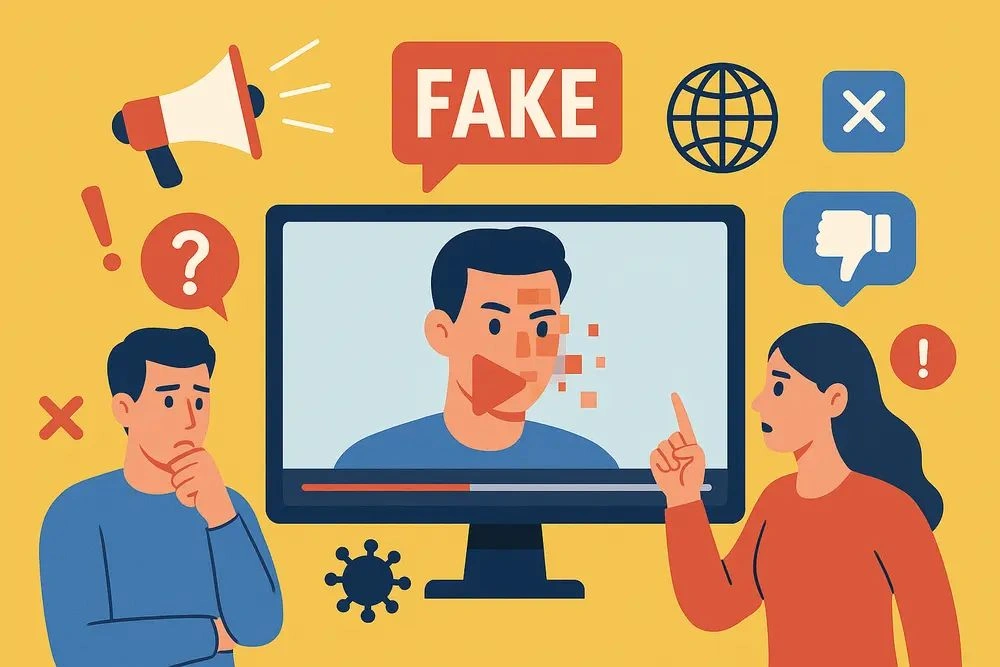
There are always new viral rumors going around, AI is becoming better, and political tensions are escalating. Because of this, big social media sites have moved on to a new stage: content monitoring that is tougher, faster, and far more apparent. The question is no more whether to censor, but how much to do so without stopping free expression. This is true for sites like Meta, X, YouTube, and Indian sites like ShareChat and Koo. People, governments, and regulators all want false information, deepfakes, and hate campaigns to be dealt with right away, not after they have already done harm.
These new rules are more than simply a simple adjustment to the terms of service. It transforms how billions of people read about news, politics, health, and even entertainment every day. The changes are particularly clear in big democracies like India, the European Union, and the United States, where upcoming elections and social tensions have made the internet a high-stakes battleground.
Why platforms are suddenly more strict
For a long time, social networks stated they were not publishers but just neutral pipes. Now, it’s a lot difficult to make that case.
Several things have come together:
Studies show that fake news may spread more faster on social media than real news, and it often reaches more people in less time.
Deepfake technology and AI-generated content can now construct fake movies, voices, and pictures that look real. These can fool voters, ruin reputations, or start arguments.
About four out of five people now believe that platforms should actively work to reduce incorrect information rather than just maintaining neutral, according to surveys.
On the other side, regulators are no longer waiting for platforms to fix their problems. The Digital Services Act (DSA) in Europe specifies that “very significant online platforms” must make rigorous rules to discover and stop unlawful content and systemic risks like false information and harm to children. Changes to India’s IT Rules have made it difficult for middlemen to host or share fake news, impersonation, and deepfakes. This has made businesses perform a lot more active moderation.
Changes in technology, legal pressure, and public uproar have all made it so that “doing nothing” is no longer an option. Now the real argument is about how much is too much.
India has new rules that make it easier to take down bogus videos and deepfakes.
India is one of the locations with the strictest content rules, in part because it has a lot of users and the internet is politically unstable there. The content Technology (Intermediary Guidelines and Digital Media Ethics Code) guidelines, 2021, already indicated that platforms couldn’t host or send out content that was against the guidelines, like false information and misinformation.
Since then, the screws have gotten tighter.
Rule 3(1)(d) got stronger in 2025, and it became clear that intermediaries need to do something about content that has incorrect information, impersonation, and deepfakes.
A huge change in February 2026 made India’s rules for AI-generated content the harshest in the world. It made moderation more proactive and algorithmic, and it cut down on the time it takes to take down content.
With the changes that will place in 2026, platforms need to:
Respond to AI-generated content that is known to be inaccurate or harmful within a very short amount of time, usually only a few hours.
Improve technical traceability so that authorities can more easily track down the source of bad information or how it spread.
Put labels on or limit deepfake-style content and other AI-generated media that could fool people.
This implies that Indian users may soon be able to report or remove down posts, videos, or reels that look like politicians making inflammatory statements or celebrities promoting products more quickly if they prove out to be fake. For platforms, this means employing more compliance teams, buying AI detection tools, and maybe getting in trouble if they don’t act swiftly.
The EU’s DSA: a lot of problems and tough audits
India is working on the problem by focusing on swift takedowns and being able to trace things. The Digital Services Act is a set of rules that the European Union is using to do the same thing. The DSA will fully apply to big services in early 2024. It sets out specific rules for “Very Large Online Platforms,” which are search engines that get more than 45 million users in the EU every month. The DSA says that these big platforms must:
The European Commission can make laws and do audits that are fair. The DSA doesn’t want platforms to look at all content all the time. Instead, it wants businesses to have good ways to deal with risk and avoid hurting people on a regular basis. Users can now challenge moderation decisions in new ways, such as mediation outside of court and judicial review. The DSA is expensive and hard for big platforms, but they can’t ignore it. If you don’t follow the guidelines, you could face large fines or, in the worst cases, lose your service. It sets a standard for the internet around the world: when a platform utilizes DSA-level tools for the EU, it often uses elements of those same tools in other areas.
Meta’s plan for the 2026 election and beyond
During election cycles, it’s easy to see how incorrect information may hurt people. As important elections get closer in a number of nations, platforms are putting out fresh proposals that are often very controversial.
In April 2026, Meta showed out an AI-powered plan to keep the US midterm elections safe. This blueprint shows us where content moderation is headed. The company’s plan includes:
Stopping new political advertising from appearing in the week before Election Day to stop campaigns from spreading incorrect information at the last minute.
Using AI identification technologies and standards like C2PA to automatically add “AI info” tags to content that has been modified digitally or generated by AI.
Adding more tools like Community Notes that help people work together to give context or fix misleading posts made by politicians and other famous people.
This mix of AI, crowdsourcing, and tougher ad requirements is an effort to strike a balance between free expression and the integrity of the site. Meta is shifting some of the work of checking facts from its own employees to users and automated systems. This may make moderation more fair or just give everyone a chance to do it without checking to see if it’s right.
If users become co-moderators, will it make people trust each other more, or will it merely create the divide between groups wider when they flag each other’s content? The answer will likely impact how people vote online, not just in the US but also in other democracies that watch and copy each other’s rules.
What users actually want
User opinions aren’t as bad as they seem on timelines, even when there are loud and angry discussions. Researchers in business and technology have shown that most people do want platforms to stop spreading misleading information, even though they may not all agree on what “false information” implies.
An MIT Sloan research that looked at surveys and studies of how people act online found that roughly 80% of people who answered said that platforms should do everything they can to halt the spread of false or misleading information. The same work also made it evident that:
Fact-checking can work, especially if it’s done swiftly and clearly.
People want to know exactly why a post was taken down or noted.
Even if they mean well, broad bans or vague takedowns usually make people less trusting.
But what people want isn’t always the same. Many individuals want hate speech and hazardous conspiracy theories to be taken down right away, but they also worry about going too far, being politically biased, or stifling minority perspectives.
You can see that friction in almost every important policy topic. Some people worry that stricter moderation could be unjust to some political viewpoints, independent journalists, or groups who are already on the outside and whose communication is more likely to be highlighted. Supporters believe that not becoming involved has already caused real harm in the globe, like violence, incorrect health information, and coordinated efforts to disrupt how democracy works.
The issue with deepfakes
Most people agree that deepfakes are terrifying. AI-generated visuals and movies are now cheap, rapid, and good enough to fool someone who is looking at them quickly.
The new regulations in India that will go into effect in 2026 will explicitly target AI-generated content and deepfakes. They need middlemen to act faster and take on more work. Global platforms are also using technological labels, watermarks, and standards of authenticity to assist people tell the difference between real and fake.
But in actual life, the deepfake problem is hard to deal with:
Detection tools are always a step behind the latest generative models.
Not all fake news is negative; satire, amusement, and creative experimentation all use similar methods.
Bad actors can quickly modify the content they submit or move it between platforms and encrypted channels.
This makes it a competition between regulators and platforms that they can handle but never really win. A legal study of India’s new rules noted that the shift toward proactive algorithmic regulation is essential, but it doesn’t immediately solve the challenges of verification and purpose online.
Finding a balance between safety and free speech
There is a core philosophical question behind all the legalese and technical systems: how do you balance the right to speak your mind with the right to be safe?
Researchers examining misleading online material assert that stringent moderation policies typically arise when falsehoods are directly associated with significant issues, such as violence, public health threats, or threats to democratic institutions. That helps explain why the rules became harsher during important elections, during an epidemic, and after violence or threats against a group.
When building their systems, frameworks like the EU’s DSA encourage platforms to think about how they could affect public safety, civic discourse, elections, and even mental health. India’s rule against hosting blatantly false content and deepfakes is part of a wider job to keep users and public order safe.
At the same time, neither region wants to see everything users post all the time, all the time. Content moderation usually depends on a number of things:
Reports from users and people who are trusted to flag things.
Systems that automatically search for and rank things.
Groups of people who look over things.
Ways to ask for help and settle disagreements.
Will this make people who care about free speech and safety happy? Probably not. But platforms and regulators are trying out the new compromise in real time.
With more people worried about fake news, big social media platforms are making their restrictions regarding what can be posted harsher.