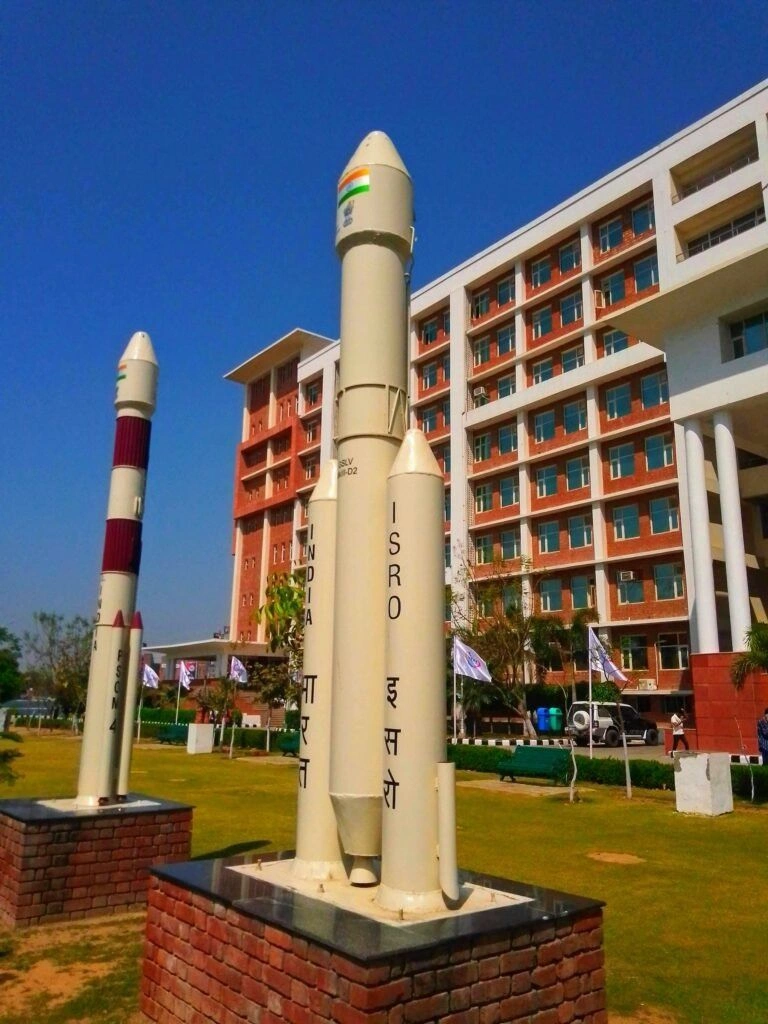
Testing Phase Marks New Milestone for ISRO’s Reusable Launch Vehicle
India’s space program gets a big boost. Indian Space Research Organisation (ISRO) announced plans for next stage testing of its Reusable Launch Vehicle Technology Demonstrator (RLV-TD) – a game changer that aims at cutting the cost of space missions – on 17 April 2026. This is not simply a tech announcement. It’s a significant step to position India as a major player in the global space economy, where the launches that cost hundreds of millions could soon be a fraction. With commercial players like Skyroot and Agnikul already buzzing, ISRO’s effort for reusability seems appropriate as countries vie to dominate low-Earth orbit and beyond.
Why does this matter today? India’s space sector is booming. It was $8.4 billion last year and that figure is expected to grow to $44 billion by 2033 propelled by satellites, tourism and defense needs. Growth that is inexpensive is promised by reusable tech. Now imagine if ISRO could land rockets like aeroplanes instead of throwing them away after one usage, saving up to 90% in costs. For a country that has mastered low-cost marvels like the Mangalyaan Mars orbiter on a tight budget, this is the next natural move.
From First Tests to Grand Designs: The Road to Reusability
In 2016, the ISRO reusable launch vehicle adventure began in earnest with its first hypersonic flight experiment (HEX) called the RLV-TD. The uncrewed 93-second glide evaluated essential aerodynamics, showing the 6.5-meter winged prototype could survive reentry speeds of more than Mach 5. Fast forward to 2023, when the landing experiments (LEX) took things one step further – replacing the sea-based splashdowns with runway precision on a concrete strip in Chitradurga, Karnataka. Those experiments mastered autonomous navigation and smooth landings, even in crosswinds.
Now, ISRO has announced full orbital return flight as aim for “next-stage testing”. Officials at Bengaluru headquarters said that they would add a push propulsion module to enable powered landings, similar to the system used on SpaceX’s Falcon 9 rockets but designed for India’s tropical launch circumstances from Sriharikota. “It is a very important integration phase,” said project director S. Unnikrishnan, “which integrates the learning from over 20 RLV tests done earlier.
What makes this different? India’s take on it is built from the ground up on affordability. Unlike behemoths like as Starship, the RLV-TD is scaled down — initially payloads of roughly 300 kg to low earth orbit — appropriate for the smallsat boom. Indian entrepreneurs alone launched 50+ satellites last year, many of which were launched using ISRO’s PSLV. Reusability might reduce per-kg costs from $5,000 to under $500, making space shots affordable for everyone from farmers wanting crop-monitoring satellites to Bollywood looking to make space-shot flicks.
Tech Breakdown: ISRO’s RLV and its Reusability
The reusable launch vehicle technology is based on a few smart technical choices. The carbon-carbon nose cap can take 1,600 C re-entry heat, and silicon-carbide panels protect the belly like a space shuttle’s. Autonomous systems manage everything from de-orbit burns to GPS guided descents, with no heroic ground personnel needed.
Key features at play:
Hypersonic Glide: Tested at 6km altitude, simulates orbital re-entry, but without full orbital insert.
Runway Landing: LEX demos hit 70 meters accuracy; orbital tests targeting 10 meters.
Propulsion Tweaks: New cryogenic motors for the booster stage, reusable for up to 10 flights.
These are not pipe dream concepts. ISRO has done winged re-entry before, but scaling it to orbit requires dealing with some tough elements like stage separation and refurbishing. First LEX data showed 95% tile integrity post-flight – remarkable for a first generation device.
This places India in elite company globally. SpaceX has flown boosters more than 20 times, Blue Origin’s New Shepard is acing suborbital jumps, and China’s Long March 8R is aiming for reusability by 2027. What is ISRO’s edge? Cost. GSLV Mk3 costs $60 million to launch; reusability could slash that. In India, where 70% of space spending is on launches, it is a lifeline.
India’s Space Boom: How Low-Cost Access Changes the Game
Zoom out and this suits India’s sky-high space goals. The 2023 Indian Space Policy approved private launches, paving the way for companies like Pixxel (Earth observation) and Dhruva (propulsion). ISRO is not in race, it is in race. The RLV innovation will be trickled down through Technology Transfer Units and startups will build on ISRO’s IP.
Just look at the numbers. India’s satellite constellation expanded 25% in 2025, helping everything from emergency notifications during the Kerala floods to stock trading over low-latency lines. Reusable launch vehicle testing is speeding this up. Our local GPS competitor, NavIC, needs regular updates; inexpensive rides are more resilient.
Real-world wins are happening now. ISRO sats helped evacuate people during last year’s Cyclone Remal. Inexpensive reusability? That means more dense networks for precision farming in Punjab or traffic cams in Mumbai. And defense? Agni series missiles share a DNA with RLV guidance: low-cost space = agile hypersonic responses.
Ever wondered if reusable rockets can make space tourism a middle-class dream in India? At $450,000 a ticket, ISRO’s model may bring that down to lakhs, enticing thrill-seekers from Goa’s beaches for sub-orbital joyrides.
Next Up: Heat, Hurdles, and the Human Element
But hardly a smooth ride. Risk of structural failure in orbital tests. Re-entry creates plasma sheathes, blacking out comms for minutes. ISRO’s answer: Redundant beacons and AI-piloted corrections, battle-tested in 2024’s RLVLEX-2.
Another problem is funding. ISRO’s budget is about ₹ 13,000 crore ($1.5 billion) compared to NASA’s $25 billion. But the efficiency is where it really shines: Chandrayaan-3 landed on the moon for $75 million. Critics dispute timescales – complete ops by 2028? — but ISRO’s record (100+ launches, zero significant flops) silences naysayers.
Geopolitics is also looming. US-India iCET pacts might impact NASA cooperation, such as Artemis lunar logistics, for RLV tech China’s Tiangong station, reusable tests put pressure India can’t be left behind
Environmentally it reduces space trash – India has around 50 dead sats orbiting. Fewer trash implies safer skies for the expected 5,000+ Starlink rivals.
Global Ripple: India’s Play in the $1 Trillion Space Economy
This is not only an Indian story. “McKinsey: Global space economy to reach $1 trillion by 2040” Progress in reusable launch vehicles brings down the hurdles, and encourages moon mining, orbiting factories and Mars hopping. India’s cheap space access can export tech to ASEAN neighbours, like its vaccine diplomacy.
Engineers are already building prototypes of RLV-derived drones in tech hotspots in Pune or Hyderabad. Bollywood’s space films like Mission Mangal inspired a generation; true reusability might ignite the next Kalpana Chawla.
ISRO’s Reusable Launch Vehicle: Another Milestone for India’s Low-Cost Space Dreams