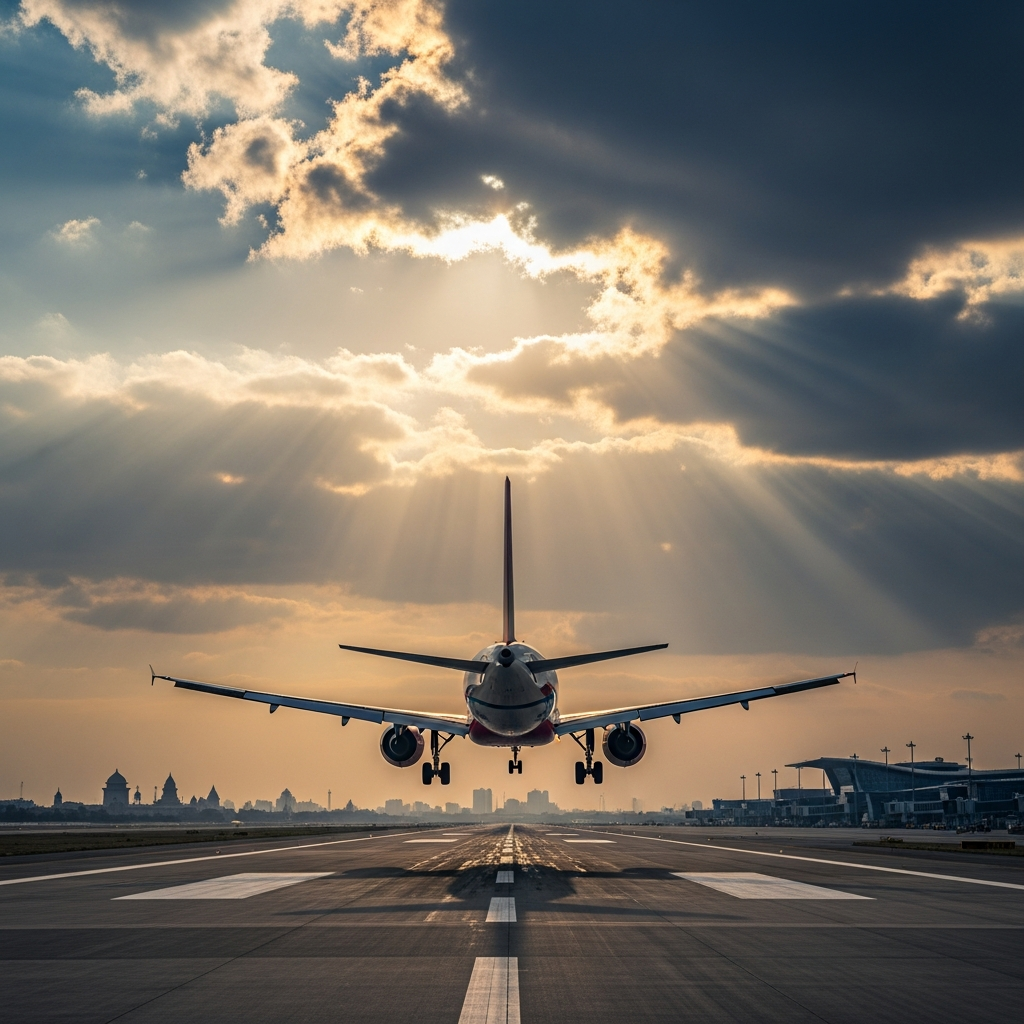
There’s something quietly meaningful about a flight path. It’s not just a route on a map — it’s a sign. A declaration, of sorts, that two countries are ready to look each other in the eye again. After nearly five years of suspended air connectivity, direct flights between India and China have resumed, and the aviation world is watching closely.
For frequent flyers, business travelers, and the thousands of Indian students who once studied in China, this news lands like a long-overdue exhale. The suspension — which began during the COVID-19 pandemic in early 2020 and was further complicated by the Galwan Valley standoff — had effectively cut off one of Asia’s most economically significant bilateral corridors. Now the planes are back up in the air, and the question everyone is asking is: what does this mean beyond the obvious?
A Diplomatic Signal on a Boarding Pass
Let me be clear, resumed flights do not undo years of tension. The India-China relationship has been battered by border disputes, military standoffs and deep-rooted strategic mistrust. But diplomacy rarely announces itself with a press conference and a handshake. More often, it moves quietly through restored trade routes, renewed visa processes, and yes, direct flights.
Analysts across both countries have described the resumption as a “confidence-building measure” — careful language that essentially means: we’re not fully there yet, but we’re moving. The bilateral ties between India and China, which account for a combined population of nearly three billion people and two of the world’s fastest-growing economies, have always been too economically intertwined to stay frozen indefinitely.
For India, re-engaging with China isn’t a concession. It’s pragmatism. Trade between the two nations has continued — even surged — throughout the diplomatic freeze, with bilateral trade touching over $130 billion in recent years. Having direct flights simply makes doing that business easier, faster, and cheaper.
What Travelers and Businesses Actually Gain
During the suspension, travelers between India and China were forced to route through third countries — Singapore, Bangkok, Dubai, Kuala Lumpur. What was once a three-hour direct flight became an eight-to-twelve-hour ordeal with layovers, added costs, and exhausted passengers. For business delegations, that friction was a quiet deterrent to engagement.
With direct connectivity restored, the immediate beneficiaries are obvious. Indian pharmaceutical companies with supply chain ties to Chinese manufacturers, textile traders, electronics importers, and the booming logistics sector — all stand to gain from reduced travel time and lower operational costs. Aviation itself, of course, is a direct winner. Indian carriers like Air India and IndiGo, alongside Chinese airlines, are expected to ramp up frequency as demand builds.
Tourism, too, is set for a cautious revival. The Chinese tourists were once a big section of the Indian inbound travel market, and they were really drawn to places like Rajasthan, Goa, and Himachal Pradesh. Now, with better access to Indian places from Shanghai, Beijing and Chengdu, Indian travellers have a better reason to book that trip they had put off.
The Bigger Picture: Asia’s Bilateral Relationships Are Evolving The India-China relationship is at the heart of broader Asian geopolitics. Both are members of the BRICS groupings, both are affected by global supply chain realignments in a post-pandemic world, and both are trying to navigate an international environment in which the West is actively courting India as a strategic alternative to China.
It’s a complicated dance — and the resumption of direct flights doesn’t resolve the underlying complexity. Border issues remain unresolved. Concerns around Chinese investment in Indian tech remain legislated against. And public sentiment in both countries carries residual wariness.
But here’s the thing about bilateral relations between large nations: they rarely move in straight lines. The India-China story has always been defined by simultaneous competition and cooperation — what scholars sometimes call “frenemies.” The flight resumption fits neatly into that framework. Two countries saying, in effect: we can disagree on the mountain passes and still agree on the departure gates.
Manufacturing and Trade: The Quiet Economic Logic
Perhaps the most underappreciated dimension of this development is what it means for manufacturing and trade corridors. India is aggressively positioning itself as an alternative manufacturing hub, drawing foreign investment in semiconductors, electronics, and clean energy. Much of that supply chain — at least in transition — still depends on Chinese components and raw materials.
Smoother air connectivity supports faster movement of samples, prototypes, technical teams, and decision-makers. That’s not a minor detail — it’s the connective tissue of modern global commerce.
India’s trade boost from normalized engagement with China won’t be instant. But the foundation is being relaid, quietly and deliberately.
What Comes Next
The resumption of India-China direct flights is a beginning, not a resolution. Watch for visa processing timelines to ease, for student exchange programs to be quietly revived, and for business delegations to start making calls they’d put off for years.
The skies between Delhi and Beijing are open again. Where the relationship goes from here depends, as always, on what happens on the ground — and whether both sides choose to keep building, carefully and without illusion, on whatever common ground remains.
Sometimes, the most diplomatic thing a country can do is simply fly.
Skies Open Once More: India and China Resume Direct Flights After Years of Silence.