Tesla is dialing up its India strategy, quietly hiring dozens of roles across engineering, sales, and operations while deepening policy discussions with New Delhi. What once looked like a slow, on‑and‑off flirtation with the world’s third‑largest auto market is now shaping into a more serious, structured rollout—showrooms, service centres, charging, and a growing talent base, even as questions hover over local manufacturing and long‑term risk.
How far is this really going to go beyond a premium‑import brand, and what does it mean for India’s homegrown EV players and charging infrastructure?
From showrooms to hiring surge
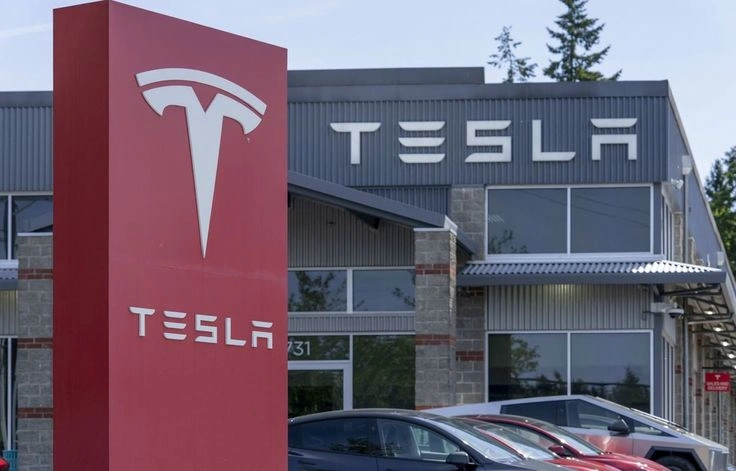
Tesla officially entered India in 2025 with its first “Experience Centre” in Mumbai’s Maker Maxity, quietly opening the door for the Model Y in rear‑wheel‑drive and long‑range variants imported from Shanghai. That move was more than just a splashy showroom; it was the first concrete sign that Tesla was ready to treat India as a serious, albeit niche, market after nine years of tease, delay, and tariff wrangling.
Since then, hiring has become the clearest signal of intent. In the first quarter of 2025, Tesla posted about a dozen jobs in Mumbai and Delhi, including service technicians, sales advisors, and backend operations, and by late 2025, the company had at least 34 live openings in eight cities, hiring for departments such as supply chain, AI and engineering, charging, and sales. By 2026, there were hundreds of Tesla-branded jobs related to India on job sites and LinkedIn, including some niche positions like a vehicle operator to test Autopilot features in Mumbai.
This suggests Tesla isn’t just importing cars but building a local operating backbone: teams that can manage customer onboarding, service, logistics, and even software features for Indian roads. For a company that has long relied on vertical‑integrated control over its customer experience, that kind of hiring wave is rarely symbolic.
Policy tango: tariffs, EV rules, and “local yet different”
Under the surface of job ads and showroom openings, Tesla has been woven into a larger policy drama. India’s original 100% import duty on fully built EVs made early entry almost unthinkable, prompting Elon Musk to publicly call for temporary relief on import penalties until a local factory could be set up. Over time, New Delhi tweaked the rules: it lowered import taxes on certain EVs for companies willing to commit substantial investments and, eventually, to build local manufacturing capacity.
The 2024–25 EV policy framework effectively opened a backdoor for Tesla. It allowed reduced duties in exchange for a minimum investment of around $500 million and a commitment to establish domestic manufacturing within a fixed window. At the same time, whispers in policy circles suggested that the government was considering extra demand‑generation measures—like bumping up required sales‑turnover targets—specifically to keep Tesla and similar global players engaged.
Yet reality has been more cautious than the hype. Union ministers have openly stated that, as of mid‑2025, Tesla showed no formal intent to set up a car‑manufacturing plant in India, focusing instead on retail and showrooms. Some reports even frame Tesla as a “retail‑only” presence for now, while other global automakers line up for local production under the new EV‑car manufacturing scheme.
So, is Tesla hedging its bets? Or is it simply waiting for the right mix of policy comfort, infrastructure, and consumer readiness before committing billions to a factory?
What’s on the ground: Model Y first, then more?
For Indian buyers, Tesla’s India story so far is written in one main chapter: the Model Y. The SUV arrived with two variants imported from Shanghai, backed by a charging roadmap that includes Superchargers and destination chargers in Mumbai and Delhi. Some reports indicate four charging stations each in Mumbai and Delhi at the outset, with expansion planned to other metros and even tier‑two cities.
Order‑book data, though not officially disclosed, paints a cautiously optimistic picture. By early 2026, sources close to Tesla’s India operations suggested that confirmed bookings had crossed 1,200 units, with expectations of around 1,500 by the end of the financial year. Given the high price tag, this is obviously a small‑volume, premium segment, but it’s not nothing.
Beyond the Model Y, Tesla is signalling a broader product pipeline. One insider familiar with the India roadmap said that the Model 3 would follow once the Model Y rollout stabilised, with Model S and Model X slotted for later phases. Another thread is the expansion of service centres: Tesla has announced plans to grow its service and body‑shop network across Bengaluru, Hyderabad, Chennai, and Ahmedabad over the coming quarters.
In other words, Tesla is treating India less like a one‑off experiment and more like a multi‑tiered market, starting with a few hot metros, then slowly stringing in more service touchpoints and more models.
Strategic placement: Maharashtra, Gujarat, Tamil Nadu
Behind the scenes, Tesla has also been scouting locations for a potential EV factory, according to reports from mid‑2024. A Financial Times report noted that a Tesla team could explore a plant worth an estimated $2–3 billion, with Maharashtra, Gujarat, and Tamil Nadu emerging as likely contenders thanks to their existing automotive clusters and ports.
That three‑state corridor is no accident. Maharashtra already hosts Mumbai’s financial muscle and parts of the Pune–Nashik auto belt; Gujarat has a strong industrial base and access to ports; Tamil Nadu is a traditional hub for global OEMs. If Tesla ever does commit to manufacturing, this would be a natural first‑cut shortlist.
But here’s the rub: at the same time that these locations are being evaluated, Indian officials say Tesla has not formally applied for the government’s EV‑car manufacturing scheme and has stayed out of later rounds of stakeholder talks. That leaves the project in a grey zone—seriously explored, but not yet locked in.
What does this mean for investors and policymakers? One reading is that Tesla wants to test brand acceptance, charging readiness, and service feasibility before signing a multi‑billion‑dollar cheque. Another is that Tesla may simply never fully localise production in India, preferring a hybrid model of low‑volume imports and selective partnerships.
Talent hunt and India’s EV ecosystem
Tesla’s growing India‑focused hiring is not just about running showrooms; it is quietly plugging into India’s deep tech and engineering talent pool. Among the listed roles are engineers, AI specialists, supply‑chain managers, and software developers—many based in cities like Mumbai, Pune, and Delhi.
This is particularly notable in Pune, which has long been an auto‑engineering and R&D hub. A vehicle‑operator role in Mumbai that involves work on Autopilot‑related development hints at Tesla’s interest in fine‑tuning its driver‑assistance systems for Indian‑style traffic conditions. Such roles sit at the intersection of global software and local road‑specific data, offering Indian engineers a chance to touch real‑world AI‑driven mobility without being consigned to routine support work.
At the same time, Tesla’s India push is happening as India’s overall EV market, though still modest compared with China, is growing steadily. The country recorded around 100,000 electric car sales in the most recent year cited, versus China’s 11 million. That gap is both a warning and an opportunity: Tesla can enter as a premium, aspirational brand, but it will have to compete with rising domestic players such as Tata Motors, Mahindra, and emerging startups that are designing cars specifically for Indian roads and budgets.
Could Tesla’s arrival push these players to accelerate their own tech, software, and charging roadmaps? Or will it simply create a separate, high‑end lane that doesn’t touch the mass‑market dream?
Charging, software, and the “India‑ready” test
Tesla’s advantage in India is not just its brand; it’s its software‑centric model and charging ecosystem. The company has already tied its entry to a network of Superchargers and destination chargers in Mumbai and Delhi, with plans to expand. In a country where charging infrastructure is still patchy, even a relatively small but reliable Tesla network can be a differentiator.
Software‑driven features such as over‑the‑air updates, energy‑use optimisation, and driver‑assistance tools give Tesla cars a “future‑proof” feel that many Indian buyers find attractive. But Indian roads will challenge the best systems. Dense traffic, mixed‑mode lanes, and unpredictable behaviour can stretch any ADAS stack. That’s why roles like the Autopilot‑related vehicle operator in Mumbai matter: they’re not just for show, but for collecting real‑world data and refining algorithms.
Then there’s the question of pricing and protectionism. Even with reduced import duties, Tesla’s cars remain in a rarefied price bracket, accessible mainly to high‑income urban buyers and a niche of corporate fleets. That shields Tesla from the hyper‑competitive mass segment but also limits its ability to drive broad‑based EV adoption.
What’s next: manufacture, wait‑and‑see, or tiered rollout?
Looking ahead, Tesla’s India strategy looks like a three‑track game:
Retail and service: Continue building a premium‑showroom‑and‑service network in metros, with gradual expansion to more cities.
Import‑based sales: Keep shipping Model Y, then Model 3, with possible entries for Model S and Model X in later phases, while relying on limited‑duty pathways negotiated with the government.
Manufacturing optionality: Hold options on a $2–3 billion plant in Maharashtra, Gujarat, or Tamil Nadu, but delay a final call until sales, infrastructure, and policy clarity improve.
Tesla Quietly Ramps Up India Push With New Hiring, Policy Talks