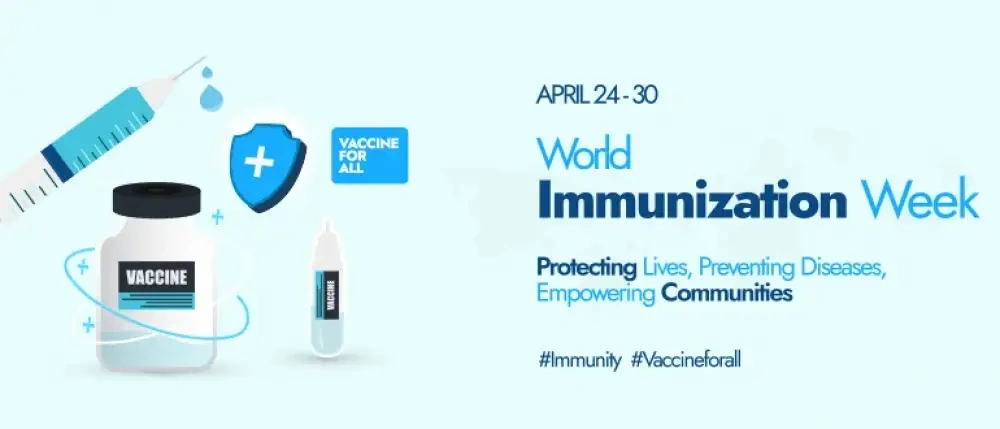
In our minds, when we think of public health, we tend to focus on the latest medical advancements or the intricate machinery of healthcare systems. Yet some of our most powerful technologies have been available for decades, silently saving millions of lives every single year. As World Immunization Week comes to a conclusion this April 30, 2026, it is a good opportunity for us to take a step back and see the wider picture. This year, the theme is “For every generation, vaccines work” and it’s a great reminder that immunization isn’t just a professional chore, it’s a generational commitment we make to one another.
Vaccines have changed the face of human life in fifty years. We have seen the near-elimination of crippling diseases that once loomed large in childhoods and societies. “It’s mind-blowing to know that these preventative actions save six lives every single minute.” But as we move to an increasingly digital and skeptical society, how can we keep that momentum going for the next generation?
The Life-Course Approach : Power
For a long time, popular view of immunization has been nearly exclusively childhood-focused. We link those doctor visits early on to the important immunizations that prevent polio, measles and other serious diseases. But the 2026 campaign is selling a bigger story: the life course concept. Immunization is really a lifelong commitment to health, from the newborn days of infancy to the golden years of adulthood.
Think of it as a continuous investment in your personal infrastructure. Just like we improve our homes and electronics to stay safe and efficient, our immune systems benefit from strategic updates from immunizations throughout our lifetimes. The argument is the same, whether it’s boosters for tetanus or immunizations for seasonal respiratory challenges: prevention is generally so much more successful, and so much more controllable, than the cure.
Think about the reach of these initiatives:
Steady Defense: Vaccines produce a strong barrier towards diseases which have traditionally lead to mass disruption.
Community Resilience: The more people who are immunized, the harder it is for a pathogen to invade the entire community, protecting others who are too young or medically unable to get some immunizations.
Economic Stability Immunization keeps people healthy and active and able to contribute to the labor and local economy by minimizing the burden of sickness.
Bridging the Trust Gap”
Skepticism about immunization remains a chronic concern for the world even while scientific agreement is clear. It is not always malicious; often it is because of a lack of clear, accessible information or a breakdown of confidence between communities and health officials. Closing this gap is a key objective of the 2026 commemoration.
The goal for health workers this year has been to move away from top-down commands to compassionate, educated communication. When parents feel heard and their questions about vaccine safety are answered transparently rather than being dismissed, the outcome is different. It’s about meeting people where they are, recognizing their worries and offering them with the evidence they need to make the best decisions for their families.
This is happening every day on the front lines in many countries of the world, including India. Local health facilities and community leaders are the main conduits for ensuring that the benefits of immunization are not only recognized in theory but experienced as real health outcomes. Have you ever thought about how many diseases that plague us today were everyday terrors to our grandparents? That change in reality is the product of the quiet, continuous work of immunization programs.
Innovations and equal access
The story of immunization in 2026 is very much a story of equity. Vaccines need to exist, but they need to be available to all, regardless of where people live or what their socioeconomic situation is. Getting vaccinations to people worldwide, maintaining rigorous cold chains in distant areas, is nothing short of a contemporary miracle in logistics.
“We are seeing huge strides in how these programs are being delivered, with a greater emphasis on the use of data to identify regions of low coverage and addressing them with tailored efforts. Here is where the collaboration between international organizations like the World Health Organization and local governments becomes crucial. They’re trying to build up health systems so that when a vaccine gets to a clinic, the infrastructure is there to give it safely and to take note of its impact.
What we’re working on: Infrastructure: Upgrading storage and delivery systems to reach the most remote populations Data-Driven Targeting: Tracking in real time to spot trends and respond to potential epidemics before they spread Future-Forward Thinking: Funding research to develop vaccines for tough, hard-to-control diseases
A Common Responsibility
As the week of awareness draws to a close, the message for the months ahead is clear: immunization is a shared obligation. This isn’t only a job for governments or scientists; it’s something that people do every time they decide to defend themselves and those around them. And it’s this communal activity that makes individual medical decisions into sweeping public health victory.
The strides made in the last fifty years are remarkable, but they are not a destination. The further we need to innovate, advocate and educate from the baseline. And we will be continuing to work on maintaining this momentum through the duration of 2026 and beyond. We have the tools, we have the research, we have the history to prove that these efforts are worth the expenditure.
What will our role in the next fifty years of this story be? Whether it is staying current with your personal health needs, supporting local health initiatives, or just sharing verified, factual information with your neighbours, every action plays a part in the wider health ecosystem. Immunization has already safeguarded generations and it is firmly in our hands to see that it continues to work for the many generations to come.
Beyond the Shot Why World Immunization Week Is Important for Our Future