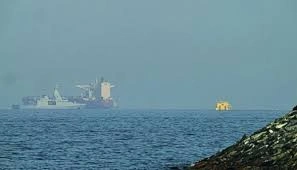
The US has started a major new naval program, called “Project Freedom,” in the Strait of Hormuz, a tiny passageway vital to the world oil traffic. The operation, launched on May 4, 2026, intends to guide commercial ships through the strait and restore freedom of navigation amid growing tensions in the region. The move comes amid a tense confrontation between Iran and the United States over control of the key maritime choke point that has major ramifications for world oil markets and supply chains.
“The Strait of Hormuz is a critical waterway that carries 21 million barrels a day of petroleum liquids in 2023, or about 80% of all petroleum exported from the Persian Gulf, the U.S. Energy Information Administration (EIA) said. This covers crude oil as well as refined goods such as gasoline and diesel. A major part of the world’s LNG traffic flows through the strait and Qatar is the world’s biggest exporter of LNG.
Effects on Global Oil Prices and Markets
Disruptions in the Strait of Hormuz have significantly impacted world oil prices. Brent crude traded around $126 a barrel and West Texas Intermediate (WTI) at about $115 a barrel as oil markets got ahead of the U.S. announcement of Project Freedom amid instability in the region. The geopolitical risk premium soared on fears that the blockade could be lengthy and that the strait could be completely closed.
But the unveiling of Project Freedom has sent oil prices down. Investors have responded well to the likelihood of at least some transits returning along the waterway, which would help to clear the backlog of 230 laden oil tankers and stranded LNG carriers. Markets are pricing in lower risk premiums, with Brent crude falling below $106 per barrel and WTI below $98 per barrel.
The lowering of tensions has also been good news for energy investors and refiners that depend on Persian Gulf crude oil. Companies related to Saudi Aramco, ADNOC, QatarEnergy and large international oil firms like Chevron and ExxonMobil will benefit from the resumption of flows and lessened volatility. The move could cap the upside for energy companies but assist overall market stability by lessening the likelihood of extended $100+ oil prices.
India’s Strategic Position and Energy Security
India is one of the world’s top oil importers, with a huge stake in the integrity of the Strait of Hormuz. The country imports over 5.5 million barrels of crude oil a day and a good part of these imports go across the strait. India’s energy security depends on the smooth flow of oil from the Persian Gulf, mainly from Saudi Arabia, Iraq, UAE and Kuwait.
In recent years India has been trying to diversify its oil imports to reduce its dependence on the Strait of Hormuz. As of March 2026, India sources crude oil from 40 countries. We get roughly 70% of our crude imports via alternative maritime routes. But almost 40% of India’s imports of crude oil still pass via the strait, and more than 50% of India’s imports of LNG use the canal, mostly from Qatar.
The disruption in the Strait of Hormuz has underscored India’s continuing dependency on the strait for energy supply. “The Indian government has been closely monitoring the situation and has undertaken diplomatic measures to secure safe passage of its warships. India has also been looking at other supply lines and diversification techniques to lessen the risk of future disruptions in the region.
The Maritime Freedom Construct: A Multilateral Approach
The Maritime Freedom Construct is a cornerstone of U.S. policy in the Strait of Hormuz. This effort is a joint effort between the U.S. Department of State and the Department of Defense and international partners. The aim is to build a coherent maritime security regime that includes combined patrols, intelligence-sharing, and coordinated danger responses.
The construct is designed to boost the ability of regional navies to monitor and secure the waterway. This includes the use of unmanned devices, satellite monitoring and helicopters to detect and track vessels. The U.S. has also been working with allies like the United Kingdom, France and the UAE to increase their naval presence in the region.
The effort also aims to limit the danger of miscalculation by establishing clear communication channels and norms for interaction. This includes hotlines between the U.S. and Iranian warships and rules of engagement, which outline how to respond to possible incidents. The purpose is to prevent inadvertent collisions and to keep the strait open for peaceful passage.
The US has launched “Project Freedom”, a major naval operation in the Strait of Hormuz to protect global oil shipping lanes amid tensions in the region.