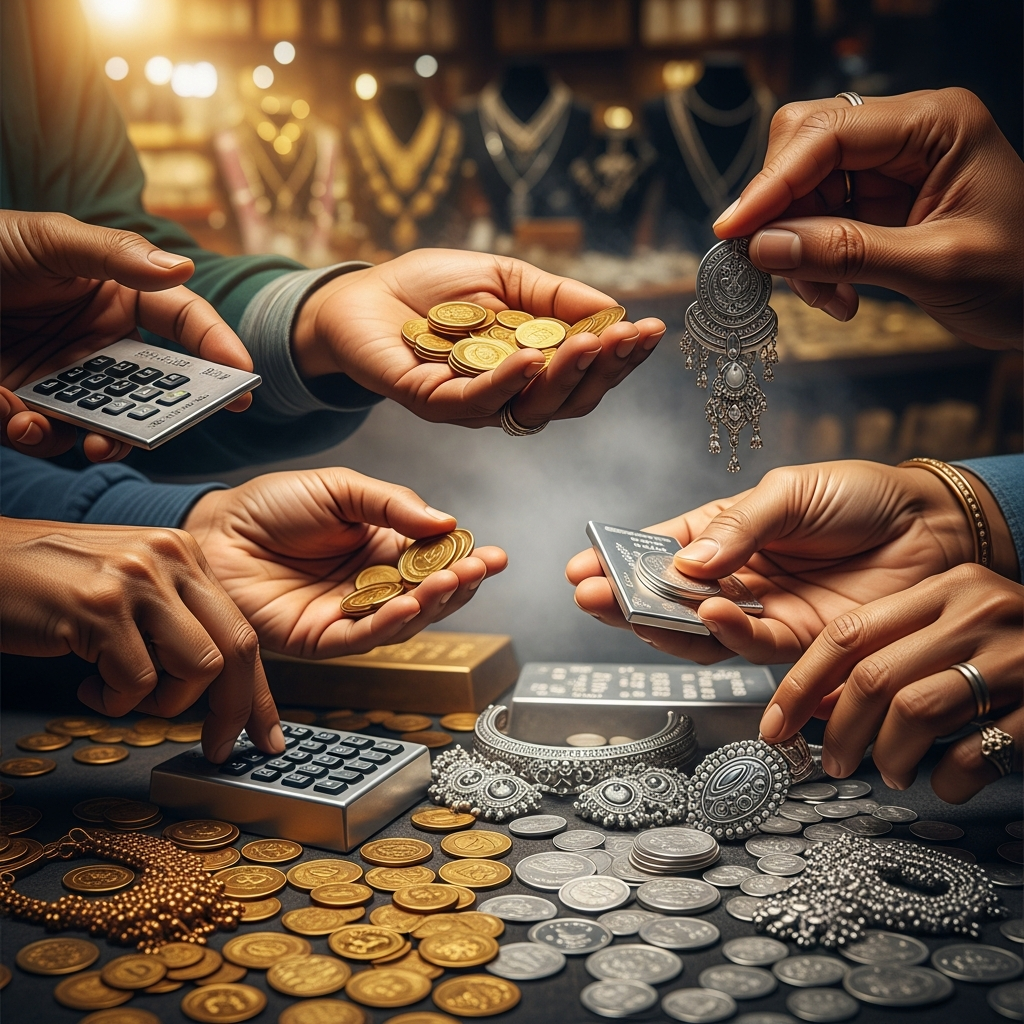
Walk into any jewellery shop in India right now and you’ll notice something in the eyes of the customers. It’s not just admiration for the craftsmanship on display. It’s calculation. People are watching the price tags more carefully than usual, pulling out their phones to cross-check rates, asking the shopkeeper whether today is a good day to buy or whether they should wait until next week.
That hesitation — that pause — tells you everything about where the bullion market stands today.
Gold and silver prices in India have been on a restless journey lately. Up one week, down the next, briefly stable before lurching in a new direction. For the everyday buyer – whether they’re buying a gift, building a savings habit or hedging against uncertainty – the volatility can be dizzying. For serious investors, it’s both an opportunity and a warning.
Understanding what’s driving these swings isn’t just useful for traders. In a country where precious metals are woven into culture, tradition, and financial planning, it matters to almost everyone.
The Global Strings Pulling Indian Prices
India doesn’t set the price of gold or silver in isolation. The commodity market in India is deeply connected to international benchmarks — primarily the London Bullion Market and COMEX in New York. When those markets move, Indian prices follow, adjusted for import duties, taxes, and the value of the rupee against the dollar.
Right now, several global forces are pulling in different directions simultaneously, which explains much of the turbulence.
Geopolitical tensions — particularly the escalating situation in the Middle East — have been pushing investors toward safe-haven assets. Gold, as it has done through centuries of human conflict and uncertainty, is benefiting from this flight to safety. When the world feels unstable, gold feels like an anchor. That instinct is ancient and, financially speaking, not entirely irrational.
At the same time, the US Federal Reserve’s monetary policy continues to cast a long shadow. When interest rates in America rise or are expected to rise, the dollar strengthens, and gold — which is priced in dollars and yields no interest — becomes relatively less attractive to global investors. When rate cut expectations grow, the reverse happens. Indian investors who may never think about American central banking in their daily lives are, whether they realize it or not, subject to its decisions every single day.
Currency movements are another curve ball. If the rupee depreciates against the dollar, imported gold becomes more expensive in India even if the international price is stable. It’s a situation that puzzles many buyers, who are seeing the gold price in India rise even on days when global prices are down, thanks to the fall in the rupee.
Silver: The Volatile Sibling If gold is the steady elder statesman of the precious metals family, then silver is the more unpredictable younger sibling. Today’s silver rate reflects not just investment demand but industrial demand – silver finds extensive use in electronics, solar panels and medical equipment.
This dual identity is what makes silver more volatile than gold. If the global economy looks strong, industrial demand lifts silver prices. If uncertainty spooks investors into safe-haven buying, silver benefits too, though usually less dramatically than gold. And when both economic slowdown fears and industrial demand weakness hit simultaneously, silver can fall hard and fast.
For Indian investors, silver has traditionally been seen as the more accessible entry point into precious metals — lower per-gram cost, available in smaller denominations, purchasable by middle-income households who find gold prices increasingly out of reach. But that accessibility comes with the understanding that silver can be a rougher ride.
What Analysts Are Watching
Experts tracking investment trends and the Indian bullion market are keeping a close eye on several indicators in the weeks ahead.
US economic data — particularly inflation figures and employment numbers — will continue to drive expectations about Federal Reserve policy, which in turn moves gold. Any fresh escalation in geopolitical hotspots, whether in the Middle East or elsewhere, could trigger another rush toward precious metals. Central bank buying, especially from countries such as China and also India’s own Reserve Bank, has been a big support to gold prices globally so a change in that would matter.
The wedding and festival seasons within India continue to be a strong driver of physical gold demand. The buying that follows Akshaya Tritiya, Dhanteras and the wider winter wedding season is predictable and can throw up temporary price spikes that push Indian prices above where they would be on global fundamentals alone.
For the Indian Buyer: Patience Over Panic
So what does all of this mean for someone standing in that jewellery shop, trying to decide whether to buy today?
The honest answer is that nobody — not the most sophisticated analyst, not the most experienced trader — can tell you with certainty where gold and silver prices will be next month. Volatility is the current reality, and it is unlikely to settle quickly given the number of unresolved global uncertainties in play.
What experienced investors consistently recommend is a strategy of systematic accumulation rather than timing the market. With Sovereign Gold Bonds, gold ETFs and digital gold platforms, investing in smaller, regular amounts of gold has become easier than ever, taking the pressure off the need to find the perfect entry point.
Precious metals have never been a way to “get rich quick.” Their enduring value lies in what they’ve always offered: a store of wealth when paper currencies wobble, a hedge when portfolios need balance, and — in the Indian context — something that carries meaning far beyond the financial.
The prices will keep moving. The fundamentals for gold and silver remain sound. And for those who invest with patience rather than panic, that’s usually enough.
Riding the Wave: Why Gold and Silver Prices in India Keep Shifting — and What It Means for You.