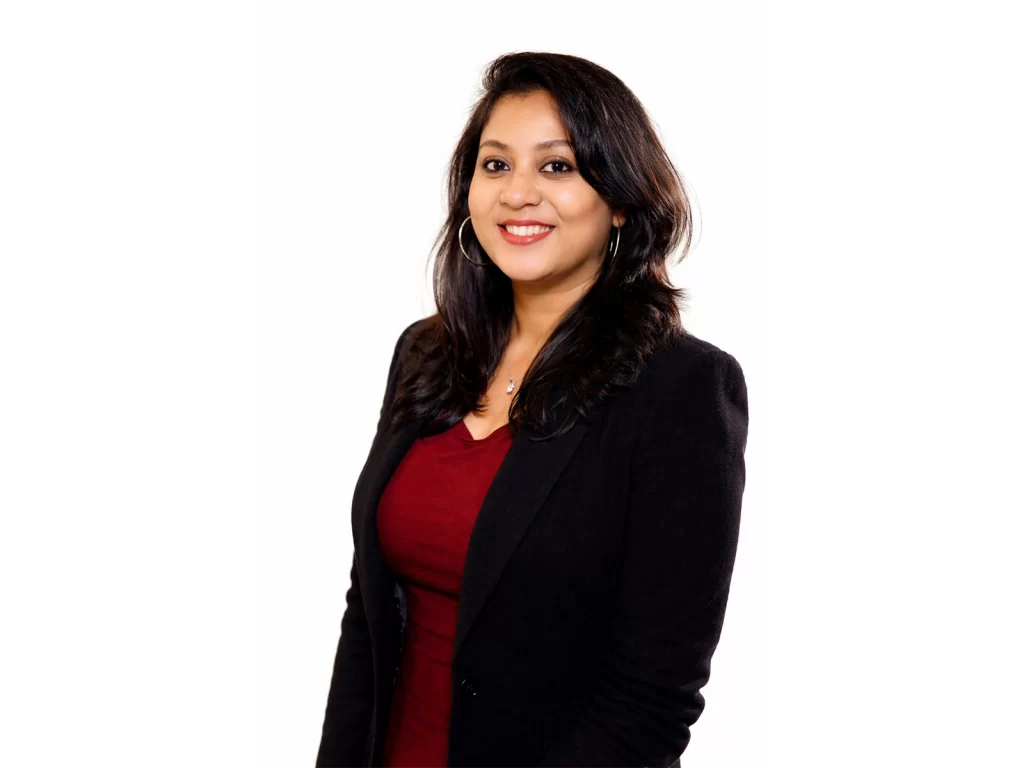
In a message that feels quietly revolutionary for Indian classrooms, Delhi‑based science educator Soma Mandal has been named the South Asia regional winner of the 2026 Cambridge Dedicated Teacher Awards. At a time when global education is being asked to reckon with climate change, inequality, and digital disruption, Mandal’s recognition spotlights a simple but powerful idea: the future of the planet is being shaped not only in boardrooms and policy drafts, but also in ordinary school labs and project periods.
Mandal, a science faculty member and eco‑club in‑charge at GD Goenka Public School in New Delhi, has been lauded for embedding climate education and sustainability into mainstream classroom teaching. The Cambridge judging panel singled her out for “dedication to empowering pupils to participate in the worldwide fight against climate change,” a phrase that captures both the ambition and the humility of her work. With over a decade of teaching experience and a master’s degree in environmental science, she has turned theory‑heavy syllabi into hands‑on projects on air quality, water security, biodiversity loss, and circular‑waste systems.
A Climate‑First Classroom in Delhi
New Delhi, a city often bracketed by choking smog, extreme heat, and water‑stress headlines, is not the easiest place to teach climate optimism. Yet Mandal’s approach is neither alarmist nor abstract. Her classroom is less about memorising textbook definitions and more about designing filters to understand local air pollution, mapping school waste flows, and tracking shifts in local bird and plant life. She has reportedly developed a climate‑focused curriculum that weaves sustainability into routine science lessons, turning weather, ecosystems, and energy units into entry points for deeper conversations about responsibility and resilience.
Students who speak about her teaching describe a rhythm that feels familiar yet unusual: worksheets and experiments alternate with field visits, debates, and student‑led campaigns. Some have worked on micro‑projects such as “zero‑waste classrooms,” “plastic‑free campus drives,” and campaigns to conserve water in school infrastructure. What stands out, according to school and media reports, is how she connects these initiatives to the larger global narrative—showing pupils how Delhi’s smog is part of a planetary warming story, not just a local inconvenience.
In an Indian context, where climate education is often treated as a special topic or an “extra‑curricular” add‑on, Mandal’s recognition by Cambridge signals a subtle shift: schools are beginning to see climate literacy not as a niche subject, but as a core competency every student must develop. How many more classrooms will it take, one might wonder, before thinking about emissions, ecosystems, and equity becomes as routine as solving algebra or writing essays?
From Delhi to Global Recognition
Soma Mandal’s name now appears in a select circle of nine regional winners chosen from thousands of nominations submitted from more than 100 countries. The Cambridge Dedicated Teacher Awards, run by Cambridge University Press & Assessment, are designed to spotlight educators who have made a measurable impact on students’ learning and wider communities. Nominees are not just those who score well on technical knowledge, but those who inspire students to think critically, act ethically, and contribute beyond the classroom.
Mandal’s journey did not begin with a global award. Colleagues and public profiles note that she has long been involved in eco‑club activities, student research, and teacher‑training initiatives around environmental education. She has also represented India at international climate‑focused events, including a global climate‑change competition organised by the University of Oxford, where she was recognised as one of four global finalists and the only Indian winner. That experience, she has said, reinforced her belief that young learners are not passive recipients of information but potential authors of solutions.
Upon winning the South Asia regional title, Mandal has been described as a “champion of climate education and empowering future leaders.” As part of the award, she will receive a trophy and classroom resources, including books worth £500, to further deepen her teaching toolkit. Her work will also be formally acknowledged in a series of upcoming Cambridge textbooks, where she will be featured on a special “Thank you” page that salutes educators shaping the next generation of learners.
Why This Award Matters for India
India’s education system is at a crossroads. On one hand, the country is pushing for digital transformation, STEM emphasis, and global‑grade curricula. On the other, climate‑related disasters—heatwaves, erratic monsoons, floods, and water scarcity—are becoming more frequent and more disruptive. In such a landscape, a teacher like Soma Mandal represents a quiet bridge between policy documents and real‑world classrooms. She is not just teaching science; she is teaching young Indians how to read, interpret, and respond to the environmental signals all around them.
What does it mean for a Delhi schoolteacher to win a Cambridge‑awarded regional title for climate education? It suggests that Indian educators are no longer merely adopting global best practices; they are also shaping them. The climate‑focused curriculum she has developed at GD Goenka is not a copy‑paste of a foreign template, but a locally grounded, context‑sensitive framework that draws on urban realities, school infrastructure, and student interests. This localising of climate education is likely to find resonance with other Indian schools, many of which are still struggling to figure out how to make abstract climate concepts real for students.
The award also has symbolic value for the teaching profession itself. In a country where teachers are often underpaid, overworked, and under‑lauded, international recognition can be a powerful morale booster. It sends a signal that what happens between the four walls of a classroom—how a student learns to care for a tree, how a child learns to question waste, how a class decides to act—can matter beyond report cards and exam ranks.
The Student‑Led Dimension of Climate Action
One of the most striking aspects of Mandal’s work is how consistently she hands agency back to students. She frames climate education not as a top‑down lecture but as a collaborative project, where students are invited to investigate, propose, and implement ideas. Some have taken the lead on campus‑level audits of energy use, waste segregation, and even carbon‑footprint estimates for school events. Others have organised awareness campaigns for parents, local residents, and nearby schools, broadening the circle of engagement beyond the classroom.
In interviews and school statements, Mandal has underlined that the award “belongs to my students,” whose enthusiasm and creativity continually redefine what a climate‑savvy classroom can look like. She has spoken about how, when young people see their ideas taken seriously, they begin to see themselves not as passive victims of environmental change but as active stakeholders in shaping a different future. That shift—from worry to agency—is, in many ways, the heart of climate education.
Here’s a question that her work implicitly poses to educators everywhere: How can we design learning environments where students don’t just learn about the climate crisis, but also feel trusted enough to act on it?
What Next for Mandal—and for Climate‑Focused Education?
The recognition at Cambridge is not an endpoint, but a springboard. As the regional winner from South Asia, Soma Mandal is now in the running for the global crown, with public voting open via the official Cambridge Dedicated Teacher Awards platform. The final global winner will be announced in June 2026, and the spotlight will likely draw more attention to the kind of teaching that blends subject‑specific rigour with real‑world relevance.
Beyond the award cycle, however, her trajectory points to a broader conversation about how climate education can be institutionalised. In India, there are ongoing discussions about integrating climate literacy more deeply into national curricula, teacher‑training programmes, and assessment frameworks. Mandal’s work offers a practical blueprint: climate learning that is interdisciplinary, project‑based, and firmly linked to local issues.
For policymakers and school administrators, her story raises another set of questions: If one teacher can inspire a flood of student‑driven climate projects, what might be possible if every school had at least one “climate‑committed” educator? And what support structures—training, funding, collaboration with environmental organisations—would be needed to make this a reality rather than an exception?
A Quiet Revolution in Indian Classrooms
In a media landscape saturated with loud headlines and dramatic policy announcements, the recognition of Soma Mandal might seem like a small story. But in the quiet corridors of a Delhi school, in the meticulous record‑keeping of a student’s climate project, in the confidence with which a young learner speaks about carbon footprints, it represents something much larger: a belief that education can be a frontline defence against ecological collapse.
Mandal’s focus on climate‑centred teaching, her ability to translate global concerns into local actions, and her emphasis on student agency are not just “innovative practices” in a glossy case study. They are practical answers to urgent questions about how we prepare the next generation to manage a warming world. As India wrestles with both rapid development and deepening environmental risks, her recognition by Cambridge is a reminder that real change often begins with the everyday choices of individual teachers—and the students who choose to follow them.
In a world where the future often feels frighteningly uncertain, perhaps the most hopeful sign is not a single award, but the growing number of classrooms where questions like “How can we fix this?” are treated not as naive, but as the most important ones to ask.
Delhi Science Teacher Soma Mandal Named South Asia Winner of Cambridge Dedicated Teacher Awards 2026