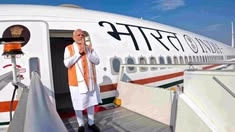
Prime Minister Narendra Modi is scheduled to visit UAE, Netherlands, Sweden, Norway and Italy from May 15 to May 20 in a busy diplomatic schedule. This journey is important for India at a time when the country is dealing with unstable global energy markets and trying to establish deeper trade partnerships.
Tour Itinerary at a Glance
India-UAE Strategic Alliance
The trip starts with a short layover in Abu Dhabi, UAE May 15. Modi will hold talks there with President Sheikh Mohamed bin Zayed Al Nahyan on energy accords and regional hotspots. From the UAE, it’s a straight line to the Netherlands, then Sweden, and then a vital stretch in Norway – capped with the third India-Nordic Summit in Oslo on May 19. How did it finish? Bilateral wrap up in Italy on May 19-20.
It’s a whirlwind, for certain. But why squeeze five countries into six days? Simple: India needs stable energy sources and new commerce routes, while conflicts in West Asia are rendering oil supplies unstable.
This visual encapsulates the excitement around India-UAE relations. The flags are flying, the skylines are merging – just like the partnerships Modi wants to enhance on this journey.
UAE: Anchors of Energy and Diaspora
India and UAE have developed a powerful connection over the years. Bilateral commerce was up somewhat at $101.25 billion in 2025-26 over the previous year, helped by jewels, electronics and petroleum. The UAE is India’s third largest trading partner after China and the US.
Energy is the true adhesive. Recent LNG deals, including a $3 billion arrangement with ADNOC, provide regular supplies from 2028, which is important as India looks for safer routes. These are expected to come up in Modi’s conversation with the UAE president, including the 4.5 million Indian expats who pay billions home each year. What does this mean for ordinary Indians? Maybe cheaper petrol at the pump and more jobs in the Gulf.
The stopover is not merely a symbolic. Securing UAE’s oil and gas is a sensible hedge for India’s energy security amid rising Strait of Hormuz tensions.
Netherlands: Tech & Green Energy Hub
Then, the Netherlands: an innovative hotspot that is right in tune with India’s green goals. India Energy Week 2026 saw the two countries already working on hydrogen technology and renewable energy. Dutch enterprises contribute expertise in offshore wind and sustainable shipping, where India wants to grow up quickly.
The trade negotiations will focus on investments and the blue economy. Two-way trade is still modest, but rising, and Dutch pension funds are looking into the Indian market. Modi might push for additional joint ventures in semiconductors or renewables—think of Gujarat ports connecting up with Rotterdam’s logistics muscle.
This is realpolitik diplomacy. India buys Dutch technology for its solar drive and promises in exchange a massive export market. How much would this help India to reach net-zero by 2070? If bargains hold, quite a bit.
Sweden and Norway: The Nordic Power Play
First Sweden, then Norway. The Nordic duo dish out cutting-edge green tech. Sweden is strong on batteries and EVs, Norway on hydropower and offshore wind. They are important to India’s transition from coal.
Norway’s Government Pension Fund has invested roughly $28 billion in Indian stocks. Bilateral trade was $2.73 billion in 2024. The best part? Leaders from Norway, Sweden, Denmark, Finland and Iceland will meet in Oslo for the India-Nordic Summit on 19 May. Expect talk of sustainable energy, Arctic lanes and defense – India is buying Norwegian subs, after all.
The visits follow preparations last year that were postponed because of security concerns. For India, it is about harnessing Nordic finances for infrastructural development. Imagine Norwegian technology running the subway in Mumbai or Swedish know-how in electric buses zooming through Delhi traffic.
Nordic strengths for India: Hydro knowledge, EV batteries, sustainable shipping.
Trade potential: Clean tech exports, cooperative R&D on green hydrogen.
Investment flows: billions already in, even more for renewables.
Italy: Defense & Mediterranean Momentum
In Italy, Modi will examine the Joint Strategic Action Plan 2025-2029, spanning trade, military and sustainable energy, during his trip. Italy, for example, sends important defensive equipment, such helicopters. And they have common interests in the Mediterranean through the EU.
Bilateral links focus on renewables – solar, wind projects still moving under an MoU from years ago Trade steady, Italy invests in Indian medicine and machinery This phase of the trip strengthens India’s Europe pivot, combining economic wins with strategic talks on migration and security.
Why last Italy? It ends the tour on a positive tone tying the energy talks to broader Indo-Pacific aims.
Energy Security India’s Top Priority
This tour is all about energy security. India imports 85% of its oil and when global shocks – from West Asia flare-ups to supply shortages – come calling, diversification is non-negotiable. UAE anchors LNG flows, Nordics offer green alternatives, Netherlands links to EU markets.
And Trade Minister Piyush Goyal has highlighted that. Resilience from numerous sources. Recent deals like HPCL’s 10-year arrangement with the UAE for 0.5 million tons of LNG per year indicate there is momentum. India plans for 500 GW of renewables by 2030. Partners like this accelerate that.
But there are hurdles. FDI falls down marginally, trade deficits with UAE increase. Can Modi change that? The tour is a test of India’s influence in a multipolar world.
Trade Ties: The numbers and the ambitions
The outbound push in India is apparent. UAE trade exceeds $100 billion under CEPA; jewels, agro exports surge. Nordics import niche high tech; Italy boosts manufacturing links.
MEA suggests the tour overall targets $50 billion in new investments over five years. The services trade – IT, medicine – might boom, too. Indian companies are gaining tariff-free access to the EU markets.
Related angle More jobs in Gujarat refineries or Tamil Nadu solar farms with these deals. How do you think they build the EV charging stations in your city? Partnerships like this.
Strategic Partnerships During Times of Turbulence
It’s geopolitics, not just commerce. UAE anchors connections with West Asia in the shadow of Israel-Iran. Nordics balance China in Arctic; Italy looks to Indo-Pacific with QUAD-plus.
India’s multi-alignment is working: Friends with all, affiliated with none. The Oslo summit?” Nordic-India bloc on climate and tech.
Diaspora matters too – 3.5 million in UAE alone wire $25 billion remittances annually. Modi’s people-first touch enhances that bond.
Wider Implications for India and the World
This is not a photo-op tour. It’s India asserting its might as a global participant, ensuring growth despite adversities. Energy stability drives 7% GDP targets . Diversify trade , reliance on China .
It signifies the stability of the region – India as a bridge between the Gulf and Europe. Internationally? A nod to multipolarity, in which Delhi matters.
The focus will be on the results as Modi boards Air India One. Will Kochi see new LNG terminals? More Norwegian rigs for Odisha? The rippling effect might change the Indian economy for years.
These handshakes count in a world of uncertainty. They remind us that diplomacy isn’t abstract — it’s pipelines, ports and paychecks. What is next for India’s global game? This tour establishes the tone.
PM Modi embarks on five-nation visit to bolster India’s energy security, trade amid global tensions