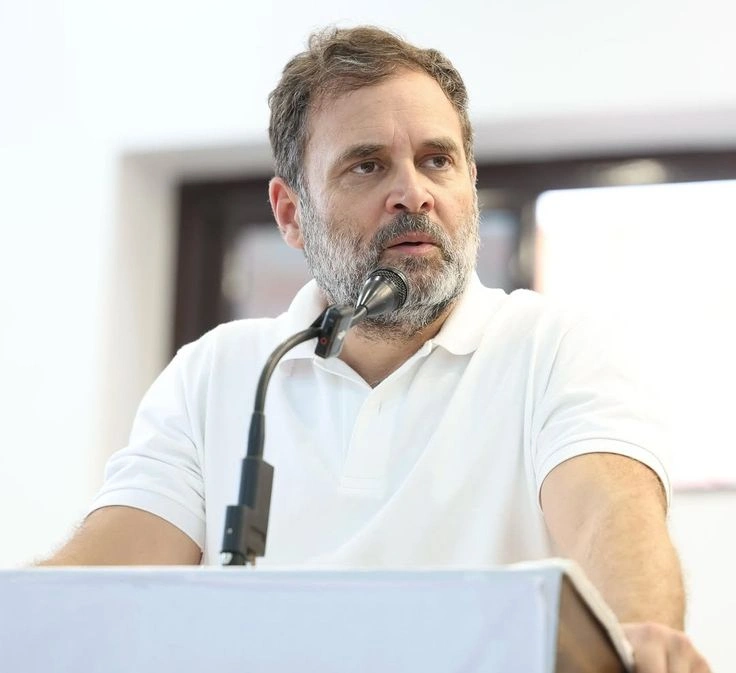
In a tense exchange at Prime Minister Narendra Modi’s residence, Leader of the Opposition Rahul Gandhi presented a stark dissent letter during a critical meeting to choose the next CBI director. The timing of the appointment, occurring shortly before the current director’s term concludes, has ignited significant discussion about the autonomy of India’s institutions. The appointment is not an isolated one — it is a flashpoint in the ongoing fight between the opposition and the ruling BJP over who supervises crucial inquiries.
The Meeting That Lasted Minutes
PM Modi convened the meeting of the committee on May 12, 2026, at 7 Lok Kalyan Marg with other members including Chief Justice of India Surya Kant and Rahul Gandhi. Timing was crucial as Praveen Sood’s time as CBI director ends on May 24 and the recommendation of his replacement among the eligible IPS officials was due.
Sources suggest the discussion on candidates lasted just five minutes. Gandhi refused to participate, passing over his two-page message. “I cannot abdicate my constitutional duty by engaging in this exercise which is biased,” he wrote directly to Modi. The Leader of Opposition is not a rubber stamp.” The remaining 40 minutes drifted onto other matters like Iran, showing how quickly the main issue died.
Gandhi had raised this earlier, disagreeing in a meeting last year and writing on October 21 with suggestions for transparency, but he got no response. This time, he doubled down, saying he had asked for self-appraisal and 360-degree reports on 69 prospects several times. None arrived. Rather, he says, they expected him to scan them right there — a scenario designed for a “pre-decided candidate.”
Understanding the Selection Rules
The CBI director appointment in India is under a post-2014 safeguard, under which a three-member panel selects from a list provided by a search team of bureaucrats. PM, LoP and CJI (or nominee) sit together to monitor any overreach of the executive.
Key mandate: Two-year fixed term, no extension without committee approval.
The LoP’s job is to balance power. To prevent “institutional capture” by making sure the opposition is heard.
Pool: Senior IPS officers with clean records preferably from state cadres.
Gandhi calls this a travesty of that aim. Without documentation, he claims, the government makes the LoP a spectator. What does this mean for accountability? In a country where CBI is investigating big schemes, even a small hint of prejudice destroys faith.
Rahul’s central allegation: institutional capture
At the core of Gandhi’s statement is a familiar charge: The Modi government has “repeatedly exploited” CBI to go after opponents, journalists and critics. He links it to a larger “institutional capture” – a term he has used for Election Commission, ED, Income Tax, even colleges.
In comments in Lok Sabha in December 2025, Gandhi alleged that RSS-linked networks position ideologues in such bodies and weaponise them against dissent. He points out that the CBI cases primarily target opposition politicians, zero against BJP senior commanders. He said ED and CBI are in a ‘quid pro quo’ with compliant business houses funding governing party.
There are several examples in the public memory:
Raids against opposition leaders during elections.
Cases against media reporting on agricultural protests or Adani deals.
Probes involving BJP allies delays, lowers.
Paranoia or pattern? Gandhi’s dissent is seen as a challenge to democratic backsliding, reflecting global fears of strongman methods.
Reflections on Earlier CBI Controversies
CBI is no stranger to politicization charges. It was with prior regimes too, but the scale seems magnified now. Remember the internal coup in 2019 when two officials fought it out in the public or the ED-CBI tag-teams in money laundering cases.
Gandhi Note Sparks Fresh 2023-24 Row: CBI Summons Opposition MPs En Masse Ahead Of Polls, Unresolved Corporate Frauds. Last year, Praveen Sood’s extension to May 2026 was criticised for appearing perfunctory, circumventing the full committee drama.
Opposition allies TMC and AAP echoed Gandhi on X, calling it the “final nail in the coffin of CBI.” BJP voices, albeit silent now, often reply “law taking its course”.
Government Side – Mute or Strategy?
No formal statement has come from the BJP till the morning of May 13. Historical precedent says they’ll ignore it as Congress theatrics – Gandhi playing to gallery ahead of state polls. But sources indicate dissent or not, the panel might still choose someone; appointments are made by the Centre based on majority.
The Modi government has cited the CBI’s conviction rate in corruption cases — over 70% — and high profile busts like the coal scams. They believe the opposition only squeals when it’s targeted. But Gandhi’s thesis stands: how do you prove independence without LoP access?
Are you wondering if the agencies supposed to preserve democracy are now guarding power?
Why This Matters India Hard
CBI probes all matters be it corruption, terror, be it 2G spectrum, Commonwealth Games, today’s digital scams or border threats. In a diverse country like India, perceived bias causes strife. Punjab, Bengal protests typically claim CBI ‘vendetta’ It reflects fears in democracies like Brazil or Poland about the misuse of investigation agencies.
For the citizen it means slower justice. Political overload is blamed for a 15% increase in CBI pending cases in a 2025 report. Tainted probes spook investors—think blocked infrastructure bids among ED shadows.
Wider Fight for Institutions
This is not a one-off. Gandhi’s “institutional capture” thesis comprises:
ED: 95% instances against opposition, he asserts.
EC: Delay in voters’ lists in critical constituencies.
Delays in opposing pleadings, Judiciary.
Congress pushes Supreme Court for transparent selections. BJP retorts with ‘reforms’ such as computerized tracking. Concession? Maybe pre-meeting docs needed, timed deliberations.
But reform remains a long shot with BJP’s edge in Lok Sabha beyond 2024. Gandhi stunt lifts opposition spirits, especially when INDIA bloc gains
Opposition’s Playbook & Public Sentiment
Amplifying it, Gandhi shared his letter on X: “I have written to the Prime Minister recording my disapproval… to prevent institutional capture.” Views went over 5 million overnight. Street attitude is divided – metropolitan liberals want openness, heartland voters are buying Modi’s anti-corruption message.
This tilts Rahul’s image from dynast to defender as LoP post-2024. Posturing, say critics. Principled, say defenders.
The Future of CBI’s Leadership
Panel heads recommended to Appointments Committee of Cabinet. Wait for announcement before May 24. If Gandhi’s opposition spreads, legal challenges are on the cards – possibly PILs seeking validity without consensus.
Longer term this points up problems in the 2014 Act. Amendments to give complete LoP powers? Not anytime soon.
A democracy in the sights
Rahul Gandhi’s Dissent Exposes the Fault Lines in India From a hurried meeting to shouts of capture, it reminds us how delicate checks and balances are when authority leans one way. New CBI boss to investigate tomorrow’s scandals. But who watches the watchers?
The fundamental question: Will this generate reform, or vanish in election noise? India gears up for 2029 polls, tussles over agencies like CBI to define trust in governance Citizens deserve more than politics agencies; anything less threatens to unravel the democratic fabric we have constructed since 1947.
Rahul Gandhi Criticizes Modi Government’s Institutional Capture in Dissent on Appointment of CBI Chief