
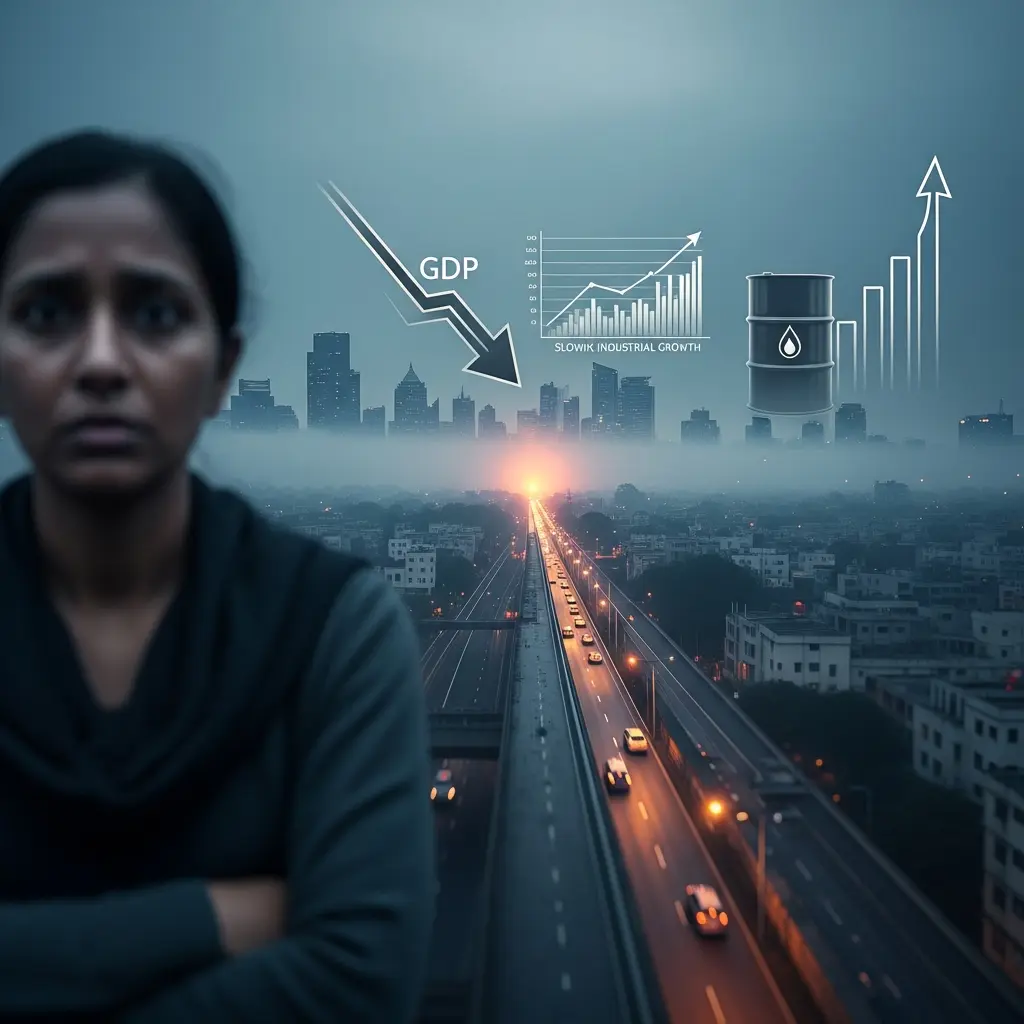
A reduced forecast is never just a number — it’s a signal. Here’s why the Moody’s cut to India’s 2026 GDP outlook is raising real questions, and why the story is more nuanced than the headline suggests.
When Moody’s Ratings trimmed India’s 2026 GDP growth forecast to 6%, it wasn’t exactly a bombshell — but it wasn’t nothing, either. For a country that has spent the better part of the last decade positioning itself as the world’s fastest-growing major economy, a rating agency putting a cautious flag on the dashboard is worth paying attention to.
The downgrade points to three pressure points: softer private consumption, a slowdown in industrial expansion, and energy costs that keep creeping higher thanks to geopolitical turbulence halfway around the world. None of these are new problems. But their simultaneous presence is precisely what gives economists pause.
“A 6% growth rate would be the envy of most economies — but for India, it also represents a step back from the ambition the country has set for itself.”
The Consumption Question
India’s domestic consumption story has long been its greatest strength. A rising middle class, a young population, and growing aspirations have historically kept demand humming even when external headwinds picked up. So when Moody’s flags weaker private consumption as a key concern, it touches a nerve.
The reality on the ground is more layered. Urban spending remains reasonably healthy, but rural demand has been patchy. Food inflation, while moderating, has eaten into household budgets. And while employment numbers look stable at the surface, the quality and wages of new jobs created haven’t always matched the pace of growth needed to sustain a 1.4-billion-person economy’s consumption engine.
Industry groups have been vocal about this gap. Several manufacturing and consumer goods associations have already urged New Delhi to consider demand-side relief measures — from tax adjustments to targeted subsidies — that could help put more money in people’s pockets ahead of the crucial festive consumption season later this year.
Oil: India’s Persistent Vulnerability
India’s relationship with imported oil is one of its most significant economic vulnerabilities, and nothing underlines that more clearly than the current environment. With global energy prices pushed higher by ongoing geopolitical tensions — particularly conflict-related disruptions in major oil-producing regions — India is paying more for the fuel that powers its factories, its transport networks, and its households.
The country imports over 85% of its crude oil requirements. That figure alone explains why analysts are watching oil prices so closely in the context of this downgrade. Every sustained uptick in global crude prices chips away at India’s trade balance, puts pressure on the rupee, and raises the cost of doing business across virtually every sector.
The government has, to its credit, been working to diversify its energy sourcing — leaning more heavily on discounted Russian crude in recent years and accelerating investments in renewables. But the transition takes time, and for now, India remains acutely exposed to whatever happens in the global energy markets.
What New Delhi Says
Officials in New Delhi have pushed back — politely but firmly — against any reading of the Moody’s revision as cause for alarm. Their counterargument rests on two pillars that are genuinely hard to dismiss: the continued strength of infrastructure investment, and the momentum building in India’s digital economy.
India’s capital expenditure on infrastructure has been one of the most consistent themes of economic policy in recent years. Roads, railways, ports, data centres — the physical and digital backbone of a modern economy is being built out at a pace that few countries can match. And the digital economy, anchored by a thriving startup ecosystem and some of the world’s highest rates of digital payments adoption, is generating real growth that doesn’t always show up clearly in traditional GDP metrics.
These aren’t hollow talking points. They represent genuine structural strengths that many analysts believe will cushion the short-term headwinds and position India well for the decade ahead. The Moody’s forecast, after all, is for one calendar year — not a verdict on India’s long-term trajectory.
Market Mood & What’s Next
The financial markets’ reaction to the revision of the India GDP forecast was one of measured caution rather than sharp panic — a reaction in itself that tells a story. Investors seem to be weighing the near-term pressures against India’s structural fundamentals and concluding that the case for long-term exposure remains intact, even if the short-term picture is murkier.
Caution, however, has its own price tag. A slight cooling in investor sentiment can dull the flow of foreign capital that helps fund growth in infrastructure, manufacturing and technology. That’s why the policy response in the coming months will matter enormously. Faster approvals for industrial projects, targeted export incentives and measures to ease the cost burden on small manufacturers could all help send the right signals.
The Indian economy has confounded pessimists before. A 6% growth rate, if achieved, would still make India one of the top performers among the world’s large economies. The question isn’t whether India is in trouble — it isn’t. The question is whether this moment of pressure becomes a prompt for the policy agility the economy needs to reclaim its higher-growth momentum.
On that front, the next few months will be telling.

