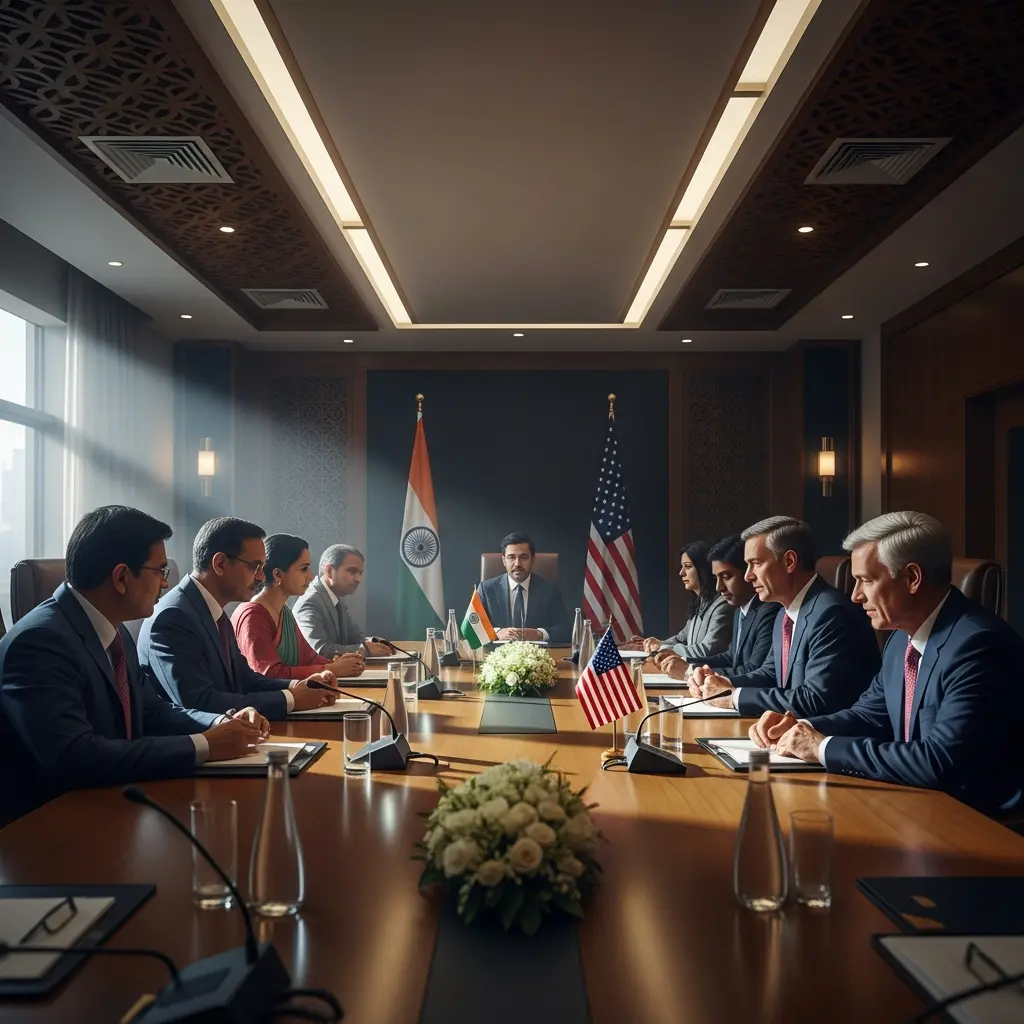
There’s a quiet but unmistakable sense of momentum building in the corridors of trade diplomacy. After months of careful back-and-forth, India and the United States appear to be inching toward the kind of landmark economic agreement that doesn’t come around very often. Negotiators from both sides are calling it a “final phase” — and for anyone watching the world of commerce, that phrase carries real weight.
But what does this actually mean? And why should anyone outside a government ministry or a boardroom care?
More Than Just Tariffs
When people hear “trade deal,” they often picture politicians shaking hands over a document full of numbers. And yes, the India–US trade deal being negotiated does involve tariff reductions and market access rules. But what makes this particular agreement notable is how much broader it reaches.
Officials have indicated that the discussions cover three major pillars: market access for goods and services, technology cooperation, and investment frameworks. Each of these touches a different slice of the economy — and together, they could reshape how the two countries do business for decades to come.
Indian exporters in sectors such as textiles, pharmaceuticals and agricultural products are watching market access very closely. Greater access to American markets could open up large new sources of revenue. American companies, especially in technology, energy and financial services, are eyeing India’s large and fast growing consumer base with keen interest.
The Tech Angle is Hard to Miss Perhaps the most forward-looking aspect of these negotiations is the focus on technology cooperation. India and the US already share a deep, informal relationship in tech — think of the thousands of Indian engineers who built careers in Silicon Valley, or the American companies that run large operations in Bengaluru and Hyderabad.
That relationship could be taken to a new level with a formal bilateral trade framework that includes technology.For US companies, it could mean smoother entry into India’s rapidly expanding digital economy.
Supply Chains Are the Quiet Story Here
Something else is happening in the background that makes this agreement particularly timely. The global supply chain landscape has been changing since the disruptions of the early 2020s. Companies around the world have been re-evaluating where they make goods, where they source components, and how reliant they are on any one geography.
India is turning out to be one of the most attractive destinations for companies looking to diversify. Its large workforce, improving infrastructure, and growing manufacturing base have put it squarely in the conversation. A stronger India–US economic partnership — formalized through a trade agreement — could accelerate that shift considerably. It sends a signal of stability and commitment to businesses making long-term investment decisions.
And that’s why foreign investment is on the table in the current negotiations. Clear, predictable rules for foreign direct investment aren’t just good for big multinationals—they’re good for everybody, from mid-sized manufacturers to venture-backed startups.
Why This Moment Feels Different
Trade negotiations between India and the United States have had their false dawns before. Talks have stalled, priorities have shifted, and elections on both sides have reshuffled the deck. So it’s fair to ask:
why does this time feel different?
Part of the answer is geopolitical. Both countries have a shared interest in building resilient economic ties as a counterweight to broader global uncertainties. India wants to attract the kind of investment and technology partnerships that can sustain its growth ambitions. The US wants reliable partners in a region of enormous strategic importance.
Part of it is also practical. Years of incremental negotiations have built institutional familiarity. Officials understand each other’s red lines better now. The groundwork laid over multiple rounds of talks has narrowed the gaps in ways that make a final agreement genuinely achievable rather than merely aspirational.
What Happens Next
No deal is done until it’s signed, and the details still matter enormously. How India’s domestic industries are protected during any transition period, how disputes are resolved, and how technology-sharing agreements are structured — these are not small questions. Getting them right will determine whether this agreement delivers on its considerable promise.
Still, the direction of travel is clear. Analysts who follow bilateral trade closely believe that a successful agreement would be among the most significant economic events in the India–US relationship since the civil nuclear deal of 2008. That’s not hyperbole — it’s a reflection of just how much trade, investment, and shared economic interest has grown between the two countries in the intervening years.
For businesses, the message is worth taking seriously now, not after the ink dries. Supply chain planners, export managers, investment teams, and entrepreneurs on both sides of the relationship should be thinking about how this evolving India–US economic partnership fits into their strategy — because by the time the formal announcements come, the most prepared players will already have a head start.
India–US Trade Talks Enter Final Phase: What It Means for Businesses and Everyday People.