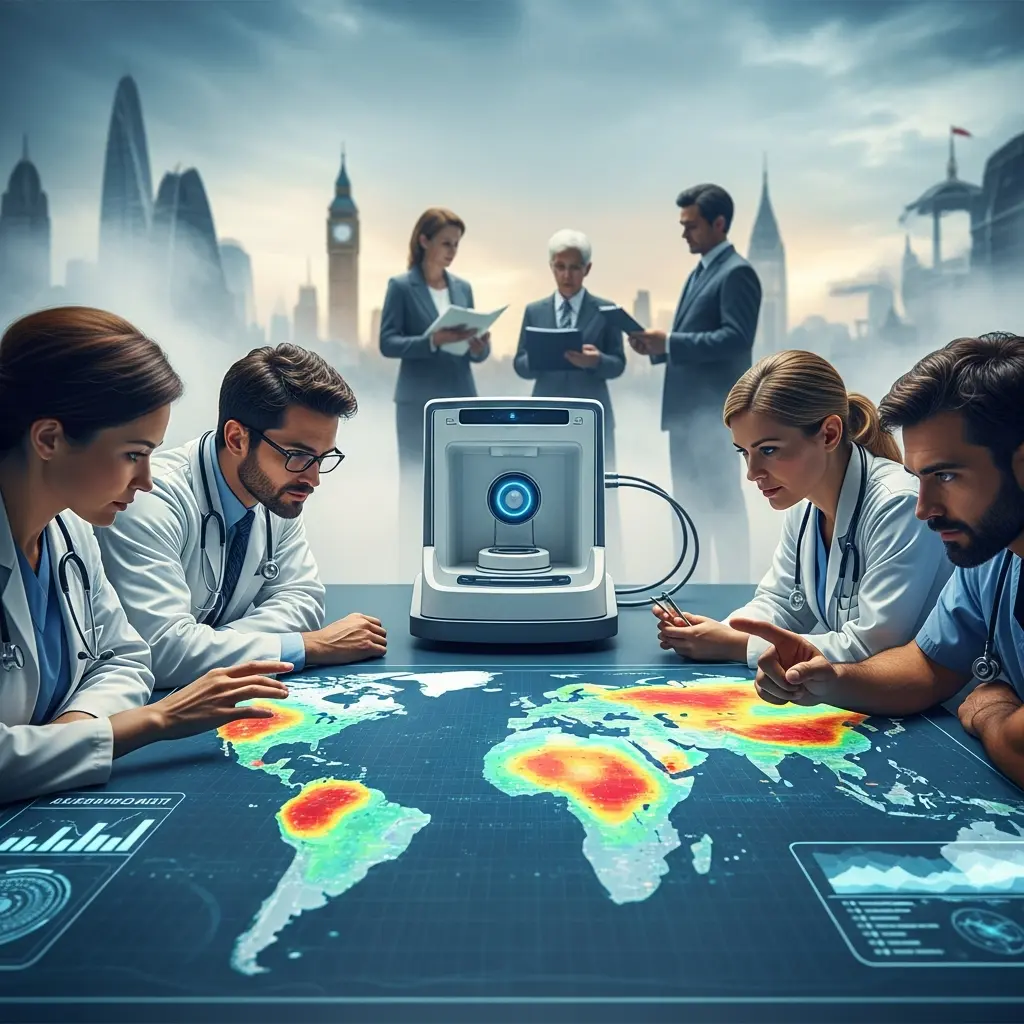
Disease does not wait for bureaucracies to catch up. But around the world, health authorities are building faster, smarter, and more connected systems — because the cost of being slow, as recent history has taught us, is simply too high
Somewhere right now, a public health official is staring at a data dashboard at two in the morning, watching a cluster of unusual respiratory cases in a region that does not usually produce them. It may be nothing — seasonal flu, a local contamination, a statistical blip. Or it may be the early signal of something that, left undetected for another two weeks, becomes significantly harder to contain. This is the daily reality of global health surveillance in 2026: a relentless, unglamorous vigil conducted by thousands of professionals across dozens of countries, most of whom the public will never hear about unless something goes wrong.
That vigilance — quiet, continuous, and often underappreciated — is the backbone of modern disease monitoring. And in the years since the world received its most recent and most brutal reminder of what happens when that backbone fails, governments and international health bodies have been investing seriously in strengthening it. The result is a global health architecture that is more capable than it was five years ago — more connected, more data-driven, more responsive — even as the threats it faces continue to evolve in complexity and speed.
“The best outcome of good disease monitoring is a crisis that never becomes a headline — a threat that was seen early, contained quietly, and forgotten by everyone except the people who stopped it.”
At the heart of this architecture is surveillance — the systematic, ongoing collection and analysis of health data to detect anomalies before they become emergencies. Today, disease surveillance isn’t just a matter of counting hospital admissions or waiting for doctors to report unusual cases. It draws on genomic sequencing to track pathogen mutations in near real time. It incorporates wastewater analysis — an unglamorous but remarkably effective early warning tool — to catch disease signals before symptomatic cases even present in clinics. It uses satellite and mobility data to anticipate how an outbreak might spread geographically. The science of watching for disease has become, in a relatively short time, extraordinarily sophisticated.
Genomic surveillance
Real-time pathogen sequencing to detect new variants and mutations as they emerge
Wastewater monitoring
Population-level disease signals detected days before clinical cases appear
Cross-border data sharing
International networks enabling rapid alert exchange between health authorities
Rapid response reserves
Pre-positioned medical countermeasures, stockpiles, and deployable response teams
But surveillance alone is only as valuable as the systems built to act on what it finds. Healthcare preparedness — the unglamorous work of stockpiling medical supplies, training rapid response teams, running simulation exercises, and stress-testing hospital surge capacity — is where the gap between well-prepared and poorly-prepared nations becomes most visible. The countries that have invested consistently in preparedness infrastructure over the past decade are the ones that tend to fare best when outbreaks arrive. Not because they are lucky, but because they have done the planning that luck should never have to substitute for.
International coordination has become the third pillar of this emerging global health framework. Disease, as the world has been reminded repeatedly, does not respect borders. A pathogen that emerges in one country can be in a dozen others within days, carried by travelers who may not yet know they are infected. This biological reality demands a political response — agreements between nations on data sharing, on mutual aid, on coordinated medical response protocols, on the governance of pandemic declarations. The World Health Organization remains the central coordinating body for much of this work, but the real texture of international health cooperation is built in bilateral agreements, regional health networks, and the quiet professional relationships between epidemiologists in different countries who have each other’s numbers saved in their phones.
Three lessons from recent outbreaks
Speed of detection matters more than almost anything else
Every day between the emergence of a new pathogen and its public identification is a day in which transmission chains grow. Investment in early-warning systems consistently proves to be the highest-return expenditure in public health budgets.
Trust is a medical resource
Populations that trust their health authorities follow guidance more reliably, report symptoms earlier, and participate in vaccination programs at higher rates. Healthcare preparedness includes maintaining public credibility, not just stockpiling supplies.
Equity in global health is not charity — it is strategy
Outbreaks that gain a foothold in under-resourced health systems do not stay there. Investing in the surveillance and response capacity of lower-income countries protects everyone.
Public health experts who work in this space are careful to avoid complacency. The improvements in global health systems since the early 2020s are real and meaningful — but so are the persistent vulnerabilities. Many lower-income countries still lack the laboratory infrastructure to conduct reliable genomic surveillance. Health worker shortages in large parts of Africa, South Asia, and Latin America create structural gaps in detection and medical response capacity that no international coordination agreement can fully compensate for. Zoonotic diseases — those that jump from animals to humans — continue to emerge with regularity, driven by habitat encroachment, agricultural intensification, and the warming of ecosystems that once served as natural barriers.
None of this is reason for despair. It is, rather, a clear-eyed inventory of the work that remains. The architecture of global health that has been built and strengthened over the past several years is genuinely more capable than what existed before. But its greatest test is not the outbreak it has already handled — it is the one that has not yet arrived. The official watching that dashboard at two in the morning is not just doing a job. They are holding a line. And for all the complexity of the systems behind them, the logic is simple: see it early, act fast, and never let the world forget what it costs to be unprepared.
The World Is Always on the Edge of the Next Outbreak. Here Is How We Are Trying to Stay Ahead of It.