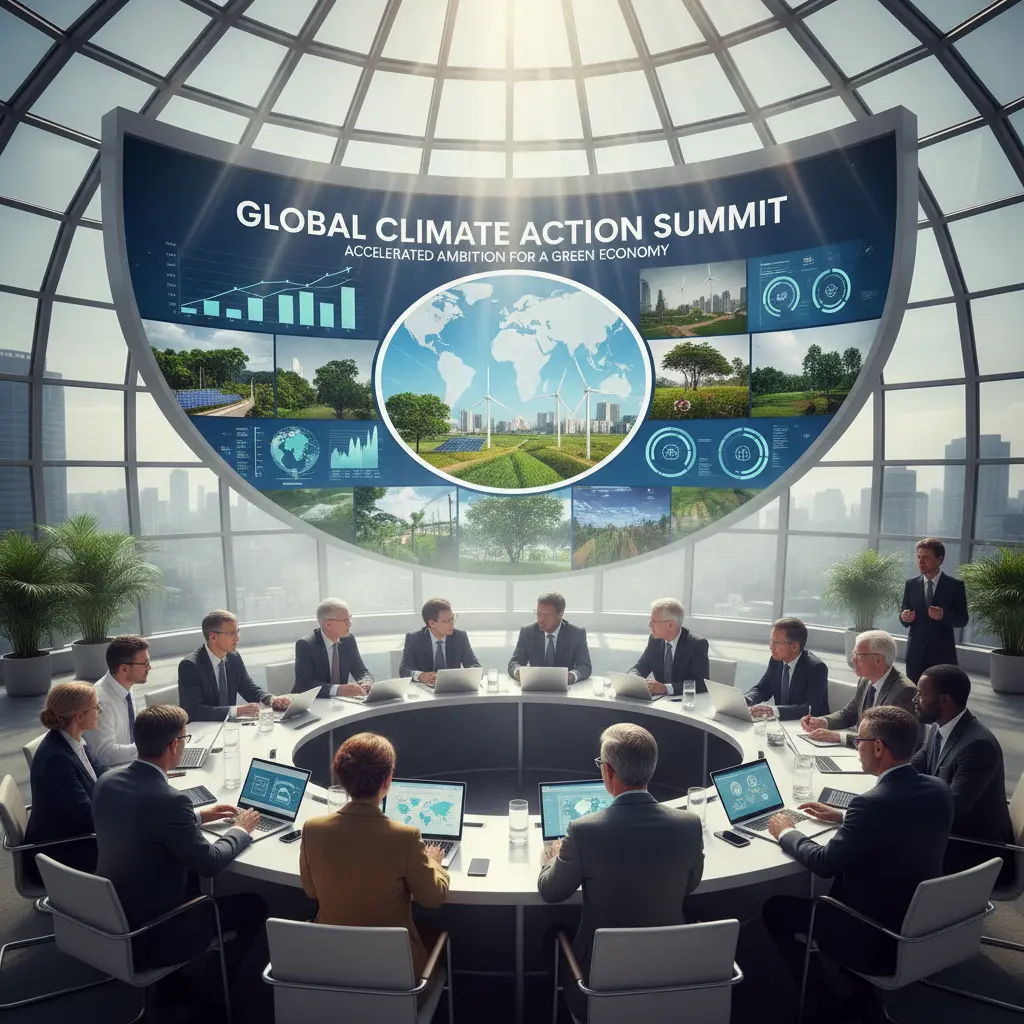
There’s something both reassuring and quietly frustrating about the fact that climate change remains a fixture on the agenda of every major international forum. Reassuring, because it means the world hasn’t looked away. Frustrating, because the gap between the conversations happening in those rooms and the pace of change required on the ground remains stubbornly, uncomfortably wide.
Scientists have been consistent in their message for years now. The window for meaningful action isn’t closing gradually — it’s closing at a rate that demands a different quality of urgency than most political systems are currently capable of producing. And yet, here we are again: governments evaluating strategies, countries announcing plans, forums issuing communiqués. The machinery of international cooperation turns, slowly and imperfectly, while the atmosphere doesn’t wait.
That tension — between what is needed and what is politically achievable — is the defining story of global climate action right now.
Emissions, Targets, and the Honesty Problem
One of the most significant shifts in recent climate discussions has been a growing willingness among scientists and some policymakers to speak plainly about where the world actually stands relative to its targets. For years, the language of international climate diplomacy leaned heavily on optimism — pledges and pathways and net-zero commitments that sounded ambitious on paper but carried enormous asterisks in practice.
The honest conversation is harder. Many of the emissions reduction targets that countries announced with considerable fanfare are not being met at the pace required. The gap between stated ambition and demonstrated action is real, and it matters. Because climate change doesn’t operate on a diplomatic timeline. It operates on a physical one, indifferent to the political calendars and electoral cycles that shape how governments make decisions.
What international forums can do — and what the better ones are beginning to do — is create accountability structures that make it harder to announce targets without also showing the mechanisms by which those targets will actually be reached. Measurement, transparency, and peer pressure might sound unglamorous, but in the architecture of international cooperation, they are often what separates a commitment that holds from one that quietly dissolves.
Renewable Energy: The Momentum Is Real
Amid the complexity and the frustration, there is a genuinely encouraging story unfolding in the renewable energy sector. The pace at which solar and wind capacity is being added globally has exceeded most projections from just a decade ago. The cost of renewable energy has fallen dramatically — in many parts of the world, building new solar or wind capacity is now cheaper than running existing fossil fuel infrastructure.
This matters enormously, because one of the long-standing objections to accelerated climate action was that it was economically punishing — that countries, particularly developing ones, couldn’t afford to transition away from cheap fossil fuels. That argument is becoming harder to sustain. Renewable energy is increasingly not just the environmentally responsible choice. It’s the economically rational one.
Several countries have recently announced major expansions of their green investment plans, channeling capital into clean energy infrastructure, grid modernisation and energy storage solutions. These aren’t just environmental gestures. They’re industrial strategies — attempts to position national economies advantageously in a world where the energy transition is, one way or another, coming.
The countries that build the supply chains for solar panels, wind turbines, and batteries today are the ones that will hold economic leverage tomorrow. The green economy isn’t a sacrifice. For the nations willing to move decisively, it’s an opportunity.
Climate Resilience: The Conversation We’re Not Having Loudly Enough
Emissions reduction gets most of the attention in climate discussions, and rightly so — preventing the worst outcomes requires cutting the carbon we put into the atmosphere. But there is another conversation that does not always get the prominence it deserves: adaptation and climate resilience.
The truth is, we’re already committed to some level of climate disruption. The warming that has already occurred, the more frequent and more intense extreme weather events, the measurable rise in sea level are not future projections. They are present-day realities. And for millions of people living in coastal communities, agricultural areas dependent on predictable rainfall, or cities at risk of extreme heat, the question of how to build resilience is not theoretical. It’s immediate and existential.
International cooperation on environmental sustainability needs to hold both tracks simultaneously — reducing future emissions while also helping communities adapt to changes that are already underway. The financing mechanisms for resilience, particularly in developing nations that contributed least to the problem and face the steepest consequences, remain badly underfunded relative to the scale of need.
What Genuine Progress Looks Like
Progress on climate change tends to look different from progress in other policy domains. It’s rarely a single dramatic breakthrough. It’s the accumulation of decisions — a country updating its building codes, a bank shifting its lending criteria, a city redesigning its transport network, a government ending a fossil fuel subsidy. These things don’t generate headlines, but they compound.
The strengthened environmental cooperation commitments announced at recent forums are meaningful to the extent that they translate into those downstream decisions. Agreements between governments create the conditions for change. But the change itself happens in the investments made, the regulations enforced, the infrastructure built, and the industries transformed.
Sustainability, at its core, is a long game. The climate conversation has been running for decades, and it will continue running. The question that each generation of leaders has to answer honestly is not whether they care about the environment. It’s whether they cared enough to act when action was still capable of making a difference.
That question is still open. The answer is still being written — in policy, in investment, and in the choices made every single day by governments, businesses, and individuals navigating a world that is already changing faster than most of us are comfortable admitting.
The forums will continue. The science will not wait.
The Climate Conversation Keeps Moving — But Is It Moving Fast Enough?