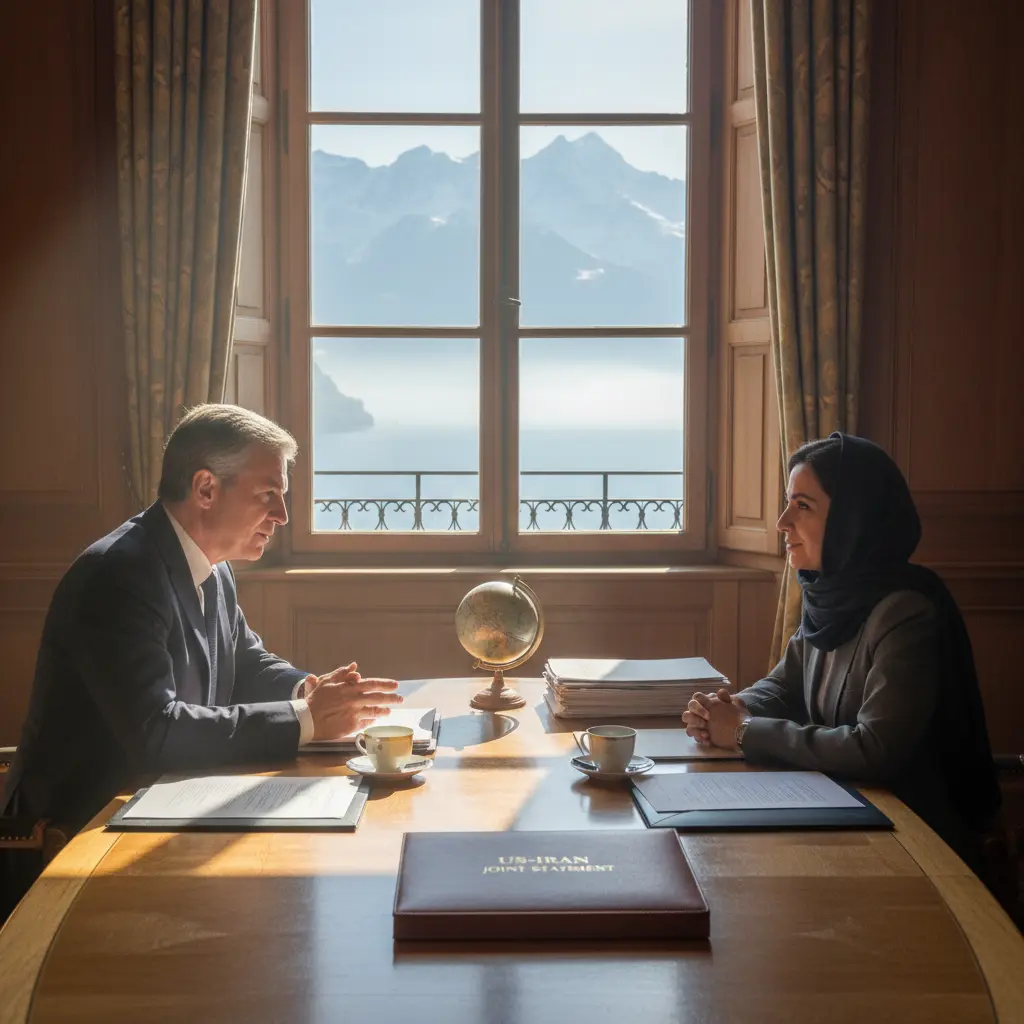
After months of escalation, war, and on-again-off-again negotiations, the United States and Iran sat down together once more this past weekend, this time in the Swiss resort town of Bürgenstock, perched above Lake Lucerne. For anyone who has followed the rocky path of US-Iran talks over the last year, this round carried a slightly different weight. It came just days after Washington and Tehran had electronically signed a memorandum of understanding, marking one of the more concrete steps toward de-escalation that either side has managed in recent memory.
That said, calling this smooth sailing would be an overstatement. The talks were delayed by a day after Iran initially failed to send its delegation, largely because Israeli strikes in Lebanon were continuing even as the ink dried on the new agreement. Iran’s Foreign Ministry made clear that its patience depended on Washington pressing Israel to actually halt those attacks, arguing that the violence in Lebanon ran counter to the spirit of what had just been signed. When the Iranian team finally did arrive, it was a senior delegation, including the country’s Parliament Speaker and Foreign Minister, signaling that Tehran still saw value in showing up despite its frustrations.
What’s Actually on the Table
The memorandum that set the stage for this round of Middle East diplomacy is being described as a 14-point framework, and it covers a fair amount of ground. It calls for an end to military strikes, a 60-day extension of the broader ceasefire, the lifting of the US naval blockade on Iranian ports, and the reopening of the Strait of Hormuz to commercial shipping without the usual transit fees. For a waterway that carries a huge share of the world’s oil and gas exports, keeping the Strait open is about as close to a universal interest as global security gets right now.
Beyond the immediate military and maritime issues, the framework also opens the door to longer talks on sanctions relief and the potential unfreezing of a substantial amount of Iranian assets that have been locked up for years, though that’s explicitly tied to how well Iran follows through on its commitments going forward. The thorniest subject, as has been true for decades, remains Iran’s nuclear program. Washington has been firm that Iran cannot be allowed to possess or even develop the capability to build a nuclear weapon, while Tehran continues to insist its program serves civilian purposes and that it’s open to discussing limits, but only if sanctions come off the table in return.
A Fragile Bridge, Built with Outside Help
What’s notable about this particular round of negotiations is who else showed up. Pakistan and Qatar both played mediating roles, with Pakistani officials, including the prime minister and the country’s army chief, present alongside Qatari representatives who had reportedly been holding behind-the-scenes meetings in the lead-up to the formal sessions. Having two regional players actively involved in steering the conversation reflects just how much this dispute touches the wider neighborhood, not just Washington and Tehran.
The technical talks that followed the weekend’s high-level session are expected to stretch out over roughly 60 days, giving both delegations time to work through the harder details rather than trying to resolve everything in one sitting. That’s arguably a more realistic approach given how many issues remain genuinely unresolved, from the final shape of any nuclear arrangement to questions around Iran’s ballistic missile program and its relationships with non-state allies across the region, none of which made it into the current framework.
Why the Strait of Hormuz Keeps Coming Up
One detail worth paying attention to is the back-and-forth over the Strait of Hormuz itself. Iran’s Revolutionary Guard Corps announced over the weekend that it was re-imposing restrictions on the waterway, citing the continued Israeli operations in Lebanon, and warned ships to stay clear. The US military pushed back almost immediately, saying the strait remained open and that merchant traffic had actually increased, with dozens of commercial vessels moving through without incident. That contradiction captures the larger tension running through this whole process: an agreement exists on paper, but the situation on the ground, especially in Lebanon, keeps testing how durable it really is.
Where Things Stand
Analysts watching this unfold see real, if cautious, reason for optimism. Getting both sides back to a negotiating table, agreeing to a written framework, and bringing in credible regional mediators are not small achievements, particularly after a year that included direct military strikes between Israel and Iran and a brief but serious confrontation between Iran and the United States. At the same time, nobody involved is pretending the hard part is over. Iran’s negotiators have been explicit that progress on the technical talks depends on seeing Washington actually deliver on the commitments already made, rather than just promising more dialogue.
For now, the picture is one of measured progress rather than resolution. The framework gives both countries a structure to keep talking, a mechanism to avoid further military escalation, and a roadmap, however incomplete, toward addressing the issues that have kept this relationship in crisis mode for years. Whether that structure holds will depend heavily on what happens next in Lebanon and how seriously both Washington and Tehran treat the commitments they’ve just put their names to. In the world of international affairs, that kind of fragile, conditional progress is often the most realistic outcome anyone can hope for, and right now, it’s what both sides have.
US-Iran Diplomatic Talks Show Progress in Switzerland.