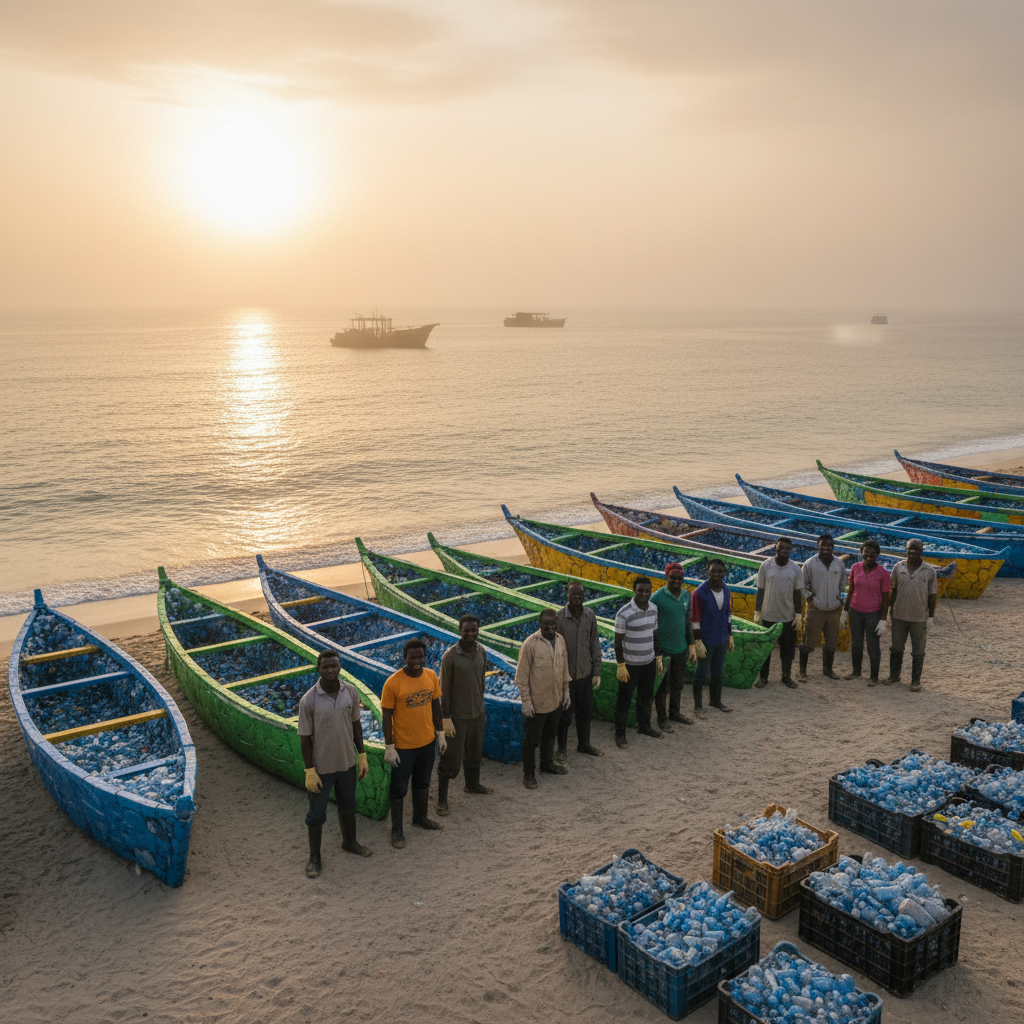
For close to a decade now something incredible has been happening along the sun kissed beaches of Lamu Island in Kenya. What started as the frustration of one man at the tons of plastic washing up on a remote beach has become one of the most celebrated examples of green innovation in East Africa: boats made entirely from recycled plastic waste.
The Flipflopi Project, as it is called, has become a sign of what can be achieved when creativity and sustainability join hands. And with plastic pollution still threatening the world’s oceans, this Kenya-led effort shows it’s possible to have practical, community-led solutions that can really make a difference.
From Beach Cleanup to Boatbuilder
The story starts with founder Ben Morrison, who spent years running a travel business in Africa before noticing just how much plastic was accumulating along Kenya’s coastline. Instead of looking away, he partnered with local boatbuilder Ali Skanda to try something nobody had done before: constructing a traditional sailing dhow entirely out of plastic waste.
The result was the original FlipFlopi boat, a nine-meter sailing vessel built from more than ten tonnes of plastic waste collected during ocean clean-ups, and famously covered in thousands of discarded flip-flops and sandals, which is how the project got its name. When it first set sail, it symbolized far more than a clever recycling trick. It represented a working model of ocean conservation rooted in local craftsmanship rather than expensive imported technology.
How Waste Becomes a Working Boat
The process behind each boat is surprisingly meticulous. Community members collect plastic waste from beaches and towns, which is then sold to the project, giving local residents a genuine source of income in areas where formal jobs are hard to come by. That plastic is sorted by type and color, cleaned, melted down and reshaped into solid beams and planks that replace the hardwood normally used in dhow construction.
This is a change more important than it might seem at first glance. Hardwood is becoming more expensive and difficult to obtain sustainably, adding to the pressures of deforestation across the region. But recycled plastic is plentiful, tough and essentially free after collection. This is a classic example of a circular economy in action, where waste that would otherwise choke marine ecosystems is transformed into something functional and durable.
Growing Beyond One Boat
What began as a single prototype has grown substantially since. Since then, the project has grown to build more vessels, including a larger boat that is about twice the size of the original, which is meant to eventually take the message of ocean conservation on longer international expeditions. The community now makes furniture out of recycled plastic, which is sold locally and internationally, providing yet another income stream for the community.
The effect ripples out far beyond the water. According to reports, the project’s local collection and recycling systems have reduced the amount of plastic waste entering nearby dumpsites, while at the same time offering training to local boatbuilders and youth in sustainable manufacturing techniques through a dedicated training center.
Part of a wider environmental push
This green innovation is not taking place in isolation. Kenya has taken some of the toughest legal stances on plastic pollution in the world, including a complete ban on single-use plastic bags and harsh penalties for those who break the law.
Other Kenyan entrepreneurs are pursuing similar goals in their own ways, from community recycling centers in Nairobi to small businesses that convert collected plastic into pavers, planks and other everyday products. All of this adds up to a blossoming recycling ecosystem around the country in which plastic is more and more viewed as a resource, not a waste problem.
Why It Matters For Marine Conservation
The scale of the plastic pollution crisis cannot be overstated. Every year, millions of tonnes of plastic waste enter the world’s oceans, damaging marine life and degrading coastal ecosystems that communities depend on for food and income. Those projects alone won’t solve that crisis, but they do offer something valuable: proof that plastic waste can be turned into useful, income-generating solutions instead of ending up in the sea.
That proof is important to coastal communities such as Lamu. It shows that you can protect the environment and create economic opportunity simultaneously. The plastic waste is no longer a nuisance to the fishermen and residents but a resource that is worth to collect, sort and sell.
A Model To Watch
Plastic recycling innovation continues to gain attention across Kenya and beyond, and the Flipflopi Project is a real success story, not just an environmental gesture. It links traditional craft with modern sustainability ambitions, creates real jobs and sends a clear, colourful message wherever its boats sail.
In a world still struggling with its plastic problem, Kenya’s recycled boats are a reminder that sometimes the best solutions don’t come from high-tech solutions but from communities willing to look at waste differently and make something useful out of it.