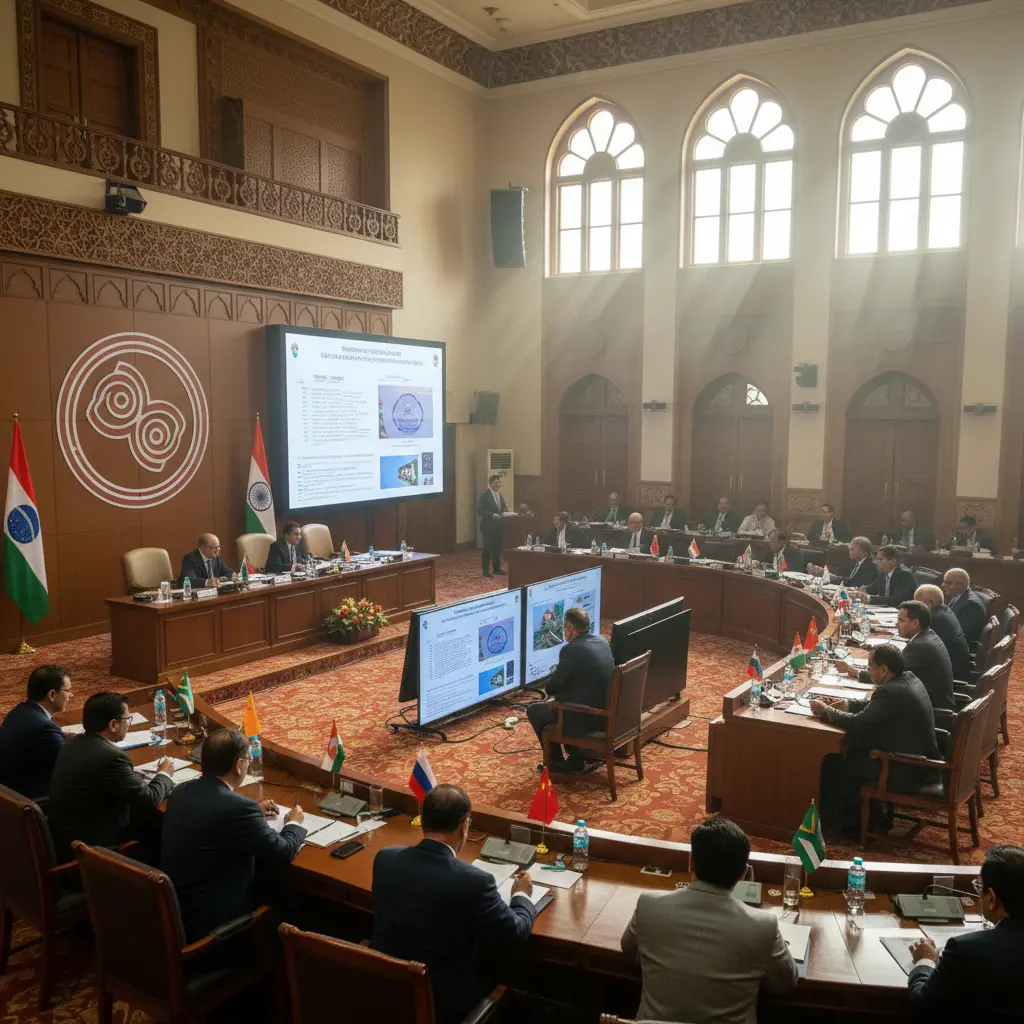
Guwahati isn’t a city that usually finds itself at the center of global security conversations, but this week, it is exactly that. India has rolled out the red carpet for senior narcotics officials from across the BRICS grouping, kicking off a two-day summit aimed squarely at one of the world’s most persistent problems: drug trafficking that no longer respects borders, currencies, or even the physical world at all.
This BRICS meeting, formally called the BRICS Heads of Anti-Drug Agencies Meeting, is being hosted by India’s Narcotics Control Bureau under the Ministry of Home Affairs. Delegates from all eleven BRICS member nations, including Brazil, Russia, China, South Africa, Egypt, Ethiopia, Indonesia, Iran, Saudi Arabia, and the UAE alongside host India, have gathered to hash out how they can work together more effectively against a threat that keeps evolving faster than most enforcement agencies can keep up with.
Why Guwahati, and Why Now
Choosing Guwahati as the venue for this anti-drug summit isn’t just symbolic. The Northeast has long served as a corridor for narcotics moving in from Myanmar and other parts of Southeast Asia, making Assam a genuinely strategic location for this kind of conversation rather than just a convenient one. It’s the sort of Guwahati news that carries weight well beyond the city limits, given how central the region is to South Asia’s drug trafficking routes.
India currently holds the BRICS chairmanship for 2026, guided by the theme “Building for Resilience, Innovation, Cooperation and Sustainability.” That chairmanship comes with responsibilities, and hosting this meeting is India’s way of using its turn at the helm to push the grouping toward something more concrete than the usual diplomatic back-and-forth.
Synthetic Drugs Take Center Stage
If there’s one thread running through every session at this summit, it’s the alarming rise of synthetic drugs. Unlike traditional narcotics that rely on crops and physical supply chains, synthetic drugs and new psychoactive substances can be manufactured in makeshift labs almost anywhere, making them dramatically harder to trace and intercept. Officials at the meeting are expected to spend considerable time discussing how to share intelligence on clandestine laboratories, monitor the diversion of precursor chemicals, and stay ahead of constantly shifting synthetic drug trends.
The picture is further complicated by the growth of darknet markets and the use of cryptocurrency to facilitate these transactions. Drug networks today are just as likely to operate through encrypted apps and untraceable digital payments as they are through physical smuggling routes, and that shift has forced enforcement agencies to rethink their entire playbook. The summit’s six thematic sessions reportedly cover everything from using digital tools for real-time interdiction to countering darknet-enabled trafficking and tightening controls around pharmaceutical and chemical supply chains.
Moving Beyond Talk
One phrase that keeps surfacing in official statements around this event is the idea of transforming BRICS cooperation from something dialogue-centric into something genuinely action-oriented. In plain terms, India is trying to push its BRICS partners past the stage of simply acknowledging shared problems and toward real operational coordination, things like joint training programs, expert exchanges, and structured information sharing that could actually help agencies act faster when a threat emerges.
This push toward practical cooperation reflects a broader frustration that’s fairly common in multilateral forums. It’s easy for member nations to agree that synthetic drugs are a problem; it’s much harder to build the kind of trust and infrastructure needed for agencies in different countries to share sensitive intelligence in real time. This meeting appears to be India’s attempt at narrowing that gap, even if only incrementally.
India’s Own Playbook
Part of what India is bringing to the table is its own domestic strategy. The country recently released its Vision Document on Narcotics Control for 2026 to 2029, laying out a long-term roadmap for strengthening enforcement, improving coordination between central and state agencies, and building out better rehabilitation and awareness programs for people affected by addiction. India’s BRICS presidency is using this platform to showcase that approach to its partner nations, treating the fight against drugs as something that requires both tough enforcement and genuine investment in prevention and recovery.
That dual approach, cracking down hard on trafficking networks while also expanding treatment and community outreach, seems to be resonating with at least some observers following the summit, even as questions remain about how well any joint declaration will translate into on-the-ground results.
What Comes Next
The two-day meeting is expected to wrap up with the adoption of a Joint Declaration, a document meant to formalize the group’s shared commitments around intelligence exchange, operational coordination, and long-term institutional cooperation. Whether that declaration leads to meaningful, measurable change is the real question, and one that will likely take months or years to answer rather than days.
For now, though, Guwahati has become an unlikely stage for a genuinely global conversation, one where the stakes stretch far beyond any single city or country. As synthetic drugs and darknet marketplaces and cryptocurrency-fueled trafficking networks continue to blur the lines between local and international crime, meetings like this one may end up mattering a lot more than their modest two-day runtime suggests.