
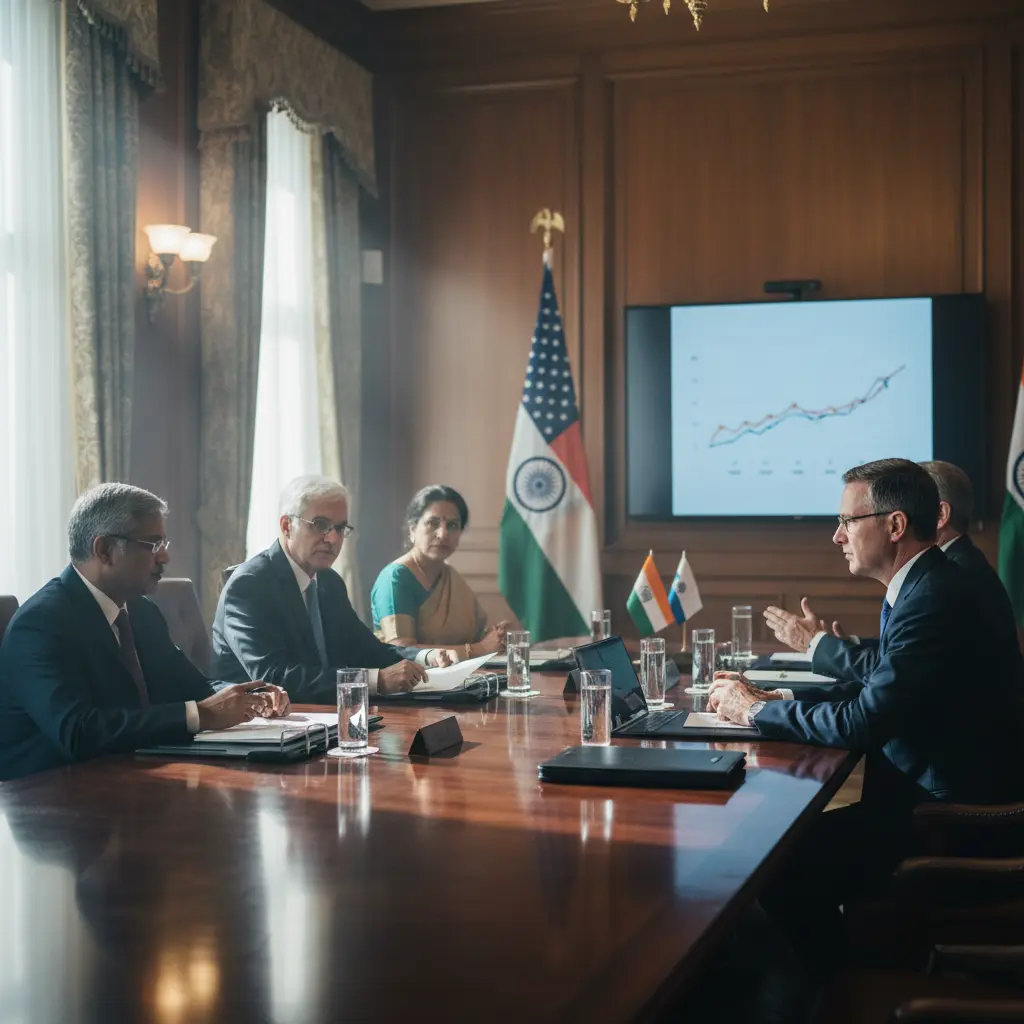
India has formally asked the United States to reconsider a proposed tariff hike tied to a forced labour investigation, setting up what could become a significant test for India US trade relations in the months ahead. The request, made through official channels to the Office of the United States Trade Representative (USTR), pushes back firmly against findings that Indian officials say are built on shaky evidence and flawed methodology.
What Triggered the Dispute
The roots of this go back to March 2026, when the USTR launched two separate Section 301 investigations covering around 60 economies. One focused on forced labour practices, the other on excess industrial capacity. By June 3, the USTR had released its findings on the forced labour probe and proposed fresh tariffs on 54 economies as a result.
Under that proposal, India and China would face an additional 12.5 percent tariff, while countries like Canada, the European Union, Indonesia, Mexico, Pakistan, and Ecuador would see a somewhat lower 10 percent duty, largely because they already have legal prohibitions on forced labour imports, even if enforcement was judged inadequate. India’s case is different — the USTR’s report specifically flagged concerns about the absence of an outright import ban on goods linked to forced labour, and used that gap to justify the steeper tariff.
Naturally, this hasn’t gone down well in New Delhi.
India’s Pushback
In a formal submission to the USTR dated July 6, India laid out its objections in detail. The core argument is straightforward: there simply isn’t enough evidence connecting India’s major exports to the US with forced labour inputs, and the absence of a blanket import prohibition doesn’t automatically translate into an unfair advantage for Indian industries.
Speaking at a public hearing held as part of the USTR’s consultation process, Joint Secretary in India’s Department of Commerce, Brij Mohan Mishra, was direct about where India stands. He said India treats the elimination of forced labour as a constitutional obligation and a matter of international legal principle, not something it takes lightly. At the same time, he raised pointed concerns about how the USTR arrived at its conclusions.
According to India’s submission, the investigation’s methodology relied heavily on case studies from a handful of economies and broad trade pattern data, without offering sector-specific or country-specific evidence of actual forced labour linkages. In plain terms, India argues the US built a sweeping policy conclusion on a fairly thin evidentiary foundation, and that the required causal link between the absence of an import ban and harm to US commerce was never properly established.
The Rice Question
One particularly specific thread in the dispute involves rice. The USTR’s report had flagged concerns about rice imports into India allegedly involving forced labour, and their potential downstream impact on US rice producers. Speaking on behalf of India’s Agricultural and Processed Food Products Export Development Authority (APEDA), a representative from the Indian Embassy in Washington pushed back on this point directly, noting that India’s rice imports are minimal and cater to niche varietal demand rather than broad commercial substitution.
India also pointed to existing regulatory safeguards, noting that rice exports from India to the US are permitted only from mills and processing units registered with the agriculture ministry — a system designed specifically to prevent forced-labour-tainted goods from entering the supply chain in the first place.
Industry Voices Join the Chorus
It isn’t just government officials raising red flags. Industry chamber FICCI has also weighed in, arguing that the proposed additional tariff deserves careful reconsideration. Its submission made a broader economic point: higher tariffs wouldn’t just squeeze Indian exporters, they would also raise costs for American manufacturers, importers, retailers, and ultimately consumers who rely on these supply chains. That’s a common refrain in global commerce disputes — tariffs rarely stay contained to one side of the transaction.
What India Wants Instead
Rather than unilateral tariff action, India has repeatedly stressed that trade friction of this kind should be worked out through the existing framework of India-US bilateral trade negotiations. The message from New Delhi has been consistent: India is open to dialogue, willing to address specific, substantiated concerns, but resistant to broad measures that aren’t backed by clear, country-specific evidence.
Why This Matters Going Forward
Trade analysts following the situation suggest the outcome here could shape the tone of commercial relations between the two countries for some time. India exports remain a significant part of the bilateral trade relationship, spanning everything from textiles and agricultural products to pharmaceuticals and engineering goods, and a tariff hike of this size would ripple across several sectors simultaneously.
The USTR’s proposal has not been finalised yet, and public hearings are part of a formal consultation process before any final decision gets made. That leaves room for further negotiation, and India appears to be betting that a combination of legal argument, industry pressure, and diplomatic engagement can move the needle before the tariff takes effect.
For now, both sides seem to be signalling a preference for dialogue over confrontation, even as the underlying disagreement over evidence and methodology remains unresolved. How this plays out could offer an early indicator of where the broader India-US trade relationship is headed in the second half of the year.

