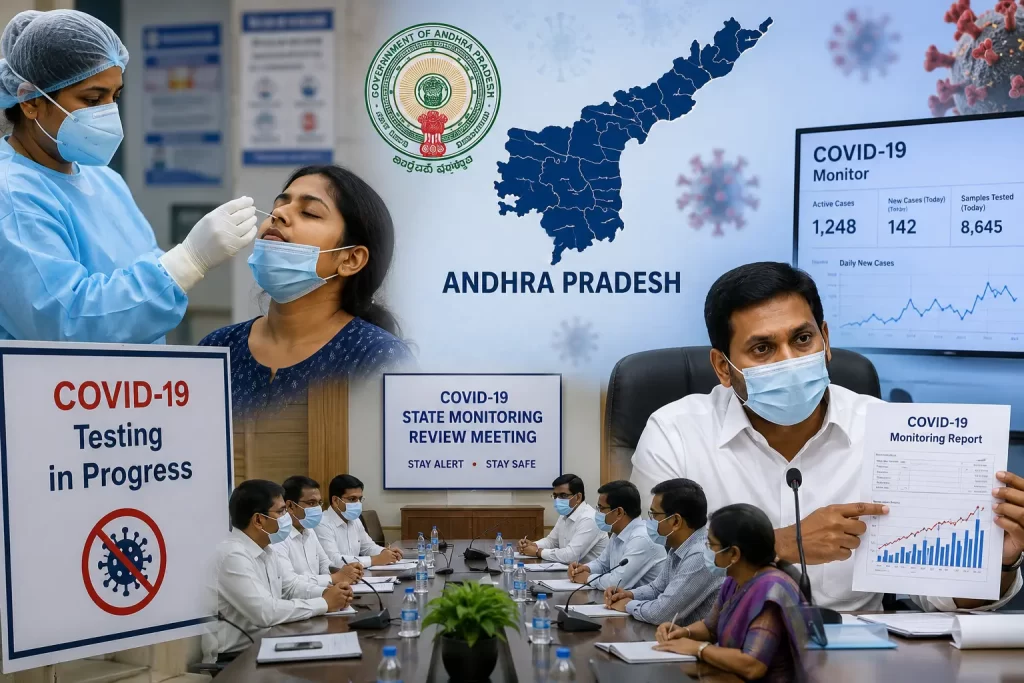
Just when it felt like COVID had faded into the background of daily conversation, Andhra Pradesh has found itself back in the headlines. Health authorities in the state have ramped up surveillance after two deaths and eight active cases surfaced in YSR Kadapa district, marking the region’s first COVID-related fatalities since 2022. It’s not the kind of coronavirus news anyone wants to see again, but officials are moving fast to keep things contained and are urging people not to read too much panic into what appears, so far, to be a localised and manageable situation.
What Actually Happened in Kadapa
The first fatality involved a 60-year-old man from Rajampet who initially sought treatment at SVIMS in Tirupati before being shifted to Christian Medical College in Vellore, where he passed away on June 28. He also had a bacterial infection alongside diabetes and chronic kidney disease, underlying conditions that likely worsened his outcome. A second death followed on July 7, this time a 46-year-old man being treated for bilateral lung damage and pneumonia at the Government General Hospital in Kadapa.
Following these two deaths, the district’s Health Department moved quickly. Rapid response teams were deployed, a 24/7 control room was activated, and samples were collected from roughly 40 people in the affected areas. Of those tested, 18 came back negative, while eight active cases remain under close monitoring. Given how suddenly the patients developed severe respiratory distress, medical experts suspect an aggressive Omicron subvariant might be involved, and samples have been sent to the National Institute of Virology in Pune for full genome sequencing to nail down the exact strain.
The Omicron Variant Question
This is really where the Omicron Variant angle comes in. Health officials have pointed specifically to strains like XFG and BA.3.2 as the ones currently being tracked, and it’s worth noting that every major variant circulating since early 2022 has descended from the original Omicron lineage. That’s actually somewhat reassuring information rather than alarming, since these descendant strains have generally caused milder illness in the broader population compared to earlier waves of the pandemic.
Rajeev Jayadevan, co-chairman of the Indian Medical Association’s National Covid Task Force, put it plainly: there’s no real cause for panic given the widespread immune memory built up across the population through both vaccination and prior infection. The severe outcomes seen in Kadapa appear closely tied to the patients’ existing health conditions rather than any unusually dangerous new mutation. That distinction matters a lot when trying to gauge how worried the public should actually be.
Why This Still Warrants Attention
Even so, sporadic doesn’t mean ignorable, and that’s exactly the balance Andhra Pradesh Health officials are trying to strike right now. A senior Union health ministry official told reporters that such isolated cases occur every year and that the surveillance, testing, and reporting systems have already been strengthened in response. Government hospitals across the state have been instructed to keep isolation wards and ICUs ready, just as a precaution rather than a reaction to any confirmed surge.
The ripple effect has reached beyond Andhra Pradesh’s borders too. Neighbouring Odisha has stepped up surveillance and testing along its shared border as a precautionary step, while Tamil Nadu authorities have also weighed in publicly, reassuring residents that the current variant circulating isn’t considered particularly virulent. It’s a coordinated, watchful response rather than anything resembling the large-scale lockdowns and restrictions people associate with the earlier years of the pandemic.
The Bigger Public Health Picture
Zooming out a bit, this Andhra Pradesh episode fits into a much larger global pattern. According to the World Health Organization, around 45,000 COVID cases have been reported worldwide over the past three months, with the global test positivity rate sitting at a fairly low 1.2 percent. In other words, the virus hasn’t disappeared, it’s just settled into a much quieter, more manageable rhythm than it once had, with occasional localized flare-ups like this one popping up from time to time.
For ordinary residents, the practical advice hasn’t really changed from what’s been recommended for a while now. Anyone experiencing fever, cough, or cold-like symptoms is being asked to stay home until they recover, both to protect themselves and to limit onward transmission. Elderly people and those with weakened immune systems or existing health conditions are advised to avoid crowded, poorly ventilated spaces and to limit unnecessary hospital visits where possible, since they remain the group most vulnerable to severe complications.
What Comes Next
Genome sequencing results from Pune should offer more clarity soon on exactly which variant is behind these cases, and that data will likely shape whether Andhra Pradesh’s response stays at its current level or needs to be scaled up. For now, though, the picture being painted by health officials is one of vigilance rather than alarm. Screening has resumed at government hospitals across the state, monitoring teams are active in the affected district, and neighbouring states are watching closely without overreacting.
It’s a reminder that COVID, even years after the worst of the pandemic passed, hasn’t fully left the public health conversation in India. It’s simply become something health systems now manage in the background, stepping up response only when specific clusters like this one demand closer attention. Whether this remains an isolated incident in Kadapa or signals something broader will likely become clearer over the coming weeks as sequencing data comes in and case numbers are tracked.