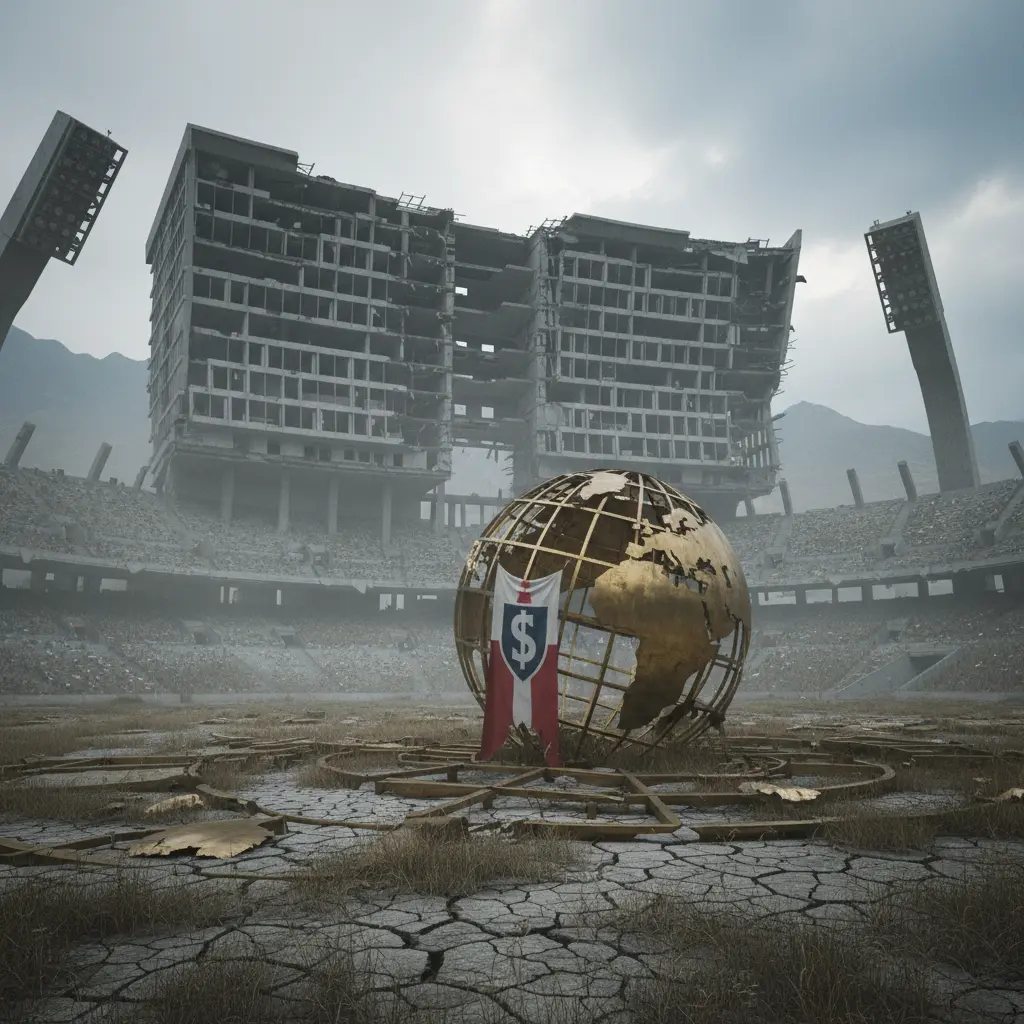
What started as a quietly ambitious plan to bring private money into football’s biggest tournament turned into one of the most turbulent weeks of Gianni Infantino’s presidency. The FIFA president’s proposal to fold the World Cup’s commercial operations into a $20 billion company partly owned by outside investors triggered a wave of opposition so fierce that, within days, he was forced to abandon it entirely.
The Plan That Sparked the Firestorm
The proposal, known internally as FIFA Forward Enterprise, or FFE, would have spun off FIFA’s money-making activities, including the men’s and women’s World Cups, the Club World Cup, broadcasting rights, sponsorships, and hospitality, into a standalone commercial subsidiary. Roughly 20% of that entity would have been sold to private investors, raising an estimated $4.2 billion based on a $20 billion valuation of the business.
The lead investor identified in the deal was a New York-based investment firm founded by Joshua Kushner, whose brother Jared Kushner is married to the daughter of U.S. President Donald Trump. That connection alone was enough to fuel intense scrutiny, even though people close to the firm pushed back on suggestions that Trump himself had any role in the arrangement.
FIFA framed the plan as a way to grow revenue for its 211 member associations, arguing that the funding each federation receives per four-year cycle could jump from around $8 million to roughly $20 million. For a governing body still working to repair its reputation after years of corruption scandals, the pitch was that private capital could modernize and expand the sport’s biggest showcase.
Football’s Governing Bodies Push Back
That argument didn’t land the way Infantino hoped. This FIFA $20 billion plan was first reported publicly by a British newspaper, and the backlash intensified almost immediately. UEFA, which represents European football’s 55 member associations, voted unanimously to boycott all FIFA competitions if the plan moved forward, an extraordinary threat from the sport’s wealthiest and most influential confederation. The Asian Football Confederation and CONCACAF, which governs North and Central America and the Caribbean, followed with their own objections. Together, those three confederations represent roughly two-thirds of FIFA’s voting membership, making the scale of resistance hard to ignore.
The criticism wasn’t confined to outside stakeholders, either. Carlos Cordeiro, Infantino’s own senior adviser on global strategy and governance, resigned in protest, calling the deal damaging to member associations and warning it would put the sport’s long-term future at risk. FIFA’s chief operating officer also spoke out publicly against the project. For an organization that prides itself on presenting a unified front, having senior insiders break ranks so visibly was a significant blow.
At the heart of the criticism was a broader worry about football governance in 2026: that treating the World Cup as an investment vehicle, rather than a tournament belonging to fans and federations, would fundamentally change what the event represents. Private equity and sovereign wealth money have become common in European club soccer in recent years, but extending that model to the World Cup itself struck many in the sport as a step too far.
Infantino’s Reversal
Rather than backing down right away, FIFA initially held its ground. On Thursday night, the organization defended the plan and blamed what it described as inaccurate media coverage for stoking the controversy. That response did little to calm things down, and by Friday, opposition had only grown stronger.
Late Friday, Infantino announced that the proposal would not move forward. He said that after listening to the range of views expressed, it had become clear the project was creating divisions that ran counter to its original purpose, adding that FIFA’s goal has always been to unite and improve the sport. He said he intended to bring stakeholders back together in the coming weeks to keep working toward growing football globally, particularly in nations that need the most support.
What It Means Going Forward
The episode leaves lingering questions about Infantino’s standing within the sport. He had reportedly secured pledges of election support from roughly 200 of FIFA’s 211 member federations before this controversy erupted, but UEFA’s public statement following the reversal suggested that trust in his leadership has been shaken. Whether that translates into a genuine challenge to his position remains to be seen.
For now, the collapse of FIFA’s World Cup business ambitions marks a rare instance of football’s governing bodies successfully checking the power of a sitting FIFA president. It also raises a larger question that isn’t going away: as the value of major sporting events continues to climb, how much outside capital is football’s governing bodies, and its fans, actually willing to accept before it starts to feel like the game itself is for sale.
Gianni Infantino news in the weeks ahead will likely center on whether he can repair relationships with UEFA and other confederations before FIFA’s next major competitions, starting with the Women’s Under-20 World Cup in September, and whWhat started as a quietly ambitious plan to bring private money into football’s biggest tournament turned into one of the most turbulent weeks of Gianni Infantino’s presidency. The FIFA president’s proposal to fold the World Cup’s commercial operations into a $20 billion company partly owned by outside investors triggered a wave of opposition so fierce that, within days, he was forced to abandon it entirely.
The Plan That Sparked the Firestorm
The proposal, known internally as FIFA Forward Enterprise, or FFE, would have spun off FIFA’s money-making activities, including the men’s and women’s World Cups, the Club World Cup, broadcasting rights, sponsorships, and hospitality, into a standalone commercial subsidiary. Roughly 20% of that entity would have been sold to private investors, raising an estimated $4.2 billion based on a $20 billion valuation of the business.
The lead investor identified in the deal was a New York-based investment firm founded by Joshua Kushner, whose brother Jared Kushner is married to the daughter of U.S. President Donald Trump. That connection alone was enough to fuel intense scrutiny, even though people close to the firm pushed back on suggestions that Trump himself had any role in the arrangement.
FIFA framed the plan as a way to grow revenue for its 211 member associations, arguing that the funding each federation receives per four-year cycle could jump from around $8 million to roughly $20 million. For a governing body still working to repair its reputation after years of corruption scandals, the pitch was that private capital could modernize and expand the sport’s biggest showcase.
Football’s Governing Bodies Push Back
That argument didn’t land the way Infantino hoped. This FIFA $20 billion plan was first reported publicly by a British newspaper, and the backlash intensified almost immediately. UEFA, which represents European football’s 55 member associations, voted unanimously to boycott all FIFA competitions if the plan moved forward, an extraordinary threat from the sport’s wealthiest and most influential confederation. The Asian Football Confederation and CONCACAF, which governs North and Central America and the Caribbean, followed with their own objections. Together, those three confederations represent roughly two-thirds of FIFA’s voting membership, making the scale of resistance hard to ignore.
The criticism wasn’t confined to outside stakeholders, either. Carlos Cordeiro, Infantino’s own senior adviser on global strategy and governance, resigned in protest, calling the deal damaging to member associations and warning it would put the sport’s long-term future at risk. FIFA’s chief operating officer also spoke out publicly against the project. For an organization that prides itself on presenting a unified front, having senior insiders break ranks so visibly was a significant blow.
At the heart of the criticism was a broader worry about football governance in 2026: that treating the World Cup as an investment vehicle, rather than a tournament belonging to fans and federations, would fundamentally change what the event represents. Private equity and sovereign wealth money have become common in European club soccer in recent years, but extending that model to the World Cup itself struck many in the sport as a step too far.
Infantino’s Reversal
Rather than backing down right away, FIFA initially held its ground. On Thursday night, the organization defended the plan and blamed what it described as inaccurate media coverage for stoking the controversy. That response did little to calm things down, and by Friday, opposition had only grown stronger.
Late Friday, Infantino announced that the proposal would not move forward. He said that after listening to the range of views expressed, it had become clear the project was creating divisions that ran counter to its original purpose, adding that FIFA’s goal has always been to unite and improve the sport. He said he intended to bring stakeholders back together in the coming weeks to keep working toward growing football globally, particularly in nations that need the most support.
What It Means Going Forward
The episode leaves lingering questions about Infantino’s standing within the sport. He had reportedly secured pledges of election support from roughly 200 of FIFA’s 211 member federations before this controversy erupted, but UEFA’s public statement following the reversal suggested that trust in his leadership has been shaken. Whether that translates into a genuine challenge to his position remains to be seen.
For now, the collapse of FIFA’s World Cup business ambitions marks a rare instance of football’s governing bodies successfully checking the power of a sitting FIFA president. It also raises a larger question that isn’t going away: as the value of major sporting events continues to climb, how much outside capital is football’s governing bodies, and its fans, actually willing to accept before it starts to feel like the game itself is for sale.
Gianni Infantino news in the weeks ahead will likely center on whether he can repair relationships with UEFA and other confederations before FIFA’s next major competitions, starting with the Women’s Under-20 World Cup in September, and whether this fight resurfaces in a different form as football continues wrestling with the role private money should play in its future.ether this fight resurfaces in a different form as football continues wrestling with the role private money should play in its future.