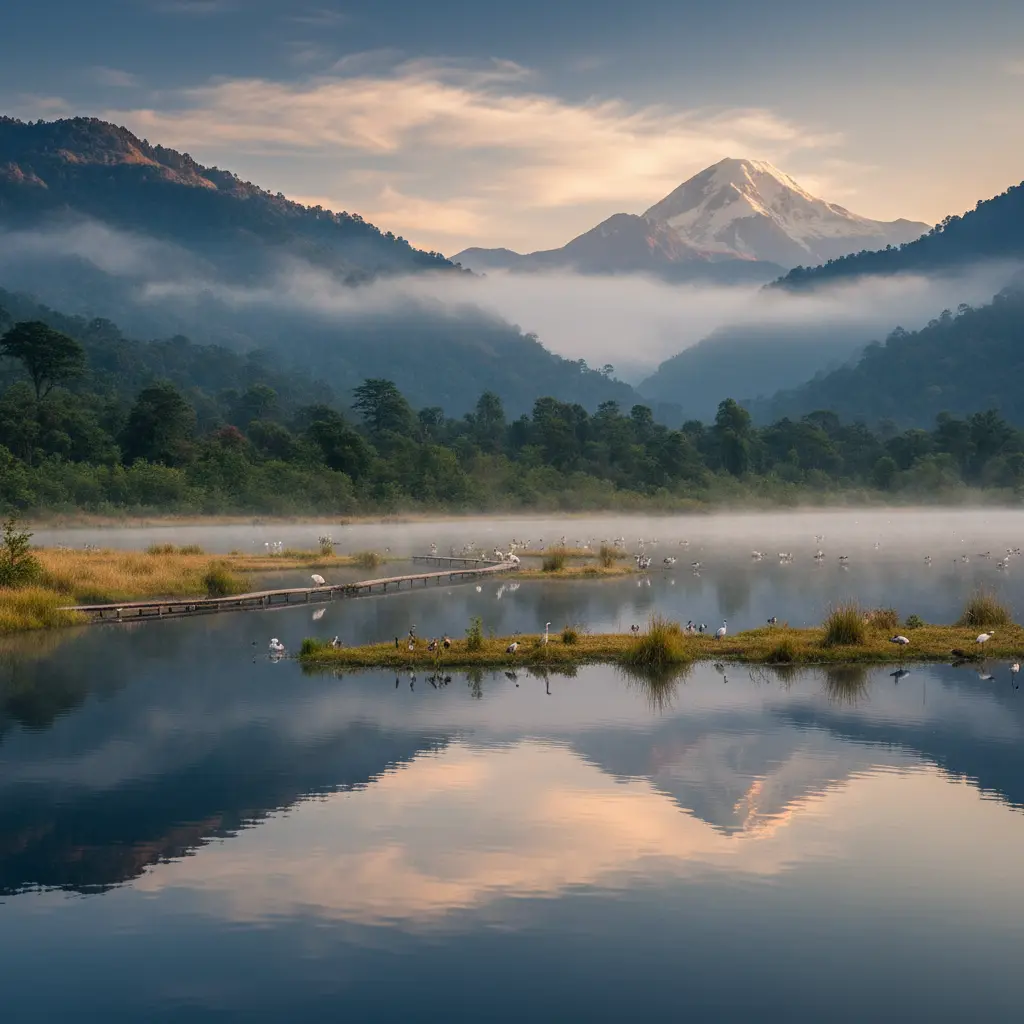
India has just added another gem to its wetland map, and this one comes from a state that’s never had this kind of recognition before. Glaw Lake, tucked away in the forests of Arunachal Pradesh, has officially become India’s 101st Ramsar site. For Arunachal Pradesh, it’s an even bigger deal — this is the very first wetland from the state to earn a spot on this global list.
What Exactly Is a Ramsar Site?
If you’re not familiar with the term, the Ramsar Convention is an international treaty, first signed way back in 1971, designed to protect wetlands that have real ecological weight — places that support unique plants, animals and often, entire communities that depend on them for water and livelihood. To be listed is not just a formality It means the wetland has been recognized as truly important on a global scale, not just locally admired.
So when people talk about “India Ramsar sites 2026,” they’re referring to this ongoing effort by the government to identify and protect such water bodies across the country. And Glaw Lake is the newest — and arguably one of the most scenic — additions to that list.
Where Is Glaw Lake, and Why Does It Matter?
Glaw Lake sits inside the Kamlang Tiger Reserve and Wildlife Sanctuary in the Lohit district of Arunachal Pradesh, right in the heart of the Eastern Himalayas. It’s a freshwater lake, fed continuously by mountain streams, and surrounded by dense, untouched forest. According to officials, the site and its surrounding catchment area are home to more than 150 tree species and close to 50 varieties of orchids — numbers that give a sense of just how rich this pocket of the Himalayas really is.
Union Environment Minister Bhupender Yadav made the announcement, calling it a milestone not just for the state but for the country’s broader conservation story. He pointed out that India has gone from having just 26 Ramsar sites back in 2014 to over 100 today, describing it as proof of the country’s growing seriousness about protecting its natural spaces.
Because the lake lies within a tiger reserve, it’s already part of a protected ecosystem that includes species like clouded leopards, Asian elephants, red pandas, and hoolock gibbons. That context matters — this isn’t a wetland sitting in isolation; it’s woven into a much larger web of biodiversity that the northeast is known for but rarely gets credit for internationally.
A Long-Overdue Spotlight on the Northeast
One of the more refreshing parts of this story is what it means for India’s northeastern states. The region is stunning — mist-covered hills, rare wildlife, glacial lakes — but it’s often left out of the conversation when people talk about India’s natural heritage. Most of the attention tends to go toward more “mainstream” destinations and ecosystems.
Environmentalists have been quick to point out that this recognition helps change that narrative a little. Arunachal Pradesh, in particular, is packed with ecosystems that remain barely documented, let alone studied in depth. Having Glaw Lake step into the international spotlight could open the door for more research, more funding, and hopefully more protection for other wetlands in the region that deserve similar attention but haven’t gotten it yet.
What the designation really changes on the ground: Being a Ramsar site is not just a prestige thing, there are real practical benefits. Officials say the designation will help in some tangible ways: Biodiversity protection: International recognition ups the pressure and support for protecting the plant and animal life around the lake.
Habitats for migratory birds: Wetlands such as Glaw Lake are often stopovers or breeding grounds for migratory birds and formal protection helps to preserve those patterns
Water security: The lake is important to communities living near it, directly or indirectly, for water. To protect that supply over the long term is to protect the wetland.
To sustain this momentum, the Central government has also launched a nationwide drive to enhance wetland conservation efforts across the country. The idea is to make sure that this is not just a one-time celebration, but a sustained, long-term effort to protect wetlands all over the country — an effort that ties directly into the larger story of wetland conservation in India.
A Little Lake, a Big Story Really this story is not about a single lake in a remote corner of India. It’s about realizing that some of the nation’s most critical natural resources are away from the spotlight, in places that don’t always appear in the travel brochures or the headlines. Glaw Lake’s path to Ramsar site status is proof of the fact that these are places that matter – not just for their beauty, but for the biodiversity they hold and the communities that rely on them.
For Arunachal Pradesh, this is a proud first step. For India, it’s one more entry in a list that keeps growing, site by site, region by region. And for anyone who cares about how fragile ecosystems get protected, it’s a reminder that recognition, even when it comes quietly, can make a real difference.
Arunachal Pradesh’s Glaw Lake Becomes India’s 101st Ramsar Site.