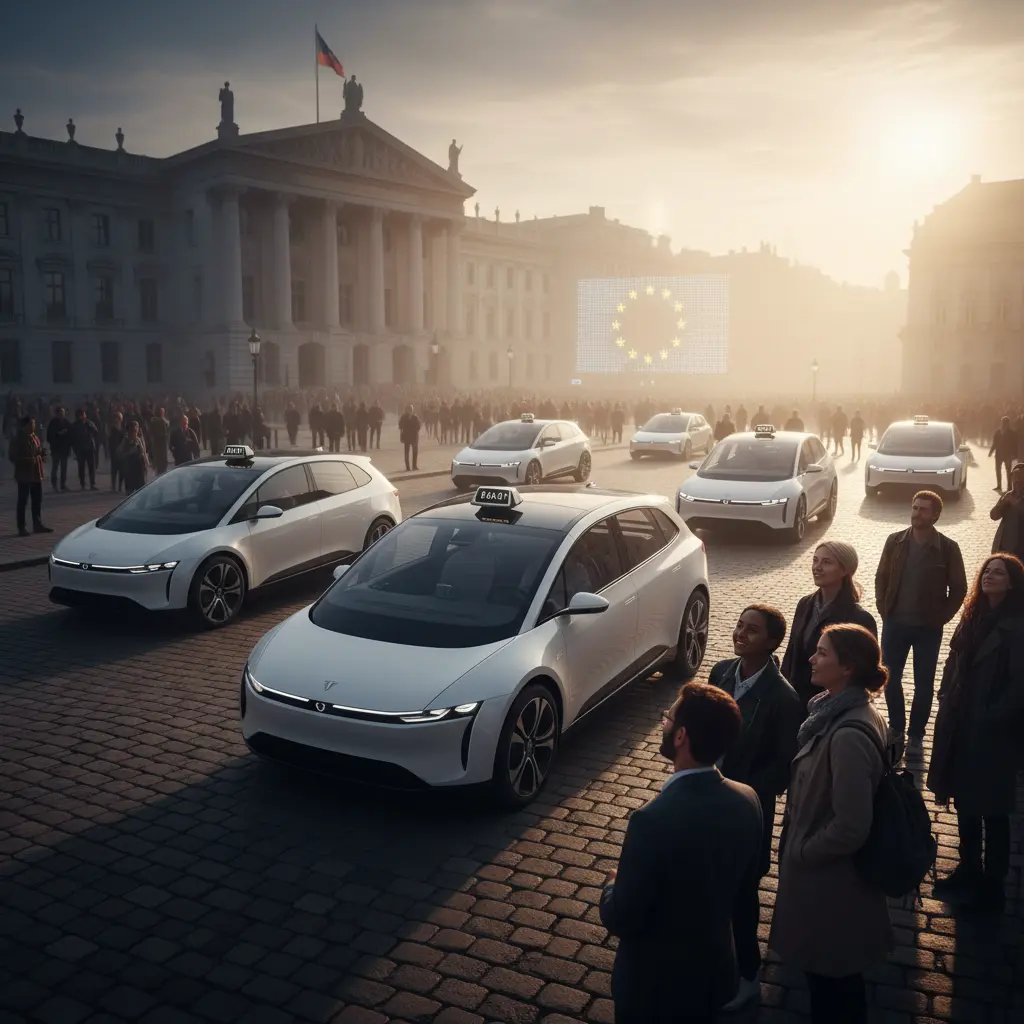
For years, Europe watched from the sidelines as driverless cars became a familiar sight on the streets of American and Chinese cities. That gap is finally starting to close. This week’s confirmation that Uber and UK autonomous-driving firm Wayve have secured a robotaxi Europe licence from London’s transport authority marks one of the clearest signs yet that the continent’s long-promised self-driving era is moving from pilot programmes into something closer to real commercial deployment.
What Actually Got Approved
Transport for London granted private hire vehicle licences to a fleet of Wayve’s autonomous Ford Mustang Mach-E vehicles, allowing them to legally carry paying passengers in the city. The approval came after months of technical review, with the vehicles inspected against TfL’s safety and operational standards before being cleared. It’s worth being precise about what this licence does and doesn’t allow: the cars will still carry a TfL-licensed driver on board to supervise the trip and step in if needed, so this isn’t yet a fully driverless free-for-all. Wayve can run up to 15 vehicles under this trial for one year.
Still, in the context of autonomous vehicles regulation 2026, this is a meaningful unlock. It puts Uber and Wayve ahead of rivals Waymo and the Lyft-Baidu partnership, both of which have also announced plans to bring robotaxis to London this year. The approval builds on a broader partnership Uber and Wayve struck with Stellantis at London’s MOVE 2026 conference, combining Wayve’s driving software, Stellantis vehicle platforms, and Uber’s ride-hailing network — a template that could be replicated across other markets once the London trial proves itself out.
Why London, and Why Now
London has effectively become the proving ground for self-driving cars Europe-wide, largely because of the UK’s Automated Vehicles Act, passed in 2024, which laid out a legal framework for driverless commercial services, liability, and insurance ahead of most of the continental EU. That head start is why so many of the biggest names in autonomous driving — Uber, Wayve, Waymo, Lyft, and Baidu among them — have all been racing to get a foothold in the city this year.
But London isn’t the only place where the regulatory dam has been breaking. Croatia beat everyone to the punch earlier this year when Zagreb-based startup Verne, backed by Rimac Group founder Mate Rimac, launched what it called Europe’s first commercial robotaxi service, using vehicles powered by Chinese autonomous driving firm Pony.ai and backed by a strategic investment from Uber. Switzerland followed with Baidu’s Apollo Go securing a Level 4 operating permit for a service called AmiGo, run jointly with Swiss Post’s PostBus arm across roughly 80 square kilometres of the country’s eastern cantons. Taken together, these approvals suggest 2026 will be remembered as the year Europe’s self-driving ambitions finally caught up with its regulatory paperwork, even if full driverless operation in most cities remains a step or two away.
The European Commission has also been under pressure to move faster. Brussels had capped the number of autonomous vehicles manufacturers could deploy across the EU at 1,500, a limit officials have signalled they intend to lift this year, though similar promises around automated valet parking slipped by nearly a year before finally being delivered in March 2026. The real bottleneck, analysts note, sits less with Brussels and more with individual member states, many of which still require a human driver behind the wheel under national traffic law.
The Bigger Picture: Robotics, Investment, and Security
This regulatory breakthrough isn’t happening in isolation. It’s arriving alongside a much broader wave of robotics infrastructure investment that’s reshaping logistics, manufacturing, and warehousing well beyond passenger transport. Consulting firms and corporate venture arms have been pouring money into physical AI this year, betting that the same sensor, edge-computing, and machine-learning advances powering robotaxis will also transform how goods move through warehouses and factories. Industry trackers estimate the broader robotics sector raised tens of billions of dollars in the past year alone, with major technology companies racing to build the software and hardware layers — from foundation models to edge-compute chips — that autonomous systems of all kinds will run on.
That expansion is bringing new risks along with it. As robotics systems become more cloud-connected and AI-driven, industry bodies have flagged a growing wave of security threats aimed at robot controllers and the cloud platforms coordinating their movements. That’s part of why the growth of AI agents cybersecurity work has become such a live theme this year — the same autonomy that lets a robotaxi navigate city streets or a warehouse robot reroute around an obstacle also creates new digital attack surfaces that need defending, especially as fleets scale into the thousands of vehicles some operators are now planning for.
What Comes Next
For now, London’s supervised trial is a cautious first step rather than a full driverless rollout, and European regulators across the EU and UK alike remain focused on proving safety cases before loosening restrictions further. But the direction of travel is now unmistakable. With Croatia, Switzerland, and the UK all granting some form of operating approval within months of each other, and Germany, Spain, and Luxembourg reportedly not far behind, Europe’s robotaxi race has genuinely begun. Whether ordinary commuters end up hailing a fully driverless ride from an app within the next year or two will depend on how quickly this current wave of supervised trials builds the public trust and safety track record that regulators — and riders — are still waiting to see.