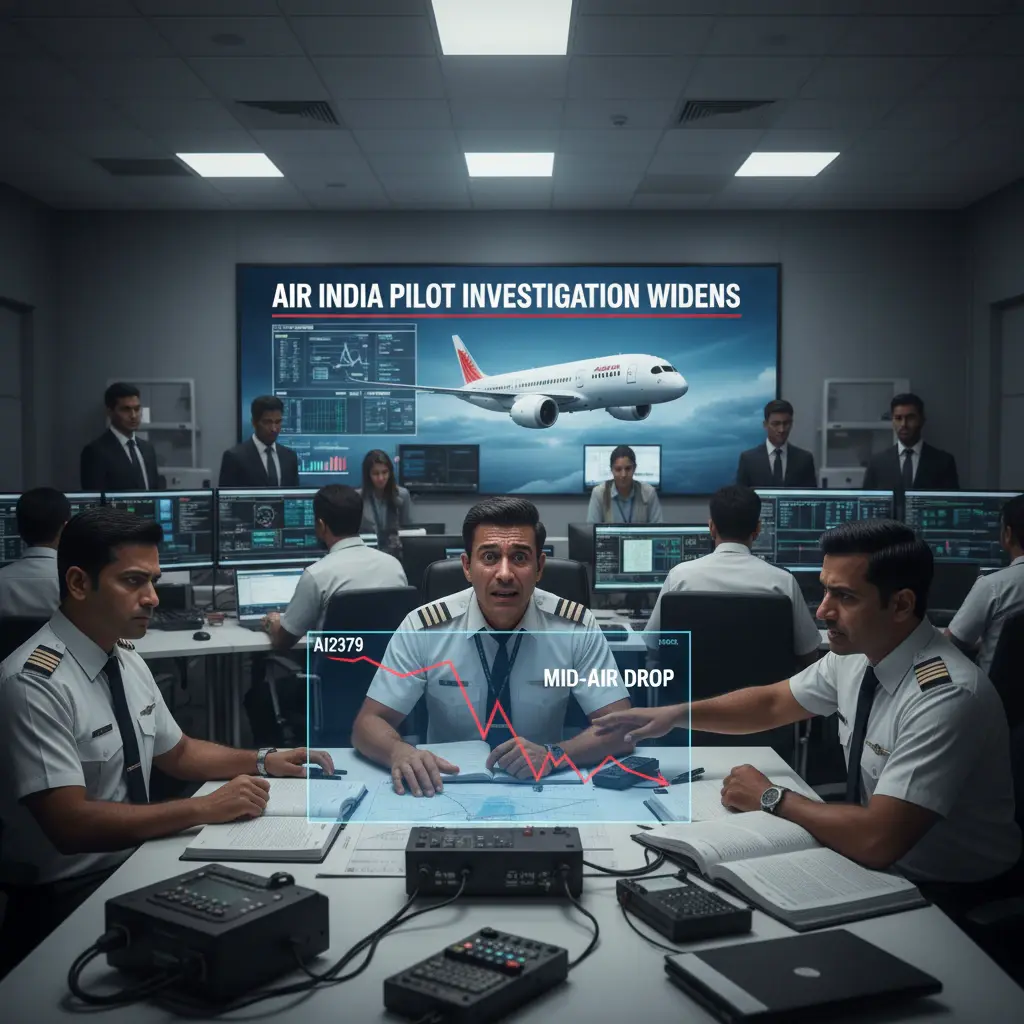
What started out as a routine turbulence report has turned into one of the most serious pilot conduct cases India’s aviation regulator has dealt with in years.
Air India flight AI2379, flying from Phuket to Delhi on August 4, suddenly lost around 300 feet of altitude mid-flight, throwing unbuckled passengers and cabin crew around the cabin. Twenty passengers and four crew members were hurt badly enough to need medical attention once the Airbus A320neo landed safely in Delhi. At first, the airline chalked it up to turbulence, a plausible enough explanation given how often clear-air turbulence catches even experienced crews off guard. But in the days since, the story has taken a much darker turn.
The Drug Test Results
The pilot-in-command has now tested positive for marijuana in a confirmatory laboratory test, following an initial “non-negative” screening result that required further verification. Officials familiar with the report say the confirmatory test removed any doubt: the captain had psychoactive substances in his system during the flight. The Directorate General of Civil Aviation (DGCA) has taken both the captain and the co-pilot off the roster while the Aircraft Accident Investigation Bureau (AAIB) carries out a full probe.
Under DGCA’s existing rules on psychoactive substance use, a first confirmed positive doesn’t mean an automatic end to a flying career. It typically triggers grounding, mandatory rehabilitation, and a medical fitness review before any return to duty is considered. A second offense carries a three-year suspension, and a third results in permanent cancellation of the pilot’s license. Still, given the scale of this incident and the number of people injured, aviation watchers expect the regulatory response to be unusually strict.
A Cockpit Thrown Into Chaos
What makes AI2379 stand out isn’t just the drug test — it’s what reportedly happened in the cockpit in the moments before and after the plunge. According to accounts cited by Indian media, the pilot-in-command was not seated when the aircraft hit the sudden drop, and eyewitness and crew reports describe him as disoriented and struggling to move normally afterward. Cabin crew are said to have physically helped him back to his seat.
It was the co-pilot who took over the controls, stabilized the aircraft, and brought it down safely in Delhi — a response that aviation professionals have pointed to as the reason the flight didn’t end far worse. The co-pilot also alerted ground control about the captain’s condition, which is reportedly what pushed authorities to order a full psychoactive-substance test rather than a routine breathalyser check alone.
In the aftermath, cabin crew are understood to have filed a formal complaint about the captain’s conduct during the flight. Air India has not publicly commented on the specifics of that complaint, and the airline has kept its public statements limited mostly to confirming that both pilots were off-rostered pending the investigation.
What Investigators Are Looking At
The AAIB has classified the event as a serious incident and is now working through cockpit voice and flight data recorder information alongside witness statements. Investigators are reportedly examining the case from multiple angles at once: the captain’s fitness to fly, the sequence of events in the cockpit, and a handful of technical anomalies the co-pilot flagged in his post-flight report. How those technical snags relate, if at all, to the sudden altitude loss is one of the open questions the probe is expected to answer.
This isn’t the first time an Air India pilot has run into trouble over substance-related violations, though incidents involving in-flight impairment and passenger injuries on this scale are rare. India introduced mandatory random psychoactive substance testing for pilots and air traffic controllers only a few years ago, largely in response to safety concerns raised after earlier violations went undetected until it was almost too late.
Why This Case Matters
Beyond the individual pilot’s fate, the AI2379 case is reviving a broader conversation in Indian aviation circles about crew resource management, cockpit protocols, and how airlines monitor pilot wellbeing between flights. A single-aisle jet carrying more than a hundred passengers dropping 300 feet without warning is frightening enough on its own. Add allegations that the person meant to be in command wasn’t in his seat, and it’s easy to see why this has become one of the most closely watched aviation safety stories in India this year.
For now, Air India has stayed largely quiet publicly, letting the DGCA and AAIB process run its course. The airline did confirm that both pilots were removed from flying duty as a precaution, which is standard practice once an incident is classified as serious. Passengers who were on board have described the drop as sudden and violent, with several saying there was no warning before the aircraft lurched downward.
The findings from the AAIB probe, once complete, are expected to shape not just the outcome for this particular pilot but potentially influence how Indian carriers handle psychoactive substance screening and cockpit oversight going forward. Until then, the case remains a stark reminder of how quickly a routine flight can turn into a safety crisis — and how much rests on split-second decisions made thousands of feet in the air.
Air India Pilot Investigation Widens After AI2379’s Terrifying Mid-Air Drop.