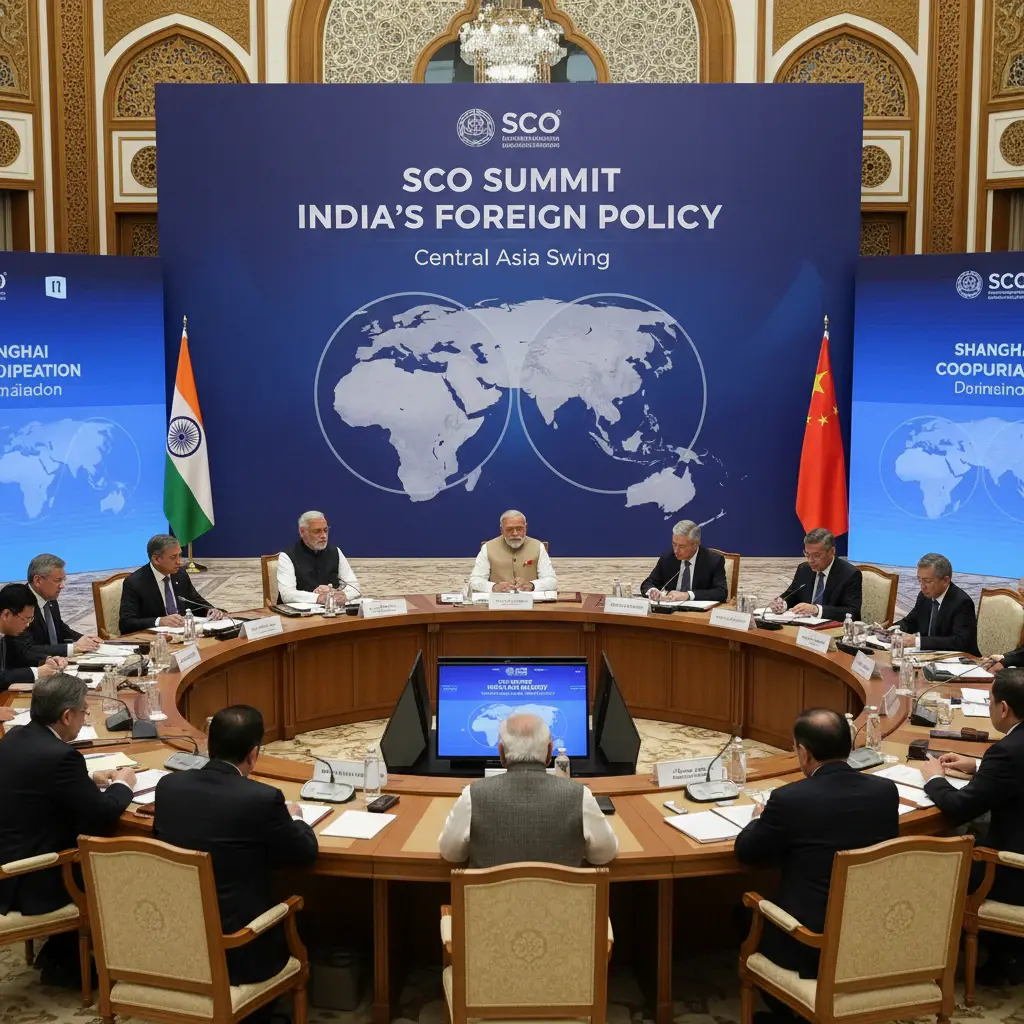
Prime Minister Narendra Modi is once again packing his bags for one of the year’s most closely watched diplomatic outings. He is set to travel to Kyrgyzstan later this month to attend the Shanghai Cooperation Organisation summit in Bishkek, scheduled for August 31 and September 1. The trip will also include a stop in Uzbekistan just before the summit begins, giving New Delhi a chance to deepen a bilateral relationship that has quietly gained momentum over the past year.
It’s worth clearing up a common mix-up here. Last year’s SCO gathering was hosted by China in Tianjin, marking Modi’s first visit to the country in seven years and a genuinely historic moment in India-China relations. This year, the chairmanship has passed to Kyrgyzstan, so the summit itself moves to Bishkek. But that doesn’t mean the India-China storyline fades into the background. Chinese President Xi Jinping is expected to be present, along with Russian President Vladimir Putin and a long list of regional leaders, which means the sidelines of this year’s summit could once again become the real venue for consequential diplomacy.
For India, the SCO summit has become something bigger than a routine multilateral checkbox. It sits at the intersection of nearly every major thread in India’s foreign policy right now: managing a still-fragile thaw with Beijing, keeping Moscow close even as Washington bristles over Russian oil purchases, and asserting the kind of “strategic autonomy” that New Delhi has leaned on heavily since Donald Trump’s tariff moves rattled trade ties with the US. Modi’s decision to show up in person, year after year, is itself a signal that India intends to keep a seat at every table rather than aligning fully with any single bloc.
The India-China relationship, in particular, remains the storyline everyone will be watching. Ties between the two countries have been cautiously improving since the two leaders met on the sidelines of the BRICS summit in Kazan in October 2024, and that momentum carried through last year’s Tianjin meeting, where both sides agreed that their differences shouldn’t be allowed to harden into disputes. Border talks have resumed, direct flights and visa processes have eased, and the Kailash Mansarovar Yatra pilgrimage restarted after a long pause. None of this erases the deeper mistrust left behind by the 2020 Galwan clashes, but it does suggest both governments see value in keeping the relationship on a steadier footing.
If Modi and Xi do meet again on the sidelines in Bishkek, expect the conversation to circle familiar themes: de-escalation along the Line of Actual Control, trade imbalances, and the broader question of how two nuclear-armed neighbours with a combined population of nearly three billion people manage to coexist without letting friction spiral. Indian officials have also been raising concerns about a mega-dam China is building on a river that flows into India, a subject likely to come up again given how sensitive downstream water issues have become.
There’s also a Pakistan angle that rarely gets left out of SCO coverage. With India and Pakistan both members of the grouping, and with tensions between the two countries still simmering after the Pahalgam terror attack and the military exchanges that followed, New Delhi is expected to push hard on counter-terrorism language in whatever joint statement emerges from the summit. India has consistently used the SCO platform to argue against what it calls double standards in how member states treat terrorism, a point of friction that has occasionally slowed down consensus within the bloc.
Beyond the headline-grabbing bilateral meetings, there’s a quieter logic behind Modi’s Central Asia itinerary. The stop in Uzbekistan ahead of the summit reflects India’s growing interest in Central Asia as a region in its own right, not just a backdrop for bigger-power diplomacy. Tashkent has been positioning itself as a multi-vector player balancing ties with Russia, China, Turkey and India, and New Delhi appears keen to translate goodwill in the region into more substantial economic and defence cooperation.
The timing of all this matters too. India is gearing up to host the BRICS summit in New Delhi later this year, giving Modi added incentive to arrive in Bishkek with some diplomatic wins already banked. A cooperative tone with China now could make the BRICS hosting duties considerably smoother, especially if Xi and Putin’s attendance is on the line.
None of this suggests India is drifting away from its other partnerships. The Quad, ties with Washington, and India’s own economic ambitions remain firmly in the picture. What the SCO summit really captures is India’s ongoing balancing act: staying engaged with China and Russia without becoming dependent on either, while using platforms like the SCO to project itself as an indispensable, non-aligned power in a world that increasingly resists tidy categorisation.
Whether this year’s summit produces any concrete breakthroughs remains to be seen. But if the pattern of recent years holds, the real story won’t be found in the official communiqué. It will be in the handshakes, the closed-door conversations, and the body language between leaders who have spent the past year cautiously testing whether old rivalries can give way to something more workable.
Modi’s Central Asia Swing: What the SCO Summit Really Signals for India’s Foreign Policy.