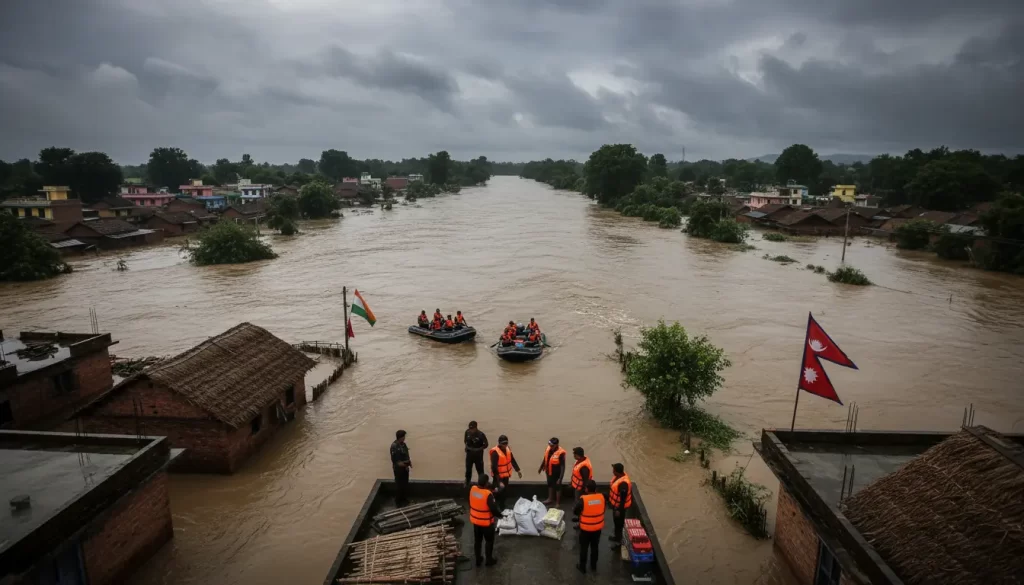
Nepal is going through one of its worst monsoon disasters in years. A series of flash floods tore through the Rasuwa and Nuwakot districts on the morning of August 26, and by the time rescue teams could even get a proper look at the damage, the human cost was already staggering. As of the latest count, at least 95 people have died in Nepal, with three more confirmed dead across the border in China. Hundreds of others, including foreign trekkers and tourists who were in the region for the Himalayan trails, are still unaccounted for.
What makes this disaster particularly frightening is how it came together. Officials believe a combination of factors triggered the floods: unusually heavy rainfall, a suspected glacial lake outburst flood (GLOF) near the Nepal-China border, and a minor earthquake that appears to have set off avalanches in the upper catchment areas. Water from the Bhotekoshi and Trishuli river systems surged downstream with almost no warning, swallowing entire settlements along the way. In Nuwakot alone, floodwaters tore through commercial hubs like Betrawati, Trishuli Bazaar, Dhunge, and Devighat, leaving behind a trail of collapsed buildings, washed-out roads, and families with nowhere to go.
The scale of the destruction to Nepal’s infrastructure is hard to overstate. Six major hydropower and transmission facilities, including the Rasuwagadhi and Chilime plants along with the Trishuli 3A and 3B stations, have been damaged or knocked offline entirely. That’s not just an inconvenience; it’s a hit to a country that depends heavily on these projects for both domestic electricity and export revenue. The Nepal Army, Armed Police Force, and Nepal Police have all been mobilized, backed by helicopters and medical teams, but the disrupted phone and internet networks in the affected districts have made search and rescue painfully slow.
India Watching the Rivers Closely
Given that several of these rivers don’t stop at the border, India wasted no time putting its own emergency machinery on alert. Union Home Minister Amit Shah spoke directly with the Chief Ministers of Uttar Pradesh and Bihar to discuss the downstream risk, since the same water eventually flows into the Gandak and other river systems that run through northern India. The Central Water Commission flagged a sudden rise in the Trishuli river’s level near Furke Khola, roughly 160 kilometers from the Indian border, and warned that the Gandak could see waves rising by as much as three meters as the floodwater makes its way south.
That warning was enough to trigger a rapid response on the ground. Nearly 5,000 people have already been evacuated from six flood-prone districts in Bihar as authorities keep a close watch on rising water levels. West Champaran, East Champaran, Gopalganj, Saran, Muzaffarpur and Vaishali districts have been placed under special vigilance and district magistrates have been asked to keep a vigil on the embankments, low-lying pockets, bridges and culverts round-the-clock. The districts of Sitamarhi and Sheohar are also under close watch because both have a history of flooding whenever the Gandak swells.
The National Disaster Response Force and State Disaster Response Force have both been placed on standby, with at least one NDRF team already sent to Gopalganj and more expected to follow depending on how the situation develops. Bihar’s Water Resources Department has also opened dozens of gates at the Gandak Barrage in Valmikinagar to let the river discharge safely rather than risk a sudden embankment breach, something the state has dealt with painfully in past monsoon seasons. Uttar Pradesh’s administration, under Chief Minister Yogi Adityanath, has echoed similar precautions along its own stretch of the border.
Officials on the Indian side have been careful to strike a balance between urgency and calm. The Home Ministry’s messaging has repeatedly stressed that there’s no need for panic, even as evacuation drives continue and community kitchens and relief shelters are kept ready in vulnerable pockets. According to the Central Water Commission, reservoir levels on the Nepal side have actually started reducing, which officials are reading as a cautiously positive sign that the worst surge may already be behind the border regions, even if the danger hasn’t fully passed for India’s low-lying districts.
A Familiar but Deadly Pattern
For people living along the Nepal-Bihar border, this kind of scare isn’t new. Nearly every monsoon season brings some version of this story: heavy rain upstream in Nepal, a swollen Gandak or Kosi, and anxious families in northern Bihar watching the water rise. What sets this year apart is the sheer speed and violence of the flooding, driven by that rare combination of a glacial lake outburst and seismic activity striking almost at once, and just how high the death toll has already climbed in Nepal itself.
For now, the focus on the ground remains split between two urgent tasks: Nepal’s rescue teams are racing against time to find those still missing in Rasuwa and Nuwakot, while Indian authorities in Bihar and Uttar Pradesh are doing everything they can to make sure this tragedy doesn’t repeat itself downstream. With monsoon clouds still hanging over the Himalayan foothills, both sides know there’s little room for complacency in the days ahead.