Some news arrives and the whole country seems to pause for a moment. The moment arrived on the morning of Thursday, October 8, 2026, when news broke that Nana Patekar, one of Indian cinema’s most fearless actors, had died at 75. For many people, the Nana Patekar death was a loss that felt personal, even if they had never met him.
What Happened in Goa
Doctors said Patekar died at 5:20 am at his home in Goa after a severe cardiac arrest. He was reportedly found unconscious at his residence in Dona Paula, and had complained of a headache the night before while at home with his nephew, Prasad Patekar. He was rushed to hospital, but it was too late. Doctors said he was brought in dead, and that cardiac massage lasting nearly an hour could not save him.
There is something quietly heartbreaking about how ordinary it all sounds: an evening at home, a headache, a family member nearby. A man who spent decades on screen as a force of nature left the world in the early hours, away from the cameras.
A State Funeral for the Actor
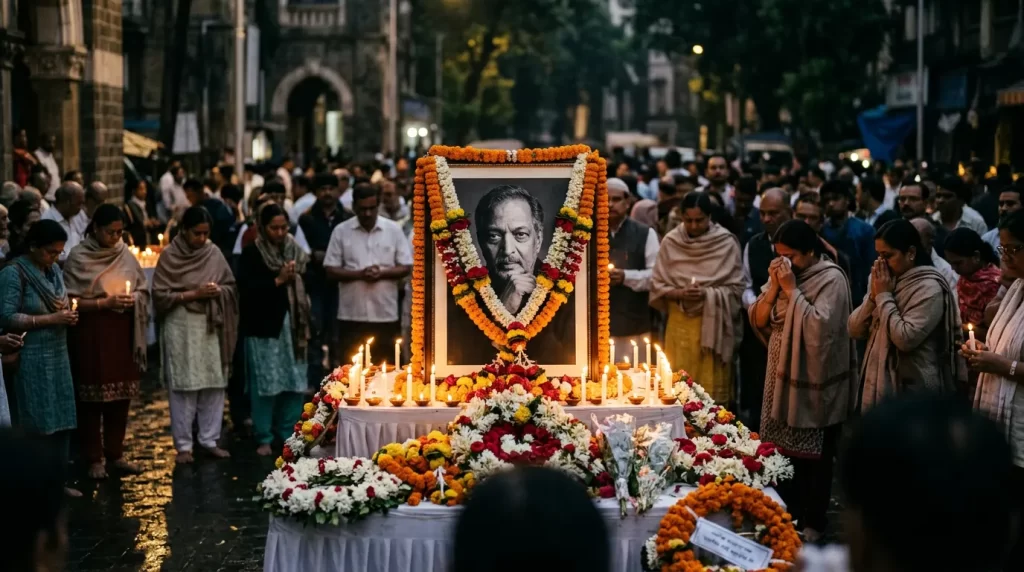
Maharashtra has decided to say goodbye in a way reserved for people who shaped its culture. Cultural Affairs Minister Ashish Shelar announced a state funeral, in recognition of Patekar’s contribution to theatre and film. Preparations are underway in Pune, with last rites expected on October 9.
A Nana Patekar state funeral feels fitting. He was never only a film star. He was a son of Maharashtra who carried its stage traditions into Hindi cinema and never forgot where he came from.
Tributes From the Top and From Colleagues
Prime Minister Narendra Modi expressed grief, and President Droupadi Murmu paid tribute, remembering his powerful performances. Modi spoke of his intensity and unmistakable presence, and it’s hard to think of better words. Actor Annu Kapoor was among the colleagues who paid their respects, and more tributes from across the industry are likely to follow in the coming days.
The Man Behind the Roar
Born Vishwanath Patekar in 1951 in Murud-Janjira, in today’s Raigad district, he trained at the Sir J.J. Institute of Applied Art in Mumbai. He made his screen debut with Gaman in 1978, then spent years in smaller Marathi roles and theatre before the wider world caught on. The stage mattered to him. He came up through Marathi theatre, and you could feel it in his work: the timing, the pauses, the way he could go from a whisper to a thunderclap in a single breath.
When people talk about Nana Patekar films, they usually start with Parinda, where his menacing, unpredictable Anna became one of the great screen villains. Then came Krantiveer, which earned him a National Film Award, and later the comic chaos of Welcome, where he proved he could make audiences laugh as easily as he once made them flinch. He could play a gangster, a cop, a broken father or a clown, and somehow you believed every version.
His honours reflect that range. He won three National Film Awards and four Filmfare Awards, and he received the Padma Shri in 2013. He is also remembered as the only actor to win Filmfare awards for Best Actor, Best Supporting Actor and Best Villain, which says a lot about how few boxes he fit into.
More Than a Movie Star
What many people admired most about Patekar was what he did off screen. He served as a Major with the Maratha Light Infantry during the Kargil War in 1999, something he approached with genuine seriousness rather than as a publicity exercise. He also co-founded the Naam Foundation, which helped drought-affected farmers in Maharashtra, and he was known for keeping a simple life, even in his years of stardom.
That blend of fierce screen presence and plain-spoken humility is why he earned a rare kind of affection. Audiences loved his characters, but they trusted the man. For a lot of people in Maharashtra, he wasn’t a distant Bollywood legend. He felt like one of their own.
Remembering the Voice
Anyone who grew up watching his films can probably still hear him: the rasp, the sudden lunges of anger, the dry humour that arrived when you least expected it. Few actors have had a voice that distinctive. Fewer still could turn a single line of dialogue into something people repeated for decades.
His last public appearance at an event in Goa has been widely shared since the news broke. He reportedly said he didn’t know whether he would be there the next day. Whether he meant it lightly or not, those words now land differently.
What He Leaves Behind
Patekar leaves behind his wife, Neelkanti, and his son, Malhar, along with a body of work spanning more than four decades. Younger actors will keep studying his performances, not for technique alone but for the honesty underneath it. He never seemed to be pretending, even when he was playing someone monstrous.
The Bollywood legend is gone, but the work isn’t. His films will keep playing on television screens at odd hours, in living rooms where someone will stop flipping channels and say, “Wait, this is Nana.” That is a quiet kind of immortality, and he earned it.
For now, the country mourns. Fans are sharing old clips, theatre colleagues are telling stories, and a state prepares to give him the farewell his career deserves. Whatever else people remember, they will remember that when Nana Patekar was on screen, you could not look away.