
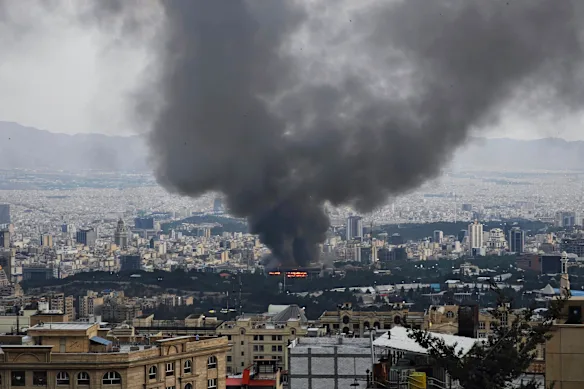
June 17: In a dramatic escalation of tensions between Israel and Iran, a missile strike allegedly carried out by Israeli forces targeted a state-affiliated Iranian television studio on Monday. The attack occurred during a live broadcast, with the anchor seen abruptly leaving the set moments before the missile hit, raising questions about a potential forewarning or internal alert.
The targeted studio, located in Tehran, was reportedly linked to Iran’s state media operations and believed by Israeli intelligence to be involved in broadcasting strategic communications for the Islamic Revolutionary Guard Corps (IRGC). The building was destroyed in the strike, though no casualties have been officially reported as of now.
Eyewitnesses and video clips circulating on social media captured the moment the anchor walked off the set mid-sentence. Seconds later, the studio was struck by a precision-guided missile, sending debris flying and setting parts of the building ablaze. Emergency responders quickly arrived at the scene as security forces cordoned off the area.
While Iranian officials have not released an official statement, semi-official media outlets condemned the strike as an act of “aggression” and warned of retaliation. Reports suggest the anchor, whose identity has not been publicly disclosed, has been placed under protective custody. The circumstances surrounding their timely escape have sparked speculation, with some sources suggesting a possible leak or intelligence warning.
Israel has maintained strategic ambiguity regarding the incident, offering no direct comment. However, recent statements from Israeli defense officials have emphasized a commitment to dismantling Iranian communication hubs allegedly used to coordinate regional proxy operations and disinformation campaigns.
Military analysts view the strike as a shift in Israel’s strategy, targeting not just military and nuclear facilities but also Iran’s media and information infrastructure. “This move signals an evolving theater of conflict — one that includes psychological and information warfare,” said Dr. Aysha Farooqi, a Middle East security analyst.
The strike follows a series of recent covert and overt confrontations between the two regional rivals, including cyberattacks, cross-border strikes, and intelligence operations. The timing of the missile attack — during a live broadcast — has amplified its symbolic weight, potentially sending a strong message about the reach and precision of Israeli operations.
As regional and international observers call for restraint, concerns over a broader escalation remain high. The United Nations has not yet issued a formal response, though diplomatic backchannels between key stakeholders are reportedly active.
This incident is expected to further strain Israel-Iran relations and may trigger retaliatory measures from Tehran in the coming days. With the Middle East already on edge, the targeting of a media outlet represents a significant new dimension in the ongoing conflict.Tools

