
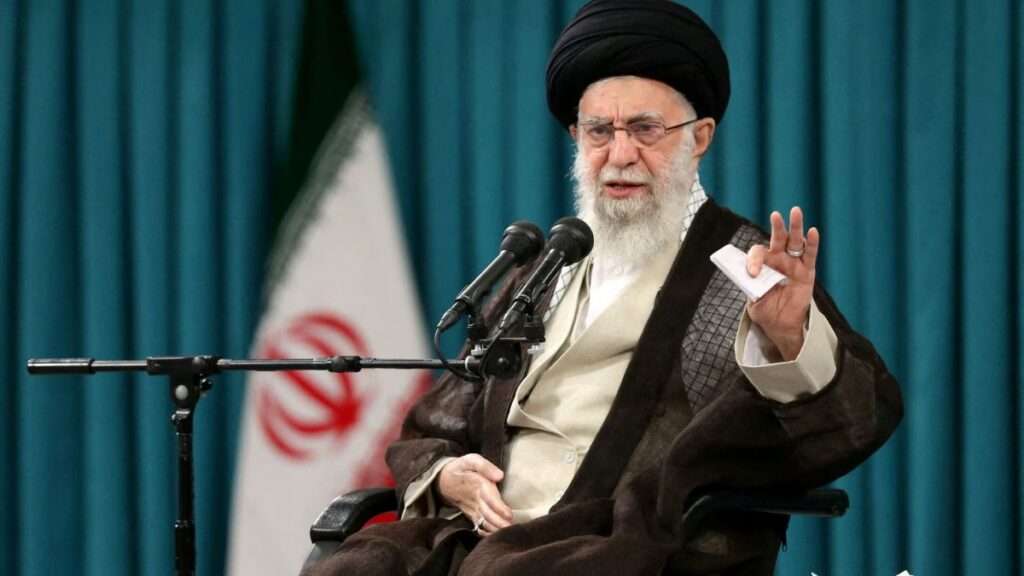
June 18, 2025 — Iran’s Supreme Leader Ayatollah Ali Khamenei issued a strong response Tuesday to former U.S. President Donald Trump’s recent comments demanding Iran’s “unconditional surrender,” warning that the Islamic Republic will meet pressure with resistance. Speaking before top military leaders in Tehran, Khamenei proclaimed, “The battle begins,” marking a sharp escalation in U.S.-Iran tensions.
Khamenei criticized Trump’s statements as evidence of what he described as “arrogant and outdated colonial thinking,” affirming that Iran would not yield to threats or intimidation.
“We will not bow to foreign commands. Our nation is prepared for any confrontation — militarily, politically, and spiritually,” said the Iranian leader, addressing a gathering of commanders from the Islamic Revolutionary Guard Corps (IRGC).
His remarks came just days after Trump, during a campaign event in Florida, declared that if re-elected, he would force Iran to accept complete U.S. terms, threatening a return to crippling sanctions and total dismantling of any remaining nuclear framework.
In Tehran, the Supreme Leader’s remarks were met with strong approval from senior officials, signaling unity within the Iranian leadership. Khamenei emphasized that Iran has significantly expanded its defensive and strategic capabilities in recent years and is not afraid of external pressure.
The exchange has sparked concern among international observers and diplomats. Officials from the European Union have called for both nations to de-escalate their rhetoric and return to diplomatic negotiations. “This kind of language risks triggering a deeper conflict that could destabilize the wider region,” one EU spokesperson said.
U.S.-Iran relations have been strained for years, particularly since Washington’s withdrawal from the 2015 Joint Comprehensive Plan of Action (JCPOA). Although the Biden administration made efforts to revive the agreement, talks stalled in 2024, and tensions have since simmered, with rising friction over sanctions, military activities in the Gulf, and Iran’s regional influence.
Analysts say Khamenei’s speech reflects Iran’s strategy of defiance and regional positioning. “This is a calculated message to both the Iranian public and Iran’s adversaries,” said political expert Dr. Nima Sadri. “The leadership wants to project strength while preparing for any future confrontation — diplomatic or otherwise.”
Meanwhile, Iran’s Revolutionary Guard announced increased readiness levels at several key military installations, citing the possibility of external threats in light of recent developments.
With both countries approaching pivotal political moments — the United States gearing up for elections and Iran preparing for parliamentary votes — the heated exchange is likely to shape foreign policy decisions and regional dynamics in the months ahead.

