
Introduction:
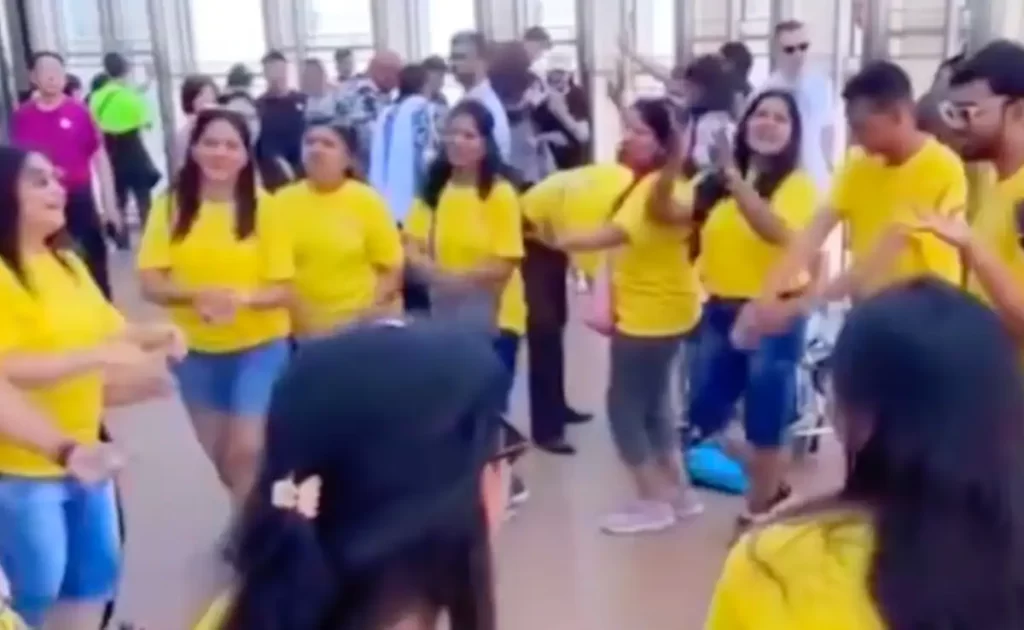
In a recent viral incident, a group of Indian performers was seen doing Garba, the traditional Gujarati folk dance, atop the iconic Burj Khalifa in Dubai. While the event was intended to be a vibrant cultural showcase of Indian heritage on an international platform, it has ignited a wave of online criticism and debate. The viral video, widely shared on social media, has polarized public opinion, with some praising the move as cultural pride and others accusing it of being disrespectful or misplaced.
Body:
The video, reportedly filmed with permission atop the world’s tallest skyscraper, shows a group dressed in traditional chaniya cholis and kedia twirling and clapping to rhythmic Garba beats against the stunning Dubai skyline. Organized by an Indian influencer-led event management team, the performance aimed to promote Indian culture during the run-up to Navratri 2025, a nine-day festival that celebrates feminine energy and the victory of good over evil.
However, what was supposed to be a celebration of heritage quickly turned controversial. Social media platforms like X (formerly Twitter) and Instagram were flooded with mixed reactions. The hashtag #GarbaAtBurjKhalifa started trending, with users divided on the ethical and cultural implications of the act.
Some netizens lauded the move, stating it projected Indian traditions on a global platform. “This is India on the world stage. Cultural pride knows no borders,” wrote a user. Many pointed out that Dubai is home to a vast Indian diaspora, and such expressions of culture are a natural extension of the community’s identity.
But a large section of viewers expressed disapproval, claiming the dance, especially atop a commercial and symbolic structure like Burj Khalifa, lacked context and reverence. Critics accused the organizers of turning sacred traditions into performance stunts for likes and followers. One user commented, “Garba is not a prop for content creation. There’s a time, place, and sanctity to be preserved.”
Others questioned if necessary religious or cultural approvals were sought, or if this act was merely a case of performative nationalism. Concerns were also raised about permissions from the Burj Khalifa authorities, cultural sensitivities in the UAE, and safety regulations being followed during the shoot.
Experts in cultural anthropology weighed in, highlighting the increasing trend of traditional practices being repackaged for digital audiences. “While global exposure is valuable, the intent and setting must align with the essence of the culture. Otherwise, it risks trivializing deeply rooted traditions,” noted Dr. Meena Kaul, a professor of South Asian Studies.
Conclusion:
As debates around the Garba-at-Burj Khalifa video continue to swirl, the incident reflects the broader conversation about cultural expression in the digital age. While globalization allows for greater visibility and pride in traditions, it also demands responsibility, sensitivity, and authenticity. Whether viewed as a proud celebration or a misplaced spectacle, the video has undeniably sparked an important dialogue on how Indian culture should be represented on global stages in an era driven by virality.

