
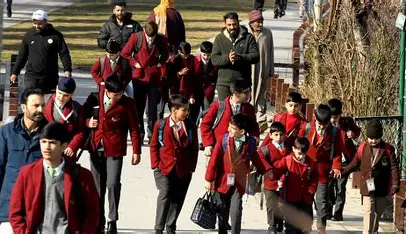
In light of the prevailing heatwave conditions and rising temperatures across the Kashmir Valley, the Directorate of School Education, Kashmir (DSEK), has officially declared a 15-day summer vacation for all government and recognized private schools. The break will commence from June 23 and continue until July 7, 2025.
The announcement was made on June 22 by the DSEK following consultation with the local administration and weather departments. The region has been experiencing unusually high temperatures for the past two weeks, with Srinagar and other major towns recording highs exceeding 34°C — well above the seasonal average.
In an official statement, the DSEK emphasized that the decision was taken keeping in view the health and safety of students, particularly young children, who are more vulnerable to heat-related illnesses. “Due to the soaring temperature and forecast of continued heatwave, it is in the best interest of students and teaching staff to observe a mid-year summer vacation,” read the circular issued by the directorate.
The notification also instructed schools to ensure that holiday homework is assigned and that academic continuity is maintained through digital or remote learning resources, wherever feasible. The DSEK has advised parents and guardians to keep children hydrated, indoors during peak hours, and protected from extreme weather.
This marks the first major seasonal break for students since the academic session began earlier this year in March. While winter vacations in Kashmir typically extend for nearly three months due to extreme snowfall, summer breaks are shorter but necessary in the face of rising climate variability.
Educational institutions in Jammu division, on the other hand, operate under a different calendar owing to the distinct climatic zones in the Union Territory. Jammu schools have already observed their summer vacations in May and June.
Meanwhile, health authorities have issued separate advisories for the general public, urging caution during daytime travel, avoiding exposure to direct sunlight, and consuming light meals and fluids regularly. Meteorological officials have predicted that the heatwave may persist for another week before any significant drop in temperature is expected.
The early onset of high summer temperatures this year has once again raised concerns about climate change and its growing impact on everyday life in the Himalayan region. Experts note that such weather fluctuations could become more frequent, affecting not just health but also education and agricultural schedules in the valley.

