
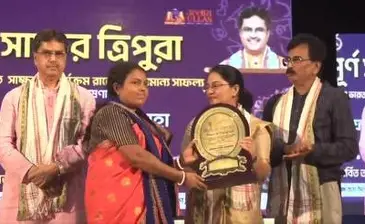
Tripura has officially attained the status of a fully literate state, becoming the third in the country to achieve this milestone after Mizoram and Goa. The declaration was made following an extensive review by the state’s Department of Education in collaboration with literacy mission authorities.
Chief Minister Dr. Manik Saha, while addressing a press conference in Agartala, said the achievement reflects the commitment of the government, educators, and citizens alike. “This accomplishment belongs to every household, teacher, volunteer, and student who believed in the power of education,” he stated.
The path to 100% literacy in Tripura involved a decade of focused efforts, especially in rural and tribal regions. Programs such as Shiksha Doot, School Chalo Abhiyan, and targeted adult learning initiatives played a vital role. According to state officials, significant progress was made in reaching remote areas, addressing drop-out rates, and promoting education in indigenous languages.
The 2011 Census reported Tripura’s literacy rate at over 87%. In recent years, the state government intensified its efforts through door-to-door awareness drives, free educational kits, mobile learning units, and collaboration with local community leaders to eliminate illiteracy entirely.
Education Minister Ratan Lal Nath emphasized the importance of inclusion in achieving this goal. “We ensured that no community, however remote or marginalized, was left behind. Tribal villages, tea garden areas, and border communities were all part of this transformation,” he noted.
With this milestone, Tripura now stands alongside Mizoram and Goa—states that have long maintained high literacy rates through structured policies and consistent investment in education. Analysts believe Tripura’s accomplishment will have a positive ripple effect on employment, digital awareness, and social participation.
However, education experts also stress that reaching full literacy is only one step. “The next challenge lies in ensuring quality education, digital skills, and access to higher learning. Literacy must now evolve into lifelong learning,” said Dr. Anjali Das, an academician from Tripura University.
Concerns remain about the migration of educated youth to other states for better opportunities. State authorities have indicated that upcoming policies will focus on skill development, entrepreneurship training, and local job creation to retain talent within the state.
Tripura’s success is being hailed as a model for other northeastern states and regions across India striving to improve educational outcomes. The government has stated that literacy assessments will continue annually to sustain and improve educational engagement among all age groups.

