
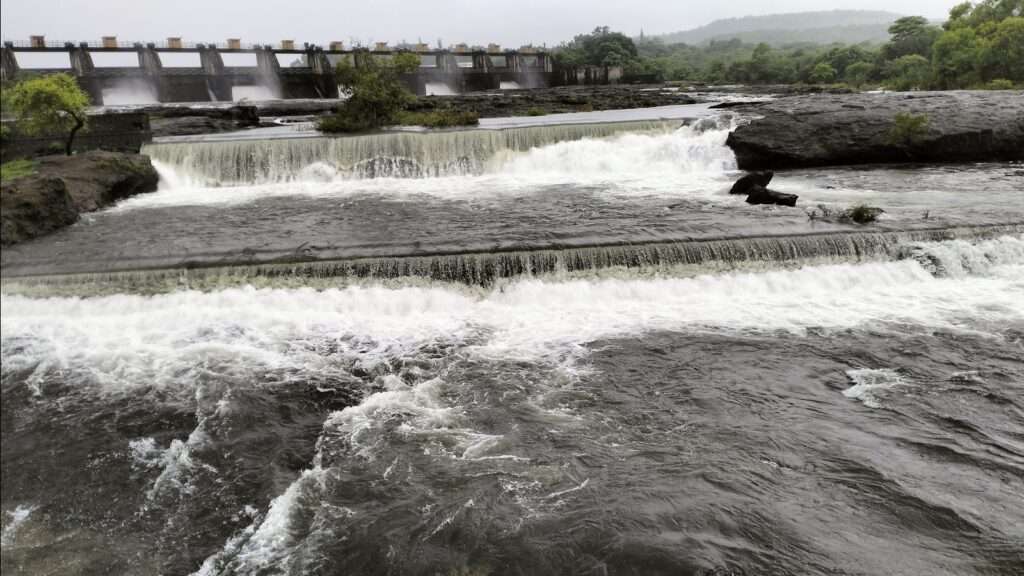
June 26: The water storage in Pune’s four major dams—Khadakwasla, Panshet, Varasgaon, and Temghar—has reached 25.39% of their collective capacity, marking a significant improvement as monsoon rainfall intensifies across the region. According to the latest data released by the Water Resources Department, the combined live water storage in these reservoirs now stands at approximately 7.36 TMC (thousand million cubic feet) out of the total capacity of 29.15 TMC.
This surge in water levels comes as a relief to the residents and farmers of Pune, who had been concerned about the delayed onset of monsoon. The catchment areas of these dams have witnessed moderate to heavy rainfall over the past week, significantly contributing to the increased inflow. The India Meteorological Department (IMD) reported that Pune has received above-average rainfall for the month of June so far, with more showers expected in the coming days.
Among the four dams, Khadakwasla, which is crucial for Pune city’s drinking water supply, has shown a steady rise in water levels. Panshet and Varasgaon, which play a key role in supporting irrigation and rural water needs, have also recorded improved storage figures. Temghar dam, although smaller in capacity, has also benefitted from the recent showers.
Officials stated that while the current water level is encouraging, it still falls short of the desired mark of 40–45% storage typically expected by the end of June. “We are witnessing a promising start, but consistent rainfall in the coming weeks is essential to ensure sufficient water availability for both urban and agricultural demands,” an official from the irrigation department said.
The improved storage has positively impacted agricultural activities in the region. Farmers have begun sowing kharif crops such as soybean, paddy, and bajra, taking advantage of improved soil moisture and water availability. The agriculture department has reported a steady rise in sowing activity across rural parts of the district.
Authorities have, however, urged citizens and farmers to continue water conservation efforts. While the dam levels have shown progress, officials caution that erratic rainfall patterns in July could affect water availability in the latter half of the year.
The IMD has forecast continued rainfall for Pune and adjoining areas in the coming days, which could further boost the reservoir levels. The administration is closely monitoring the inflows and has assured timely updates to ensure efficient water management.
With the monsoon finally picking up pace, the increase in dam storage offers a hopeful outlook for Pune’s water supply and agriculture, although continued vigilance and responsible usage will remain key in the months ahead.

