
June 27, 2025
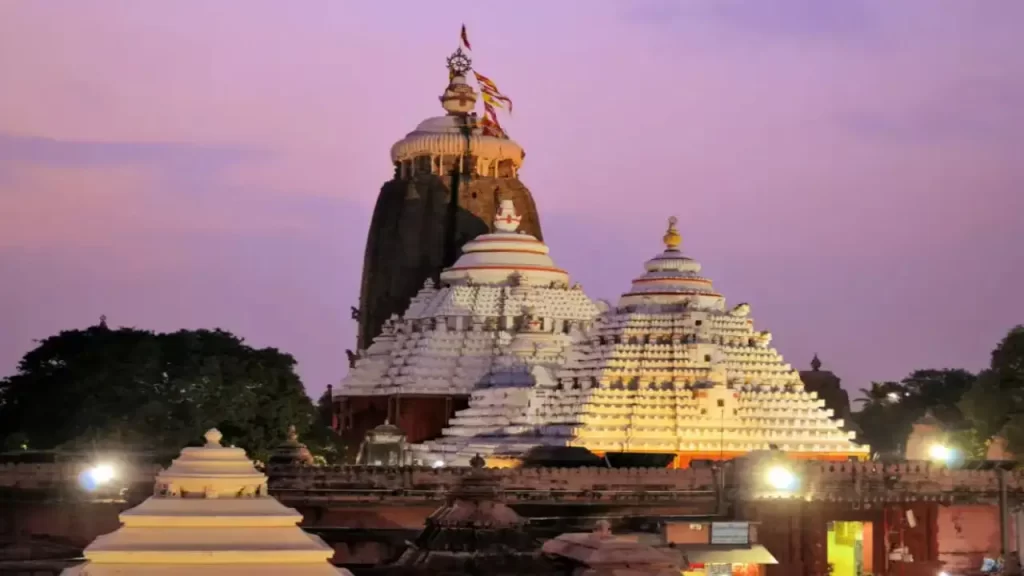
The revered Jagannath Temple in Puri, Odisha—one of the four sacred Char Dham pilgrimage sites in Hinduism—has long fascinated devotees with its spiritual aura and unexplained phenomena. Among its many mysteries, the enigma surrounding the temple’s “third step” remains one of the most intriguing aspects of its religious and cultural heritage.
The Jagannath Temple, dating back to the 12th century and built under the reign of King Anantavarman Chodaganga Deva, is not just a religious landmark but a symbol of India’s ancient architectural and spiritual traditions. Devoted to Lord Jagannath—a manifestation of Lord Vishnu—the temple is known for its annual Rath Yatra, which attracts millions of pilgrims from across the globe.
However, a lesser-known yet deeply respected tradition revolves around the temple’s inner sanctum and the steps leading to it. Of these, the third step, also referred to as one of the “Baisi Pahacha” (22 steps), holds significant religious importance. Devotees and priests strictly avoid stepping on it, a custom that has been preserved through generations.
According to temple legends, the third step is believed to house the divine essence or heart of Lord Vishnu, rendering it too sacred to be touched by human feet. Pilgrims are often seen bowing their heads, touching the step with reverence, or stepping directly over it without contact. Though the temple administration does not officially comment on the reasoning behind the practice, the custom is observed unfailingly by all.
Local scholars and religious experts suggest that the third step symbolizes cosmic consciousness or the “third eye”, and represents spiritual awakening. In some Tantric interpretations, the step is linked to mystical energy that protects the sanctity of the inner sanctum.
Historically, the unique design of the temple and its ritual practices have invited extensive studies. Experts from the Archaeological Survey of India and various cultural historians have noted that such symbolic steps are rare and underscore the blend of ritual science and architectural mastery embedded in India’s temple traditions.
The mystery is compounded by the fact that the temple’s main sanctum has no shadow at any time of the day, the flag on its pinnacle flies opposite the wind direction, and the temple’s kitchen can feed thousands without any visible waste—adding layers of spiritual curiosity around the site.
Despite the lack of documented records, the tradition of honoring the third step continues unabated. For many devotees, the mystery itself reinforces their faith, making the pilgrimage experience even more profound.
As scholars continue to explore the origins of this sacred tradition, the third step of the Jagannath Temple remains a powerful symbol of unseen divinity and unwavering devotion—a mystery etched in stone that continues to inspire reverence and wonder.

