
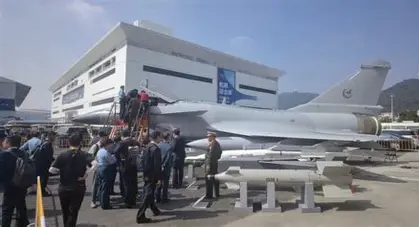
In a strategic move to strengthen its air defense, Iran is reportedly set to procure a fleet of Chinese J-10C fighter jets. This development comes in the wake of intensified Israeli air raids targeting Iranian military infrastructure, pushing Tehran to modernize its outdated aerial capabilities.
Sources from defense intelligence suggest that Iran’s decision to fast-track the acquisition of the J-10C fighter aircraft was heavily influenced by recent Israeli attacks on key Iranian installations in Syria and near Isfahan. These strikes highlighted the limitations of Iran’s current air fleet, much of which includes aircraft from the Shah era, lacking modern combat capabilities.
The J-10C, manufactured by China’s Chengdu Aerospace Corporation, is a 4.5-generation multi-role combat aircraft equipped with cutting-edge technology. It includes an active electronically scanned array (AESA) radar system, advanced avionics, electronic warfare suites, and compatibility with a wide range of guided munitions. Designed for both air-to-air combat and precision ground strikes, the J-10C poses a significant threat to adversaries operating in the region.
Iran is expected to receive at least 12 to 24 jets in the initial phase of the deal. Reports also suggest that the agreement may involve technical support, pilot training, and potential technology transfers from China, further deepening military cooperation between the two nations. The estimated value of the deal runs into several hundred million dollars.
This move reflects Iran’s pivot towards Eastern defense suppliers amid ongoing Western sanctions and arms embargoes. It also signals growing strategic alignment between Tehran and Beijing, especially under China’s broader Belt and Road Initiative which has increasingly incorporated military partnerships.
Regional observers warn that Iran’s acquisition of the J-10C could shift the aerial balance of power in the Middle East. The aircraft’s capabilities could challenge Israeli air dominance, particularly in contested airspace over Syria and Iraq. Countries like Saudi Arabia and the UAE may also view this development as a regional security concern, potentially triggering an arms race in the Gulf.
However, despite the advanced features of the J-10C, analysts caution that Iran’s air force still faces operational constraints. These include limited experience in handling next-generation fighter jets, infrastructure deficits for maintenance, and integration issues with existing Russian and domestic systems. Nonetheless, the purchase is a significant leap forward for Iran’s military modernization ambitions.

