
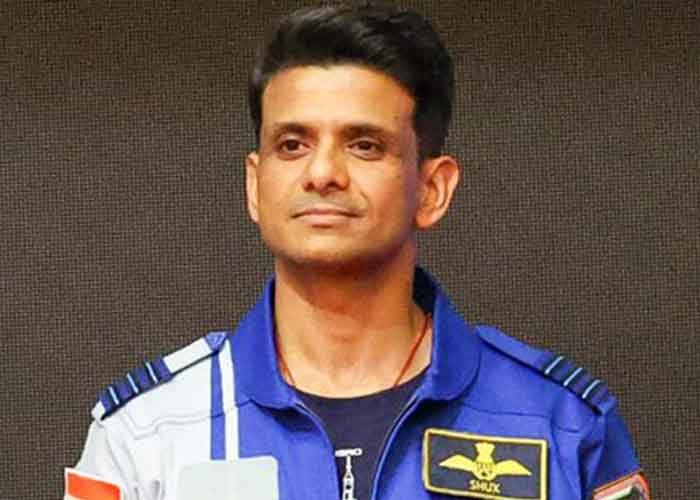
5 July, 2025-Indian astronaut Shubhanshu Shukla has achieved a remarkable milestone by setting a new record for the longest space stay by an Indian national, surpassing the benchmark established by Rakesh Sharma over four decades ago. This accomplishment signals a significant advancement in India’s human spaceflight efforts.
Rakesh Sharma, India’s first astronaut, spent 7 days and 21 hours aboard the Soviet spacecraft Soyuz T-11 in 1984. In contrast, Shukla has now logged more than 30 consecutive days aboard the International Space Station (ISS), marking a new chapter in India’s space exploration history.
Selected under India’s Gaganyaan human spaceflight initiative, Shukla, a former Indian Air Force pilot, embarked on this extended space mission through international collaboration involving several global space agencies. His journey has focused on performing cutting-edge scientific experiments, testing life support systems for deep-space missions, and contributing to long-duration human spaceflight studies.
Shukla’s mission comes as a major boost to the Indian Space Research Organisation (ISRO), which is preparing for its first crewed Gaganyaan mission scheduled for launch in 2026. His extended presence aboard the ISS is viewed as a crucial step in validating India’s capabilities for future long-term space habitation.
Throughout the mission, Shukla has conducted more than 15 scientific experiments across areas such as microgravity biology, space material testing, and Earth observation. He has also maintained a strict physical fitness regime to counter the effects of prolonged weightlessness and has regularly interacted with students in India, promoting interest in STEM education.
The Indian government and ISRO have hailed Shukla’s achievement as a proud moment for the nation. Messages of congratulations have poured in from across the country, with citizens celebrating his perseverance and contribution to India’s growing space ambitions.
This achievement not only showcases India’s advancements in astronaut training and mission planning but also strengthens its position in the global space community. With several new international space agreements and cooperative ventures underway, India is positioning itself as an emerging leader in the realm of space exploration.
Shukla is expected to return to Earth in the coming weeks, after which he will undergo standard post-mission health assessments. He will also participate in outreach events to share his experiences and insights from space.
By surpassing a record that stood unbroken since 1984, Shubhanshu Shukla has carved out a new legacy in Indian space history, inspiring future generations and reaffirming India’s commitment to space science and innovation.

