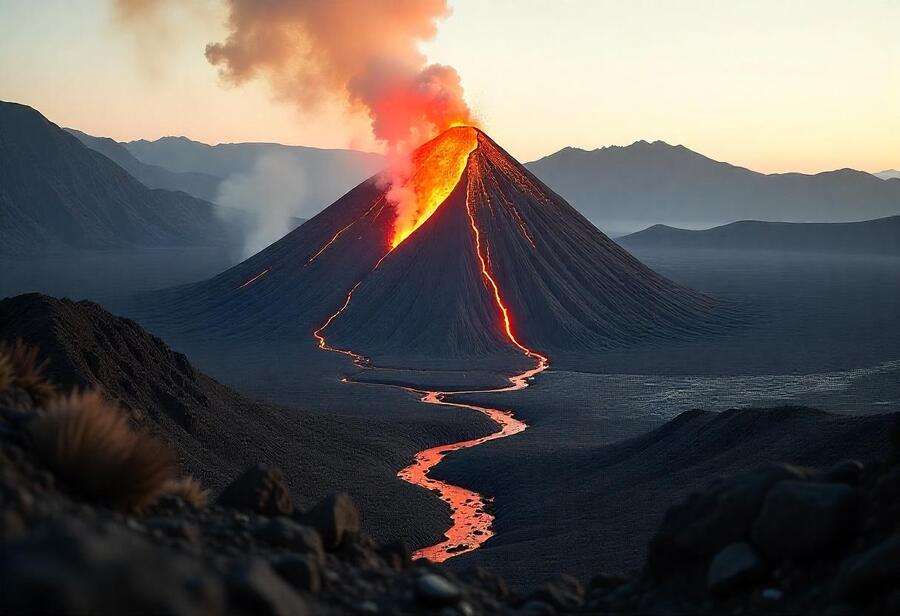
7 July, 2025-The Shinmoedake volcano in Japan’s Kyushu region erupted early Monday, marking its first major activity since 2018. The eruption prompted the Japan Meteorological Agency (JMA) to raise the volcanic alert level to 3, urging residents to stay away from the crater and surrounding areas.
A massive plume of ash was observed rising over 3,000 meters above the summit, with ashfall reported across nearby towns. Authorities ordered evacuations for communities within a 2-kilometre radius, while emergency shelters were opened to accommodate displaced residents. No injuries or fatalities have been reported so far.
The JMA had been monitoring increasing seismic activity beneath the volcano over the past several weeks. On Sunday, volcanic tremors intensified, and alerts were issued in anticipation of an eruption. By early Monday, Shinmoedake erupted, spewing ash and gases into the atmosphere.
Air and rail services were significantly affected. Multiple flights at Kagoshima and Miyazaki airports were delayed or cancelled due to reduced visibility caused by volcanic ash. Rail operators temporarily suspended services in the affected region, while expressways near the volcano were closed for safety reasons. Japan Airlines and All Nippon Airways issued travel advisories for passengers flying in and out of southern Japan.
This is the first eruption of Mount Shinmoedake in six years. The volcano, part of the Kirishima mountain range, last erupted in March 2018. Experts have warned that further eruptions are possible in the coming days due to ongoing magma movement.
Dr. Hiroshi Tanaka, a volcanologist at Kyoto University, said the eruption was consistent with the pattern of increased seismic signals detected in recent weeks. “The risk of additional volcanic activity remains high. Residents should remain cautious and follow official guidance,” he said.
In response to the eruption, Prime Minister Fumio Kishida stated that emergency response teams have been mobilized to support local authorities and residents. Government officials are working closely with the JMA and disaster management agencies to monitor the situation and coordinate relief efforts.
The eruption has reignited discussions around Japan’s preparedness for natural disasters, particularly in geologically active regions. With over 100 active volcanoes across the country, experts continue to stress the importance of early warning systems and community evacuation drills.
As of Monday evening, volcanic activity remained ongoing, and authorities maintained heightened alert levels. Residents have been advised to remain indoors where possible and wear masks to protect against inhaling ash particles.
Monitoring efforts will continue in the coming days, with officials warning that conditions could change rapidly. Travelers and residents in southern Japan are urged to stay informed through official weather and disaster alert channels.