
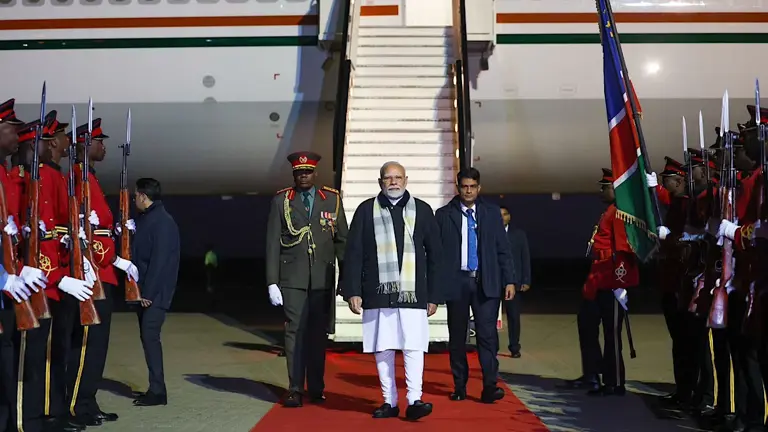
Prime Minister Narendra Modi’s official visit to Namibia has marked a defining chapter in India’s diplomatic engagement with Africa. By recognizing the contributions of the Indian diaspora and initiating new areas of collaboration, the visit has paved the way for a deeper, more comprehensive partnership between the two nations.
Speaking at a community event in Windhoek, Prime Minister Modi lauded the Indian diaspora for their active involvement in Namibia’s development. He emphasized that Indians living abroad serve as cultural bridges, connecting India with the rest of the world. “You represent India’s spirit and values wherever you go,” he stated during his address.
The bilateral meeting between PM Modi and Namibian President Nangolo Mbumba resulted in discussions around expanding cooperation in various key sectors. These included clean energy, health services, digital infrastructure, education, and technology. A significant development from the visit was the signing of a memorandum of understanding (MoU) on renewable energy. Given Namibia’s vast natural resources and solar potential, this agreement is seen as a vital step toward building sustainable energy partnerships.
India also reiterated its support for Namibia’s development journey through training programs, capacity-building initiatives, and technical assistance. The countries shared their vision of strengthening South-South cooperation and promoting a multipolar world order rooted in mutual respect and shared growth.
Prime Minister Modi highlighted India’s historical support for Namibia’s freedom struggle, recalling the long-standing friendship between the two nations. He expressed India’s readiness to share expertise in emerging fields such as IT, pharmaceuticals, and skill development to foster inclusive growth.
The visit is viewed as part of India’s broader efforts to expand its global outreach and deepen ties with African nations. It also aligns with New Delhi’s strategic aim to enhance its presence in the Global South, diversify its partnerships, and counterbalance the growing influence of other powers in the region.

