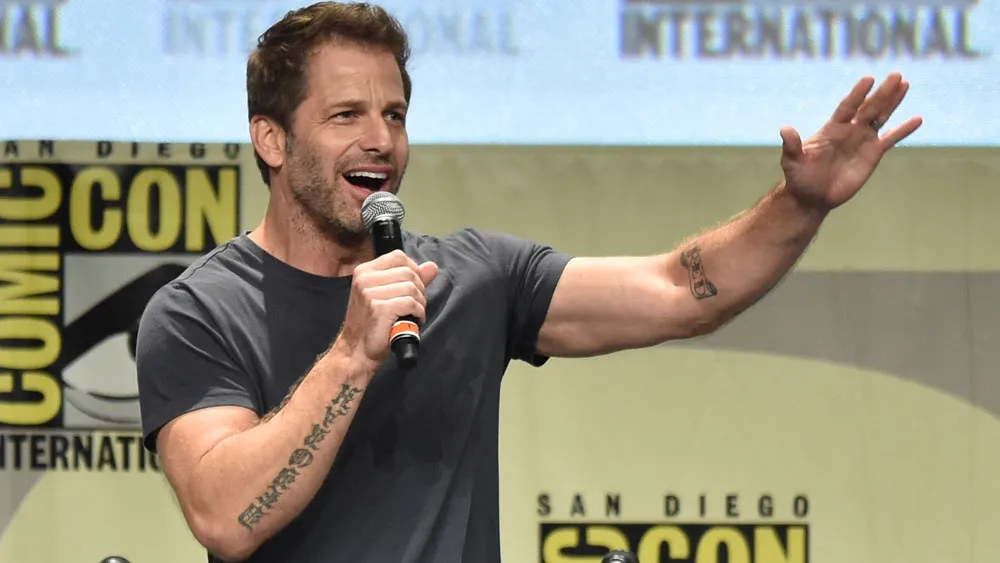
In a significant cultural crossover, renowned Hollywood filmmaker Zack Snyder, celebrated for his directorial work on Man of Steel and Justice League, has declared the Indian epic Mahabharata as “the greatest epic story ever created globally.” Snyder’s comments have sparked widespread discussion among film enthusiasts, scholars, and fans across both Western and Indian cinematic circles, reigniting interest in the prospects of bringing the ancient Sanskrit narrative to the global silver screen.
Speaking during a recent interview promoting his latest cinematic projects, Snyder expressed deep admiration for India’s literary heritage. “I think the Mahabharata is probably the greatest epic story ever created, globally speaking,” the director remarked. He praised the epic’s vast scale, complex moral themes, and intricate characters, noting how its narrative ambition parallels or even surpasses many of the mythological stories that have inspired Western cinema for decades.
A Growing Hollywood Fascination with Indian Epics
Snyder’s comments arrive amid a growing trend of Hollywood creatives exploring Indian mythology for adaptation. As global audiences seek fresh, diverse narratives, epics like the Mahabharata and Ramayana are increasingly viewed as untapped sources of storytelling potential. Industry insiders have observed that with franchises like the Marvel Cinematic Universe and Star Wars setting high benchmarks for epic storytelling, there is significant interest in exploring other cultural mythologies to captivate worldwide audiences.
Film analysts suggest that Snyder, known for his visual storytelling and large-scale battle sequences, could be uniquely positioned to bring the Mahabharata’s grandeur to life. However, many emphasize that adapting such a deeply revered text would require cultural sensitivity and close collaboration with Indian historians, scholars, and artists to maintain authenticity.
The Challenge of Adapting the Mahabharata
The Mahabharata, attributed to the sage Vyasa, is one of the world’s longest and oldest epic poems, encompassing over 100,000 verses. Its narrative spans dynastic conflicts, philosophical discourse—including the Bhagavad Gita—and profound questions of duty, honor, and fate. Any cinematic adaptation faces the formidable task of condensing its immense scope without sacrificing narrative depth.
Indian filmmakers such as S. S. Rajamouli have previously expressed aspirations to adapt the Mahabharata, and Snyder’s remarks may potentially accelerate global collaborations or inspire international studios to pursue the project.
Enthusiastic Reactions and Cultural Pride
Snyder’s statement has been warmly received in India, with many social media users expressing pride over international recognition of the nation’s literary treasures. Hashtags like #Mahabharata, #ZackSnyder, and #IndianMythology have been trending on platforms such as X (formerly Twitter) and Instagram. Cultural commentators note that such endorsements can boost global interest in Indian epics and contribute to India’s emerging status as a powerhouse of storytelling.
Future Prospects
While Snyder has not confirmed any concrete plans to adapt the Mahabharata, his acknowledgment underscores Hollywood’s ongoing fascination with epic narratives that transcend cultural boundaries. As conversations about cross-cultural filmmaking gain momentum, industry watchers are eager to see whether this admiration will eventually translate into a cinematic endeavor that introduces the Mahabharata to a new generation of global audiences.